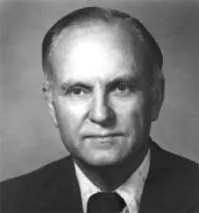
Dr. Sennholz is Professor of Economics at Grove City College, Pennsylvania.
A keen observer takes a close second look at various statistics.
Communist leaders tirelessly proclaim that the economic and social superiority of their order is bound to lead to its triumph. To accept such claims as fact leads to despair about the future of individual enterprise and freedom. To equate the alleged economic capacity of communism with military power gives rise to hopelessness about the military position of the free nations.
Impressed by Soviet “progress,” some underdeveloped nations in Asia and Africa are imitating the communist system and accepting political and military integration with Russia, while we, in turn, may be tempted to imitate communist techniques in order to compete with the Soviet statistics. In the name and for the sake of economic growth, we may try more government regulation, more government spending, and currency expansion, thus hampering and mutilating our free market processes until they are replaced by the kind of government control that is the essence of the Soviet system. It behooves us, therefore, to examine carefully the alleged statistics of Soviet economic growth in the light of the known goals and techniques of the communist regime.
The communist world differs fundamentally from the democratic world in structure of state, economy, and society, in spiritual, intellectual, and moral constitution. Communism means extreme centralization of society and regimentation of the individual. It sacrifices everything humane to the State, subjugates and corrupts human conscience, and resorts to cruelty, evil, and deceit in order to attain its end. This is why Communists cannot be judged by our own standards of human relations and morality.
On the Nature of Soviet Growth
In an individual enterprise economy the consumers determine the structure, change, and growth of production. Through buying or abstaining from buying, they determine what is to be produced, its quantity and quality. Profits and losses oblige the producers to cater to the wishes of the consumers. Economic growth, thus guided by consumer preference, depends upon managerial ability applied to the savings accumulated by producers and consumers.
Economic growth under socialism differs radically from free market growth. The government has taken over, organized, and regulated practically every phase of economic production. As the only employer, the socialist government can concentrate the entire energy of the system on strategic points. Without regard for expense, it can throw materials and manpower into projects that are considered most important. The expenses are borne by the masses of people who labor long hours at cut-rate pay.
The Soviet State controls every phase of economic production including wage rates and working conditions. The remuneration and employment of labor, like that of land and capital goods, are determined in accordance with general Soviet objectives. Labor towards the consolidation and promotion of the communist order and state power is rewarded generously, while “unessential” labor must be satisfied with less. Certain industries deemed essential for Soviet objectives are supplied lavishly with labor and resources, while the unessential industries are drained for the support and growth of the former. In other words, numerous economic sectors with millions of workers are exploited for the benefit of a few industries that are essential for communism.
Freedom To Move
In a free market economy all discrepancies of remuneration and working conditions would soon be alleviated through the free flow of labor and capital. People and capital would leave depressed industries and flock toward better-paid occupations and industries. No doubt, the people of communist countries would move in similar fashion if free to do so. But the communist State cannot tolerate this migration for fear of collapse of the central plan. It forces millions of workers to continue their labor in the exploited industries and selects those who are privileged to work in the better-paying subsidized industries.
The industrialization of Soviet Russia, which has been the foremost project of the Soviet regime, is carried out mainly on the backs of Russian agricultural workers. Many millions of Russian men, women, and children labor from dawn to dusk on collective estates for a bare minimum of existence. It is they who have to pay the high price for the industrial ventures of the State.
The apparel industry is another important source of Soviet revenue. The State sells all textile products at incredibly high prices, thus forcing the population to labor long hours for a minimum of clothing. The Soviet citizen is clothed in rags when compared with the American worker.
In addition to this form of mass exploitation, millions of individuals are forced to labor without any compensation on a bare minimum of existence. Upon their seizure of power, the communist dictators threw millions of Russian capitalists and landowners into concentration and labor camps, which have been an essential institution of communist production ever since. This labor force has been frequently replenished by hundreds of thousands of individuals from behind the Iron Curtain—countless Germans, Poles, Czechs, and Hungarians representing the latest addition.
Some Methods of “Growth”
Even if we were so naive as to believe implicitly the Soviet statistics, and to overlook their unswerving intention to deceive and mislead us, a few deliberations suffice to deflate their empty boasts. Russian statistics reflect the economic growth that is due to territorial expansion during and after World War II. The Soviet Union completely incorporated Estonia, Latvia, and Lithuania and acquired about half of Poland, parts of Finland, Germany, Czechoslovakia, Hungary, and Romania, a territory larger than France with a population of more than 22 million people. It is most difficult to estimate how much of the Soviet economic gain is attributed to military conquest, for which the Western democracies and, above all, the United States must ultimately be “credited” on account of their crucial role in World War II and their surrender of these people to Soviet control afterwards. But we obtain an important clue on the scope of this growth from the fact that the newly acquired territory is slightly larger than the territory lost after World War I. As this territory contained some 18 per cent of the productive capacity of Czarist Russia, we may infer that the newly acquired territory accounts for at least 18 per cent of the stated Soviet growth since World War II.
Another essential growth factor of the Soviet economy is the removal of capital equipment from all countries occupied by the Red Army during and after the war. Countless plants and factories, valuable machines and equipment, materials and supplies, rolling stock, rails, and even nails, were shipped to Soviet Russia. This productive equipment undoubtedly contributed greatly to the rapid economic recovery indicated by Soviet statistics.
Soviet economic growth is largely confined to only a few basic sectors. A capitalist economy expands in all its sectors, providing an even larger variety of consumers’ goods and services together with a steady growth in leisure; but Soviet growth is erratic and eccentric, proceeding by fits and starts in accordance with the orders and directions from above. Little attention is paid in Russia to the wishes of consumers. The emphasis of Soviet growth lies on a few basic materials, capital goods, and armaments. Many of the economic sectors which we Americans deem important, such as construction, clothing, and services, are greatly neglected in Soviet plans. Needless to say, the Russian growth statistics give glowing reports on achievements in industries with highest priority while little or no weight is given to others.
Growth or Waste?
Such a “planned growth” may indeed facilitate some spectacular technical achievements. But we must be careful not to equate technical achievements with economic progress. For these achievements may actually be associated with labor exploitation and economic impoverishment. A centralized economy that operates without benefit of the market and its price system lacks the tools for rational economic calculation. The Soviet planners cannot ascertain whether the value of the output actually exceeds that of the input, for they lack the common price denominator that permits a comparison between the final product and a multiplicity of heterogeneous producers’ goods employed in the production. In other words, they cannot determine whether an additional ton of steel is actually more valuable than the raw materials embodied in it, the labor withdrawn from other production, and other cost factors, such as location and time. In fact, it is entirely possible that an expansion of steel production not only curtails other production but even reduces total production. The people’s living conditions may decline while the official statistics are reporting rapid economic growth. Furthermore, the additional ton of steel mentioned above may be employed for projects that constitute malinvestment and waste. In short, the statistical growth may be tantamount to economic waste and poverty.
Toward World Revolution
The struggle between East and West is no old-fashioned power struggle, but total war in which the communist strategy is changing continuously. Whether by psychological, economic, technological or military measures, the Communists work diligently and in many guises toward the ultimate triumph of communism.
The objective of communist world revolution has led to a vast expansion of Soviet military production and anything related thereto. This does not mean that the military power will necessarily be used in order to achieve final victory, although there can be no doubt that the Communists would use it if this would most effectively serve their cause. The existence or appearance of military strength also has the ideological effect of demanding respect in the councils of those nations that live by power and coercion. Nationalists, militarists, and other collectivists everywhere are unduly impressed by military strength and all political devices that promise to give such strength. Military production also affords relief and encouragement to the millions of Communists in the free world, who are working diligently towards the ultimate sway of their social order. What could be more reassuring to them than the thought of their own formidable military strength?
Why Communists Talk about Growth
To compare the growth rates of the Soviet economy with those of the market economy of the United States is an insoluble task. The two economic orders differ radically and fundamentally. In spite of all its mutilations and obstacles created by government intervention, the U. S. economy continues to grow in all its sectors at a modest rate. Because market prices still lend order to the economic process, our economy continues to grow and deliver the very goods which Soviet planners can only promise. To talk about and promise economic growth is a vital communist strategy to bolster the hopes of the suffering masses. For more than 40 years the communist leaders have successfully diverted their people’s attention from misery and starvation, persecution and slavery, by promising them bliss in the decades to come. “We shall surpass the United States” is their latest slogan designed to catch the imagination of the masses and secure their docile allegiance. But if 42 years of Soviet tyranny have yielded no fruits of such ambitious intention, how much longer must we wait for the miracles of communist production?
There is one possibility that the Soviet economy may actually surpass us. If we should destroy our individual enterprise system through more and more government intervention, and endeavor to imitate the communist order, the ensuing chaos of our economy may even be worse than the waste and inefficiencies of the Soviet system. For our political leaders may lack the ruthless and savage determination to give some order to an inherently chaotic system. And we citizens may lack the servility of slaves that can make the Soviet system function. This is why our imitation of the communist order is so deplorable, for it must prove particularly disastrous for us.