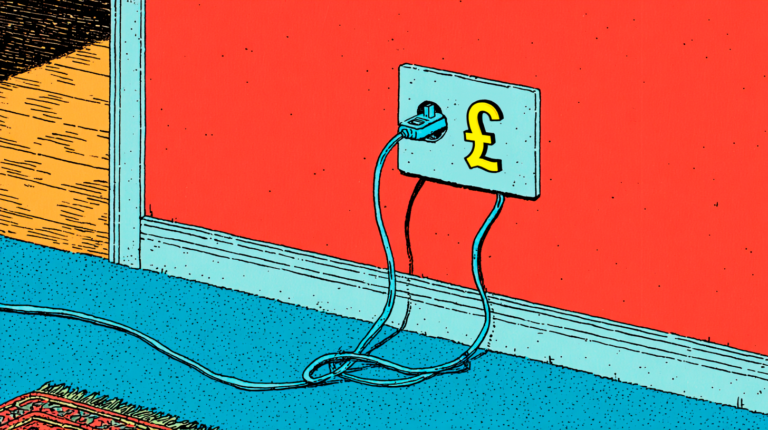

But once households have been “protected” from one energy shock, they will expect “protection” from the next.
When oil prices rise, economists ask what it means for inflation. Politicians ask what it means for voters. Since the Iran conflict and the disruption in the Strait of Hormuz, that has become the more urgent question.
This is no longer just a macro and monetary policy story. It is a cost-of-living story. And in Britain, that means it quickly becomes a political one.
According to the official definition in England, a household is fuel poor if it lives in a property with a fuel poverty energy efficiency rating of band D or below and, after meeting its required energy costs, is left with a residual income below the official poverty line. That is a helpful definition because it gets to the heart of the issue. Fuel poverty isn’t just about the cost of energy. It’s about the collision of low income, poor housing and unavoidable energy use.
The important phrase is “required energy costs.” The Government does not measure fuel poverty by what households actually spend, but by what they would need to spend to heat the home adequately. That is economically sensible. Poorer households often under-heat their homes, ration usage or go without. Actual spending can therefore flatter reality. For many households, demand for heat is not especially elastic. It is constrained by necessity, not preference.
In 2025, 2.36 million households in England—9.4%—were classed as in fuel poverty, down from 9.9% (2.47 million) in 2024. Closing the gap costs about £379 per household, a shortfall of around £896m.
And that headline figure understates the wider political exposure. For the first time, these statistics include a new affordability measure of median required energy costs as a proportion of household income (after-housing-costs). For England, this amounted to an estimated 6.8% of households. For low-income households, that figure was an estimated 14.9%. On the old 10% affordability measure, 7.63m households (30.4%) would have been spending more than a tenth of income on energy. Even on the Government’s own numbers, millions remain dangerously exposed to another spike in prices. This is why oil shocks matter politically.
The pressure is already building again. Cornwall Insight expects the typical dual-fuel bill under the price cap to rise to £1,929 in July, up from £1,641 in April—a jump of £288, or roughly 18%, more than wiping out the previous cut.
For better-off households, that is unpleasant. For poorer ones, the choice is between cutting back on heating, food and everything else. That imbalance is what turns an energy shock in to a political event. The same rise in prices has very different effects on people depending on household incomes.
In Westminster the debate has already shifted from whether government should step in to how much support should be offered, how quickly and to whom. Opposition parties are competing over relief, whether through scrapping VAT on energy bills, cancelling the planned fuel-duty rise, or promising fresh subsidies.
We have seen this before. Prices rise, ministers cap them, hand out support and tax firms “windfall” profits. Last time, that approach cost £44 billion. According to the National Audit Office, it also prevented around 289,000 households in England from going into fuel poverty.
That is understandable politics. But it also revealed something bigger, more insidious about the British state. That of market intervention and compensation. Starmer has said this week that household support will be kept under review, and urged people not to panic. In other words, the state is already being positioned once again as the shock absorber.
That changes people’s expectations. Once households have been protected from one energy shock, they expect protection from the next. Once firms have seen ministers tax “windfall” gains in one crisis, they start pricing in intervention in the next. Temporary measures stop looking temporary. The state shifts from emergency backstop and becomes part of the normal response.
This is the ratchet effect. Support schemes are easier to introduce than withdraw. Yet none of this resolves the underlying structural problem. Transfers can soften the hit, but they do not insulate and make homes more efficient. Rebates can reduce bills, but they do not improve supply. Windfall taxes may buy temporary fiscal room, but they do nothing to make Britain less vulnerable to the next shock.
So the country becomes more managed, but not more resilient. That is the real political economy of successive energy shocks.
Modern Britain is drifting into a model where every shock becomes a bill for the state. Each energy crisis exposes the same weakness: we compensate and subsidise the damage rather than reduce the risk. That may buy time, but it does not build resilience. Eventually the money runs out, or the politics does. Either way, this is not a strategy. It is a habit—and a bad one at that.