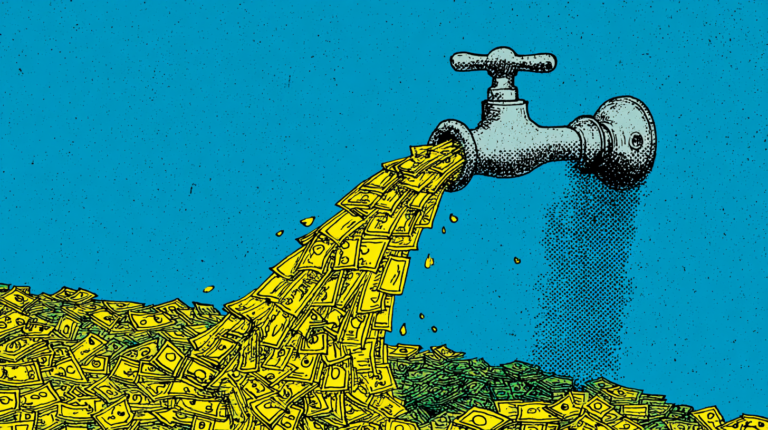

Taxpayers need a break, in this update from the South Carolina Policy Council.
As the great Benjamin Franklin once said, “in this world, nothing is certain except death and taxes.” In South Carolina, there might as well be another—government spending.
Over the past decade, one pattern has held constant: the General Fund grows nearly every year, typically outpacing both inflation and population growth.
The House recently advanced its version of the state budget. The proposal sent to the Senate is identical to the version approved by the House Ways and Means Committee, though changes are almost certain as the process continues.
When the governor submitted his executive budget to the House earlier this year, the proposal included a $15.8 billion General Fund—what would be the largest in state history. Federal funds totaled $14.1 billion and other funds $14.7 billion, bringing the overall budget to roughly $44.5 billion.
In a welcome development, the House reduced those totals. The chamber’s version includes a $15.4 billion General Fund, $14 billion in federal funds and $14.7 billion in other funds, for an overall budget of about $44 billion.
Why This Matters
Historically, the budget process begins with modest growth but expands as it moves through each chamber, often emerging significantly larger in the final conference committee report.
For that reason, the House’s reduction—about $400 million from the General Fund and roughly $500 million overall—is a positive step. Still, lawmakers should not be celebrating yet. Even with the reduction, the proposal represents roughly a $300 million increase in General Fund spending compared with last year.
In short, the budget remains too large.
The General Fund consists of three components: recurring revenue, non-recurring revenue (one-time), and the capital reserve fund.
Together, these components produce a total FY27 General Fund spending of approximately $15.41 billion.
When lawmakers allocate recurring dollars to new spending, they are prioritizing government programs over permanent tax relief for South Carolina taxpayers. And when nonrecurring dollars are spent, the opportunity cost is foregone tax rebates or tax credits that could return surplus revenue to citizens.
Permanent tax relief must be financed with recurring revenue to ensure the reductions are sustainable.
New Income Tax Legislation
SCPC takes a straightforward approach to evaluating tax reform proposals. We support a broad base, a low rate, a simplified exemption structure that eliminates arbitrary carveouts, and a path toward eliminating the income tax. The proposal advanced by the General Assembly, H.4216, accomplishes these goals.
The estimated fiscal impact of the bill is already $309 million. The nonrecurring surplus for FY27 totals $1.09 billion, while the recurring surplus is just under $690 million. However, according to the latest analysis from the Revenue and Fiscal Affairs Office, approximately 22.6% of South Carolina taxpayers would see their tax liability increase under the proposal. Those increases would generate an additional $213.4 million in revenue.
Though we support the bill, SCPC does not want to see any South Carolinian face a tax increase and has been critical of that aspect of the bill since its inception, a concern we have reiterated in our reports and recent statements on the income tax proposal.
However, even critics of the bill are unlikely to argue that the state should distribute $42.5 million in tax relief to roughly 2,500 taxpayers earning more than $1 million annually.
So what is the middle ground? Most advocates of the bill agree that taxpayers earning less than $30,000 annually should not face a higher tax burden. But what about taxpayers earning $300,000? In cases like this, policymakers must weigh the fiscal cost of providing targeted relief if rebates are limited to specific income brackets.
South Carolina’s strong financial position—marked by years of recurring and nonrecurring surpluses—provides an opportunity to reduce tax burdens. The potential for some taxpayers to see an increase in their tax liability in the near term only strengthens the case for acting quickly.
Overall tax reduction remains a central goal of the broader reform effort. Lawmakers must now address where the line should be drawn to provide the most relief for taxpayers without hurting long-term sustainability of the budget.
The Rebate Solution
An income-targeted transition rebate would provide temporary relief to taxpayers most likely to see higher liability during the shift to the new income tax structure created under H.4216. Under this approach, rebates would be directed toward low- and middle-income filers—for example, filers with adjusted gross income below $200,000. Those taxpayers would receive a one-time rebate or credit that phases down over several years, designed to offset increases caused by the restructuring of rates and deductions. This would cost just $110 million.
Because the rebates would be funded with surplus or other nonrecurring dollars, the policy would not undermine the long-term goal of reducing South Carolina’s income tax burden or force agencies to make abrupt budget cuts.
Just as important, a transition rebate would give lawmakers breathing room to bring state spending into line with a lower-tax environment. Major tax reforms rarely happen in a vacuum; they require discipline on the spending side as well. Providing temporary relief with a phase-down allows the General Assembly time to evaluate programs, adjust, and pursue reforms that ensure the budget remains sustainable under a reduced tax structure.
As income tax rates decline with revenue growth, the credit program could be tied to the overall rate and gradually phased out.
In effect, the rebate would serve as a bridge protecting taxpayers from short-term disruption while giving policymakers time to get the state’s fiscal house in order.
Still, a rebate or credit is only a temporary solution. Permanent spending reform is the true path to accelerating South Carolina’s transition toward eliminating the income tax. With the state on solid financial footing, lawmakers could advance a proposal that limits the negative side effects of H.4216, giving taxpayers a buffer while spending is adjusted. Ideally, the General Assembly would restrain spending now rather than later. But, realistically, history shows lawmakers have rarely prioritized spending reform. If that remains the case, targeted credits or rebates funded with surplus dollars are the next best option to protect taxpayers during this transition. If lawmakers are unwilling to restrain spending today, they should at least use the state’s surpluses to ensure no taxpayer pays more during the transition to a lower-tax future.
Keep an eye on the calendar. On April 10, the South Carolina Board of Economic Advisors will release its final revenue projections. Any additional revenue should go toward tax relief.
This article was originally published by the South Carolina Policy Council.