
“The world’s homeschooling moment,” six years on.
On the day the World Health Organization declared Covid-19 a global pandemic, I wrote in this space about “the world’s homeschooling moment,” projecting a spike in the number of families who would choose homeschooling and other alternative education options in the wake of school closures. I predicted that while most children would return to their conventional classrooms post-pandemic, some families “may start to wonder if homeschooling or other schooling alternatives could be a longer-term option.” Six years later, it’s clear that many families wondered this.
Data reveal that homeschooling numbers remain well above pre-pandemic levels in many parts of the US, and homeschooling grew nationally at an average rate of 4.9% during the 2024/2025 academic year. “This is nearly three times the pre-pandemic homeschooling growth rate of around 2%,” reported Professor Angela Watson, director of the Johns Hopkins University Homeschool Research Lab, who analyzed the data. “Notably, 36% of reporting states recorded their highest homeschool enrollment numbers ever—exceeding even the peaks reached during the pandemic.”
One of the states with particularly robust homeschooling growth is North Dakota. According to the Johns Hopkins analysis, it joins just three other states—South Dakota, South Carolina and Louisiana—in seeing ongoing increases in homeschooling rates and avoiding the post-2020 dip that other states saw in the immediate aftermath of school reopenings.
Ashtyn Kasch is one of these new North Dakota homeschooling parents. She began homeschooling her daughter Quinn last August, after Quinn completed kindergarten at a local public school. While Quinn loved her teacher, Kasch felt that the large classroom and long school day were wearing on her daughter. “I also felt like her childhood was slipping away, and I never got to see her anymore. Additionally, we love to travel and see the world, and that just wasn’t compatible with the public school system and their strict attendance rules,” said Kasch.
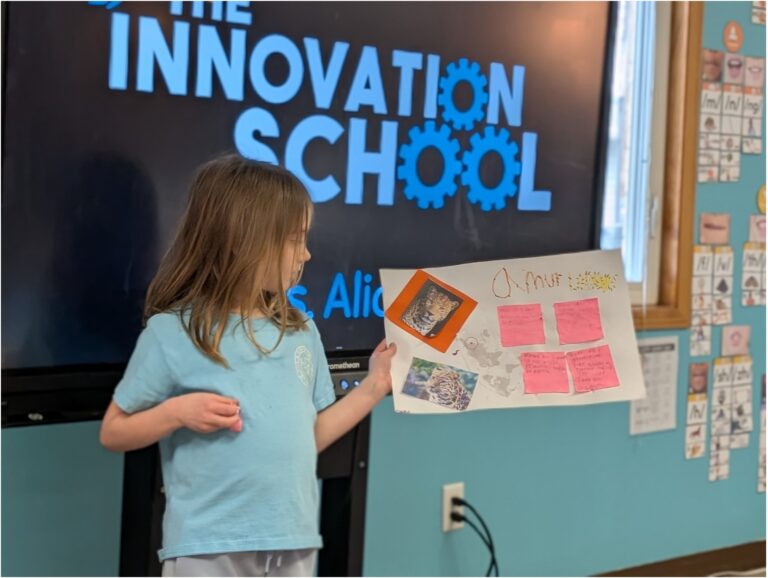
As they began their homeschooling journey, Kasch reached out to The Innovation School, a private K-8 school in Bismarck where Quinn attended a pre-kindergarten program, to see if the school offered any hybrid homeschooling options. Kasch adored the school’s child-centered focus rooted in the Reggio Emilia educational philosophy, and wanted to see if Quinn could attend the school part-time as a homeschooler. This arrangement would enable Kasch to continue working as a physician assistant and complement Quinn’s at-home core curriculum and additional homeschooling activities.
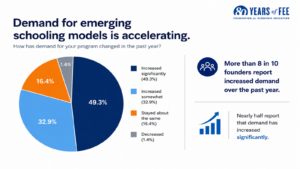
While The Innovation School occasionally offered one-off classes for homeschoolers, it didn’t have an established hybrid homeschool option until this academic year. Now, the school plans to expand the program going forward to accommodate the growing number of homeschooling families in the area. “Interest in innovative education is growing because families are recognizing that learning isn’t one-size-fits-all,” said Kelsy Achtenberg, director of The Innovation School. She sees growing demand from parents for different types of educational models and methods. “They’re seeking environments where learning isn’t standardized, their children are truly known, curiosity is valued and where learning feels meaningful and connected to real life,” said Achtenberg.
The school’s new hybrid offering is one way to meet this rising demand, with a variety of enrollment options now available to homeschoolers. Quinn attends The Innovation School two days a week at an annual tuition of $4,500, or half the cost of full-time enrollment. She is also able to participate in school field trips and enrichment activities, such as theatre and music. “I love the idea of her being able to homeschool, but also interact with her peers and classmates of different ages a few times a week,” said Kasch.
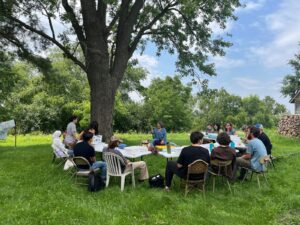
Hybrid homeschooling programs, along with other creative schooling options, are expanding across the US. These models often provide more curriculum freedom, scheduling flexibility and individualization than traditional schools—public and private. They are particularly appealing to families new to homeschooling and those who want to blend the personalization of homeschooling with the structure and community of conventional schooling. Nationally, an estimated 8% of homeschooled students are learning in a hybrid school environment.
The pandemic may have prompted many families to wonder about homeschooling, but its ongoing popularity points to parents’ sustained interest in alternatives to conventional schooling. Established private schools that introduce new hybrid homeschooling offerings, as well as emerging schooling models that embrace homeschooling’s flexibility, will likely find local families increasingly receptive to innovative ways of approaching teaching and learning.