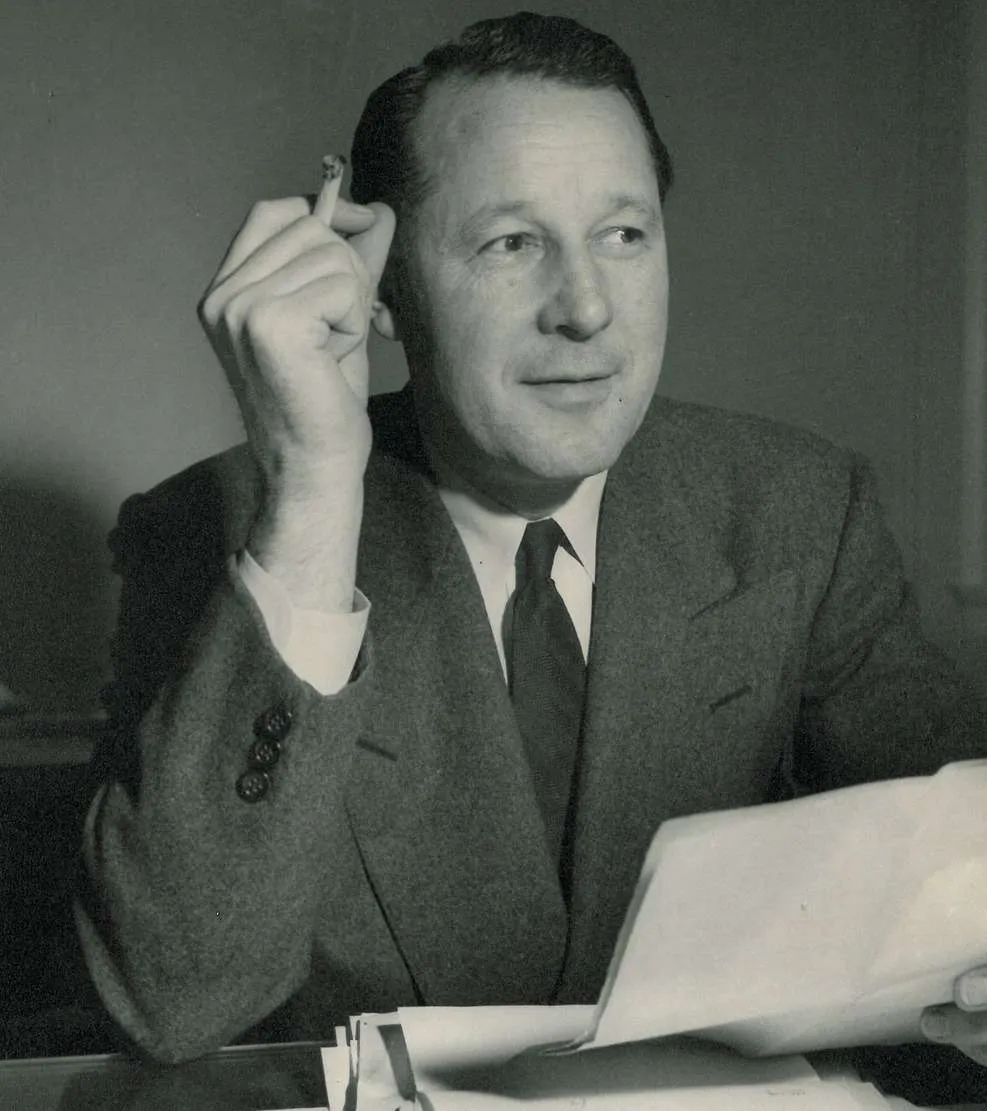
On April 3, 1967, Postmaster General Lawrence O’Brien told a gathering of magazine publishers and editors that the Post Office Department should be turned over to a nonprofit government corporation. He eloquently conceded the failure of government mail delivery:
Had the AT&T been operated as has the Post Office Department, the carrier pigeon business would have a bright future.
A few days later President Johnson named Mr. Frederick Kappel, the recently retired head of AT&T, as chairman of a 10-man Commission to report within one year what should be done about mail delivery.
Here is the dilemma of Mr. Kappel and his Commission:
1. To recommend a modified form of state ownership and operation, such as a nonprofit government corporation, would simply postpone any correction of the present inefficiency and waste.
2. To recommend what should be done, that is, let anyone deliver mail for whatever rates users will pay, would appear too incredible to the President, the Congress, and the people for the proposal to be accepted.
In a word, Mr. Kappel’s Commission will be damned if it does and damned if it doesn’t!
Thus, the Commission may decide not to disregard the Postmaster General’s suggestion of a nonprofit government corporation. This, of course, is still the state ownership and operation of the industry: socialism. Nor will it be looked upon as a fruitless venture by anyone convinced of his own ability to make socialism work. Most people seem to think that the failure of socialized mail delivery to date has not been in the principle of socialization but, rather, in the faulty organization of the socialized structure.
Observe the failure of one “5-year plan” after another in Russia, India, or wherever. Then note that the planners invariably ascribe the failure to an error in the planning rather than to the master-planning system itself.
The long and the short of it is that these people do not know how to make socialism work; no one ever has; no one ever will. All the evidence confirms the failure.
It Would Still Be Socialized
A nonprofit government corporation, however ingeniously devised, is no less a political agency than is the present Post Office Department. The stern discipline of earning a profit or losing the invested capital is wholly absent from such agencies. Sloppy management, instead of being penalized through personal losses, is subsidized at taxpayer expense. There is neither penalty for failure nor reward for success under a government-type corporation.
Note the incongruity: During the period of years when AT&T was earning profits of $25,000,000,000 the Post Office Department piled up deficits of $12,000,000,000. The former is organized for profit; its services continually improve as its rates decrease — a colossal success. The latter is organized for nonprofit; its services continually deteriorate as its rates increase — a colossal failure. The Postmaster General suggests a new nonprofit, government corporation to remedy the mail fiasco and the President asks the retired head of the private AT&T, organized for profit, to recommend how to do it!
Why do so many people believe that a nonprofit corporation is better than one organized for profit? They think this way because they naively believe that the $25,000,000,000 earned by AT&T, for instance, would have gone to workers in higher wages and/or to consumers in lower prices had the Company been nonprofit. They overlook the likelihood that there would have been something less than nothing had the telephone business been organized along nonprofit lines. Profit is not a cost of doing business, but the reward for having done it more efficiently than competitors do.
Most people like to make money. It is the hope of so doing — the profit motive — that makes for competition. The fact that each is trying to outdo the others improves services and brings prices down.1 The record speaks eloquently for itself on this point.
The Postmaster General sees that the carrier pigeon business would have a bright future had AT&T been organized as has the Post Office Department. Yet, he recommends another government monopoly to displace the one that has failed! Does he not understand the vital distinction between the two? One is private, competitive, and for profit, while the other is political, monopolistic, and not for profit.
Collectivizing the Problem
And now to the heart of “the problem.” Why is mail delivery a national problem, whereas no such problems arise in the delivery of the human voice, or of human beings, or of drugs and groceries, or of gas and oil? It is because mail delivery, as distinguished from the others, has been nationalized. In other words, this activity has been collectivized. Were we to break the monopoly of mail delivery, “the problem” would vanish, disintegrate; it would shatter into 200,000,000 fragments.2
Nationalize or collectivize verbal communication, that is, consolidate into a single system the 200,000,000 individual desires to transmit the spoken word, and immediately we would have “a problem” incapable of solution. Suppose it were up to you to coordinate 200,000,000 desires to talk! What to do? Just as the Post Office Department does, you’d doubtless lump these millions of requirements into a few dozen divisions or categories. But even these you could not manage to the satisfaction of the customers. You would have “a problem”!
Our nationalized mail delivery is lumped into categories. There is the personal message called first-class mail, 50 for the first ounce if by surface, 80 if by air. There is the no-charge or franked mail, billions of envelopes containing everything from subsidy checks to political propaganda. There is Rural Free Delivery. And library literature that goes across the nation for one-fifteenth of a cent an ounce! And highly subsidized delivery of magazines, newspaper, catalogues! And then there is below-cost freight delivery lumped under the heading of “parcel post.” There are other categories; but when all is said and done, the Post Office Department has a daily deficit of $3,000,000 and several million dissatisfied customers. This is indeed “a problem,” primarily because the industry is collectivized.
Free the Market
How is the national problem of mail delivery to be de-collectivized? The solution is simple enough to outline but difficult to implement within the prevailing political climate. Only two steps are necessary:
1. Repeal all laws that prohibit anyone from delivering mail for pay.
2. Let the Congress appropriate no more funds to defray Postal deficits, forcing the Department either to close down or to charge rates sufficient to cover costs.
Should the Post Office Department elect to stay in business, the rates would zoom. Rural Free Delivery might have to be discontinued. But, what’s wrong with a rural resident picking up his mail in town as he does his groceries? No more franked mail! Politicians and bureaucrats would be obliged to include postage in their budgets. And the mail order houses with their subsidized delivery of catalogues and merchandise! Are they to go out of business? Perish the thought! These ingenious folks will discover how to handle their own delivery problems, better and at lower cost.
Gone would be “the problem.” In its place would be 200,000,000 individuals each with his delivery requirements and with numerous competing services trying to please. One might even expect postal services to advertise for customers, just as the privately operated telephone companies offer attractive suggestions that more people make greater use of the telephone. No “problem”—just millions of requirements and business opportunities.
There are two major stumbling blocks to free market mail delivery.
First, governmental mail handling is a habit of long-standing. We inherited the practice from the Old World where it was instituted more as a system of censorship and snooping than as a means of efficient delivery. Without giving the matter a second thought, our forefathers wrote into Article I of our Constitution, “To establish post offices and post roads.” The practice is surrounded by an aura of sanctity — however irrational.
Second, neither Mr. Kappel, nor any other man, can possibly envision how people acting freely, independently, privately, voluntarily, cooperatively could deliver mail to the American millions. Hence, most people, if they cannot think how to do it themselves, are at a loss to think of how anyone can. Thus, they mistakenly conclude that it is a task not for free men but for government.
Of course, no human being can hit upon how to do this. The head of AT&T, had he lived a century ago and been asked to tell how to deliver the human voice all over the world at the speed of light, would have been stumped. Indeed, he doesn’t know how to do it in 1967 after the miracle is a fait accompli. He no more knows how to deliver the human voice than the head of General Motors knows how to make an automobile, or the head of Boeing knows how to make a jet, or the head of Eberhard Faber knows how to make a pencil!3
The Uses of Knowledge
To rid ourselves of “the problem,” we must understand the sum and substance of the knowledge that accounts for voice delivery, automobiles, jets, pencils, the only aggregation of knowledge that can deliver mail with increasing efficiency and decreasing costs.
This knowledge is not the fragment that exists or can be assimilated in any single mind. It is, instead, a coming together of literally trillions of tiny bits of know-how, infinitesimal wisdoms, ideas, creativities, inventions, discoveries, think-of-thats, flowing in complex interchange since the dawn of human consciousness.4 These discrete bits naturally form to accomplish this or that — mail delivery or whatever — provided they are free to flow. This phenomenon is comparable to and just as miraculous as the invisible molecules that show forth as a cloud, a tree, a vein of gold.
Small wonder that no person knows how to deliver mail to millions of people, or ever will! Anyone who attempts to mastermind the activity is doomed to failure.
Some ask, why not turn mail delivery over to the successful AT&T? This company knows about voice delivery, not mail delivery and is no more prepared to take over the postal business than is General Electric or Piggly Wiggly.
The knowledge required for successful mail delivery is not only unknown but utterly unpredictable. No one understood the fundamentals of voice delivery a century ago! We only know that the successful delivery of mail requires a wholly new arrangement and assembly of knowledge — existing knowledge extending back to harnessing fire and the invention of zero, plus many undreamed of cost-saving, service-bettering inventions, creativities, discoveries.
This new assembly of knowledge will emerge when free entry is permitted in the mail business, that is, when it is on a private property, competitive, profit and loss, willing exchange basis. And what shape or form or size the business will take cannot even be guessed.
If the Answer Were Known, a Committee Might Find It
A century ago the human voice could be delivered no farther than two shouters could effectively communicate — less than 50 yards! But bear in mind that today’s fantastic attainment was not brought about by some nineteenth century commission formulating an AT&T to solve a problem that no one knew existed.
Successful voice delivery is the flower of the freest market ever experienced by man. Freedom is responsible for the attainment, and also explains why AT&T exists. This corporation, as well as the 2,500 independents, are merely formal and legal assemblies of existing expertise, knowledge, persons. These structures are not the cause of the creativities; it is the creativities, stimulated when men are free to try, that account for the structures.
We should appreciate, in light of all the evidence, that the postal problem — and it is a real one —cannot be resolved by simply restructuring the business. One doesn’t start there.
The sole answer lies in freeing the market. For the best service and the lowest rates, let anyone deliver mail at whatever price he can obtain! At the moment, this seems to be out of the question because there is so little faith in private property, willing exchange procedures. What is required, then, is a deeper and broader grasp of these phenomenal, miraculous processes.
If we wish efficient mail delivery, we must first recognize the root of the trouble: a lack of faith in what men can accomplish when free. The revival of this faith rests on an improved understanding of the phenomena which flow from the practice of liberty. It begins with your and my enlightenment. If we are successful enough, others also will behold the light. There isn’t any answer, at this time, short of free market education.
—FOOTNOTES—
1 Some will argue that AT&T has little if any competition. True, it has about 88 per cent of the business, but we must not overlook the fact that there are 2,500 independent telephone companies in the U.S.A. AT&T has to operate as if there were enormous competition—”run scared,” as we say—or there will be!
2 Approximate population of U.S.A.
3 See the chapter, “Only God can Make A Tree—Or A Pencil” in my Anything That’s Peaceful (Irvington, N.Y.: The Foundation for Economic Education, Inc., 1964) pp. 136-43.
4 See the chapter, “The Miraculous Market” in The Free Market and Its Enemy (Irvington, N. Y.: The Foundation for Economic Education, Inc., 1965) pp. 6-21.