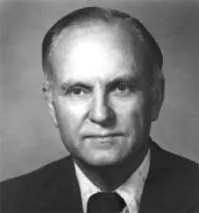
Dr. Sennholz is Professor of Economics at Grove City College, Pennsylvania.
No matter what the politicians may have promised the American people, the new administration faces some hard facts of economic life. Most electioneering promises, if implemented, involve increased government spending for such favored pressure groups as farmers, workers, small businessmen, and the aged. But more government spending necessitates higher revenues which must be obtained from the people.
If the new administration tries to keep its campaign promises, it will have to raise the taxes or incur budget deficits. Judging from past experience, it will do both: close tax “loopholes,” which in plain English means higher taxes on some groups of taxpayers; and rely on deficit financing, which means inflation.
The most popular approach during the last 30 years has been deficit financing, which largely accounts for the ominous depreciation of our dollar. During the Roosevelt, Truman, and Eisenhower administrations, unusual conditions hid the most spectacular effects of inflation from the eyes of the public. The new administration may be less fortunate for, in addition to the presently visible effects of inflation, it is likely to face a gold crisis.
In September 1960, the American gold stock slipped below $19 billion for the first time in 20 years. Since 1958, it has decreased some $4 billion and continues to decline month after month. In addition, foreign banks and capitalists have built up large liquid assets in this country which may be redeemed in gold upon demand by foreign central banks. Foreigners now own in the United States approximately $21 billion of liquid assets. Though we still hold nearly $19 billion of gold, some $12 billion of that is required as monetary reserves under our Federal Reserve Bank laws. This leaves a free gold reserve of some $7 billion against $21 billion of liquid foreign assets.
An Unfavorable Balance of Payments
In popular language, this outflow of gold and build-up of foreign balances is called an “unfavorable balance of payments.” It gives rise to alarm because foreigners may some day decide to ask for gold en masse, which would leave the U. S. Treasury bankrupt in international payments. But some government officials are still disposed to view the gold loss as a passing phenomenon of limited scope because most of the foreign dollar gains are deposited in American banks or invested in American securities.
The popular explanations of this unfavorable balance are often quite superficial. The general public believes that an unfavorable balance is the result of unfortunate circumstances over which the citizens have no control, and that correction of the situation requires government action on an international scale.
The truth is that the flow of gold and international exchange is the inevitable outcome of the monetary policies conducted by the government. A policy of inflation or credit expansion causes an outflow of gold because inflation makes commodity prices rise and short-term interest rates decline. Foreigners purchase less from us and our imports increase. At the same time, short-term capital is sent abroad in order to earn higher interest. Consequently, gold leaves a country until its inflationary policy is abandoned or until it is surpassed by inflation in foreign countries.
The socialists and nationalists are quick to lay the blame for the gold losses on sinister foreign forces that are said to attack the stability of the dollar. The Federal Reserve System is applauded for its valiant defense of the currency against foreign intrigue and speculation.
In reality, the Federal Reserve System is the government engine of inflation that causes the gold losses. The Federal Reserve expands its credit more than the European central banks expand theirs. American prices thus tend to rise more quickly than prices in Europe, and the American interest rates tend to be lower than European rates. Foreigners have nothing to do with the causation of these phenomena. European and American businessmen react alike to American credit expansion. They buy less in the United States and more abroad, and both tend to shift some capital overseas.
On August 1 when the Federal Reserve discount rate stood at 31/2 per cent, the comparative rates stood at 6 per cent in England, 5 per cent in West Germany, 4 per cent in France, and 7.3 per cent in Japan. It is no coincidence that each of these countries was increasing its gold reserves and dollar holdings. From January 1, 1959 to March 31, 1960 (the latest date for which statistics are available at this writing) the United Kingdom gained $159 million in gold and dollar holdings, Germany $291 million, France $783 million, and Japan $522 million.’ So large are the gold and dollar holdings of the German and Swiss banks that both central banks have taken steps to halt the heavy inflow of funds from the United States.
Foreign Inflation Facilitated Dollar Depreciation
Such a turn of events comes as a shock to many American observers. The United States government has expanded credit numerous times and has incurred huge budgetary deficits for some 30 years without the dilemma of embarrassing gold losses. Why could the previous administrations conduct inflationary policies with such impunity?
During the 1930′s, the fetish of cheap money dominated Europe and other parts of the world. No matter what President Roosevelt did to the U.S. dollar, the European governments outdid him. The prestige of the pound sterling went in eclipse when, in 1931, the Bank of England quit paying gold and went off the gold standard. Capital and gold holdings no longer seemed safe in England. Also, France and Switzerland suffered severe gold losses by reason of their currency devaluations in 1936 and the explosive political situation in Europe. The rise of Hitler caused gold to leave Germany until rigid government controls halted all movements. With the outbreak of war and the threat of German occupation, the flight of European gold to the United States naturally accelerated. European chaos and monetary disorder afforded U.S. monetary authorities tremendous leeway for their own inflationary ventures.
For the same reason, the numerous bursts of Federal Reserve credit expansion in the first postwar decade failed to create a dangerous payments problem. The Federal Reserve System in the Truman Administration could expand credit and depreciate the dollar because foreign currency depreciations were even worse. In England, France, Germany, Italy, and Japan, the central banks created credit even faster than did the Federal Reserve, and their governmental trade restrictions were even worse than those of the Fair Deal.
When foreign governments returned to balanced budgets, the situation was bound to change. Foreign currency stabilization and continuous American credit expansion meant that capital and gold would turn away from the United States. In 1957, this turning point was finally reached.
United States Continues Inflation
While more and more European governments endeavored to balance their budgets and took steps toward currency convertibility, the United States government continued its policy of deficit spending and credit expansion. In 1958 and 1959 respectively, the federal government incurred deficits of $7.3 billion and $8.0 billion. The Federal Reserve lowered its discount rate from 3 per cent in January to 13/4 per cent in April of 1958, but felt obliged to raise the rate again later in the year.
Beginning in June 1960, Federal Reserve authorities took several additional steps to ease credit. The discount rate at which the System stands ready to lend its funds to member banks was lowered in two stages from 4 per cent to 3 per cent. Effective September 1, the reserve requirements for banks in New York and Chicago were reduced to 171/2 per cent from 18 per cent. Rules were relaxed as to the amount of cash in bank vaults that may be counted as part of a bank’s legal reserves. These two steps provide commercial banks with more than $600 million of new reserves. The System also embarked upon large-scale open-market purchases of government securities which injected more than $600 million into the economy. A further indication of the resumption of easy money policies is the reduction of margin requirements on stock market credit from 90 per cent to 70 per cent.
The United States government and its Federal Reserve System are firmly committed to deficit financing. Whenever the American economy shows symptoms of economic decline, the government feels called upon to create another boom through deficit spending and credit expansion. This attitude is the ideological cause that is creating and perpetuating the problem of gold losses.
May We Ignore the Problem?
The United States cannot continue a payments deficit of present proportions and lose gold indefinitely. What can and should be done to solve the problem?
Some persons suggest that we merely ignore the problem because gold is an ancient relic for which there is no place in the modern economy. Who wants to sacrifice the government’s autonomy in economic planning for the sake of gold and a given exchange rate?
For the U.S. government to ignore the gold problem is to invite dollar disaster. It is true that our government may temporarily succeed in persuading foreign central banks to ignore the dollar weakness. Through persuasion or gentle coercion it may induce foreign depositors to maintain their dollar balances and refrain from further gold withdrawals. But the foreign banker who heeds the American advice runs the risk of staggering losses in case the U.S. government should suddenly cease gold payments, which would cause the dollar to fall in relation to gold and foreign exchange. And he invites disaster regarding his own career. To protect his own solvency, he must continue his gold withdrawals although he may start a run and precipitate a dollar crisis.
It seems unlikely, however, that the U.S. government can long persuade foreign central banks to ignore the problem. Governments do not trust the integrity and honesty of one another in monetary matters. They learned the lesson in 1931 when the British government abandoned the gold standard and again in 1949 when it devalued the pound. France and Holland, particularly, suffered huge losses on their sterling holdings in 1931 when they trusted assurances of the Bank of England’s Governor Montagu Norman that England would remain on the gold standard. But two days later he suspended gold payment. In 1949, Sir Stafford Cripps, Chancellor of the Exchequer, reassured the frightened public thirteen times of his sincere intention to maintain the official exchange rate, whereupon he suddenly announced a devaluation. These examples illustrate the reasons why governments and central bankers cannot trust each other in monetary matters.
Foreign dollar-holders may remember this lesson and withdraw their capital before it is decimated by an American devaluation or payment suspension. True, their withdrawal might precipitate a sudden run and crisis. But, in the long run, that might be less harmful than a continuation of currency expansion that is hidden and prolonged by dishonest tricks and subterfuge.
A Proposal by the President
It is imperative, some writers concede, that we maintain world confidence in the U.S. dollar and solve our payments problem; we must expand our exports of goods and services to offset our spending.
President Eisenhower had this in mind when he outlined an export development program to assist American exporters in expanding their sales in foreign markets. The government would promote exports through free advice, guarantees, U.S. participation in foreign trade fairs, expansion of export credit insurance by the Export-Import Bank, and other hidden subsidies.
Will such a policy solve the payments problem? Obviously not! The government help may temporarily promote American sales abroad because the public treasury carries some sales costs or reduces the risk to exporters. These subsidies for the benefit of foreign buyers and American exporters may temporarily halt the gold losses. But government payments do not correct the basic maladjustment. If our credit expansion continues and the purchasing power of the dollar further declines, ever larger export subsidies will be required to counteract the basic maladjustment. It is obvious that this must end sooner or later. The subsidy approach is self-defeating, as it necessitates more government spending and deficit financing which is the very cause of the gold losses. In short, an evil cannot be remedied by an intensification of its cause.
The government’s eagerness to help exporters with taxpayers’ money is usually accompanied by an official denunciation of foreign trade policies. Foreign trade barriers and restrictions are blamed for our inability to sell enough abroad to solve our payments dilemma.
This attempt to shift the blame to foreign governments for what is clearly our own government’s making must be rejected. During recent years the industrial nations of the free world have reduced their trade barriers, which partially accounts for their upsurge in production and prosperity. While they were lowering their barriers, we were losing gold, which strongly suggests that we not attribute our losses to the remaining, but reduced, foreign trade barriers.
The government reasoning implies that foreign governments are responsible for our dilemma and that the problem can be solved by foreign freedom of trade on the one hand and by American trade restrictions on the other hand. Although this is a convenient line of official reasoning, it is radically opposed to the truth. It is especially dangerous because it encourages protectionism in the United States. The payments argument together with the argument of higher labor costs in the United States, which allegedly hampers American competition at home and abroad, could lead to a great number of new American trade restrictions. Such a “solution,” however, can only disrupt foreign trade, cause unemployment at home and abroad, and further jeopardize our economic and political position in the free world.
Another imperative for the solution of our payments problem, according to official reports, is that our prosperous allies take more of a share of the West’s responsibility for aid to underdeveloped countries. Our government officials are urging Germany, in particular, to embark upon more foreign aid spending in Asia and Africa to give relief to the U.S. Treasury.
This is poor advice. German handouts to Ghana, Congo, or India can affect the American gold problem only inasmuch as they induce the U.S. government to reduce its spending, balance the budget, and refrain from credit expansion. It is doubtful, however, that any foreign handout could bring about such a change in American attitude. On the contrary, substantial German foreign aid spending would appear to vindicate American spending and encourage our Washington planners to spend even more. Furthermore, foreign aid by their governments would tend to dissipate the economic strength of our prosperous allies and create payments problems for them. Foreign aid spending encourages the recipient governments to embark upon central planning and development programs and, thus, further promotes socialism in the underdeveloped areas of the world.
More Subterfuges
An intensification of our payments problem will bring the U.S. government to crucial monetary crossroads. One road leads to stabilization of the dollar through balanced budgets and credit stability. This road requires the renunciation of a great deal of government intervention. It is the road of individual enterprise and limited government. The other road leads to all-out socialism via a number of interventionist subterfuges designed to make inflation and credit expansion work.
One of these measures is the lowering of the legal reserve requirements. According to present legislation, the Federal Reserve System is required to maintain a reserve of 25 per cent in gold certificates for its note and deposit obligations. As pointed out above, gold holdings are down to $19 billion of which some $12 billion constitute required reserves, leaving a free gold reserve of some $7 billion. If foreign central banks continue to draw heavily against this amount, or if the Federal Reserve should expand its obligations through additional note issue or credit expansion, or if the two things go on simultaneously, the critical point may soon be reached. Under the present law, the Federal Reserve would then be required to contract its credit in order to reduce its obligations.
Rather than face up to a squeeze in that manner, however, the government will probably resort to a subterfuge it has practiced before: reduce the legal reserve requirements from 25 per cent to, let us say, 15 per cent. This would afford the System new leeway for further credit expansion by changing required gold reserves to free reserves.
Such a “solution,” however, would merely intensify the payments problem through temporary continuation of present policies. Itwould shake the world’s confidence in our integrity and probably precipitate the foreign run on the remaining gold.
Another subterfuge in the armory of statist planners is foreign exchange control. This is tantamount to nationalization of all foreign exchange dealings. All exporters would be forced to cede their foreign earnings to the government which would then sell them at arbitrary exchange rates to importers for purchases which the officials deem essential. Foreign money and gold would be rationed according to central plan and official discretion. In a country that depends on imports from abroad, foreign exchange control is naked tyranny of the government over business. In the United States, where foreign trade is less important, foreign exchange control would constitute another important step toward total socialism. Like the reduction of reserve requirements, nationalization of foreign exchange dealings can hardly be assumed to foster foreign confidence; it probably would trigger the dreaded run.
Any government that invites such a run would most likely react to it by suspending gold payments. Blaming foreigners and speculators, it would declare itself incapable of meeting the gold withdrawals. Immediately, the price of dollars in terms of gold and foreign exchange would collapse. Foreign holders of dollars or claims on dollars would suffer severe losses. Though such bankruptcy might solve our payments difficulties, the price would be suicide as a free nation. The dollar would lose its position as a world currency. Foreign confidence in the United States as a free nation and a champion of freedom would be shattered. The resultant inflationary burst here would entail all-round price, wage, and rent controls. In other words, socialism would arise from the ashes of inflation and payments bankruptcy.
Dollar Devaluation Is Inevitable
Another “remedy” of inflationists is currency devaluation. When the outflow of gold reaches menacing proportions, an interventionist government is prone to devalue the currency officially. It suddenly decrees that the price of gold and the value of foreign money have risen in terms of the depreciated dollar. Just as President Roosevelt devalued the dollar in 1933, the new administration will be tempted to devalue again, increasing the price of gold, for instance, from $35 per ounce to $50 or $60.
The effects of currency devaluation are disastrous. Like the payments suspension, dollar devaluation would undermine the economic position of the United States in the world. It would probably usher in price, wage, and rent controls. It would inflict severe losses on foreign depositors and on all creditors, thus penalizing thrift and self-reliance. It would destroy the people’s savings and capital en masse and cause capital consumption. Productivity and standards of living would decline.
Even so, currency devaluation is an inevitable step on the road of credit expansion and unbalanced budgets. No matter how many controls the inflating government may choose to impose on the people, currency depreciation sooner or later necessitates official devaluation, which re-establishes a more realistic exchange rate between gold and depreciated currency.
If our government continues its policies of monetary ease and depreciation, dollar devaluation cannot be avoided. Devaluation constitutes official admission that the dollar has declined in value—proof that the laws of economics prevail over government planning.