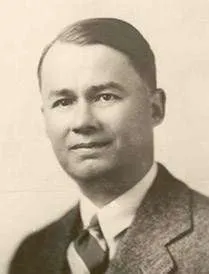
Mr. Chamberlin is a skilled observer and reporter of economic and political conditions at home and abroad. He has written a number of books, has lectured widely, and is a contributor to The Wall Street Journal and many nationally known magazines.
Overestimation of the success of communism in the Soviet Union and in China is becoming the fashionable intellectual disease of the West. Khrushchev’s transparently phony boasts of surpassing the American standard of living in the fairly near future are taken seriously, although as yet no queues have begun to form before Soviet consulates for permanent immigration permits. And it is a rare day when someone does not tell us that, unless American taxpayers put up a big contribution for the (who are somewhat fancifully supposed to keep their eyes glued on comparative production statistics of India and China) will decide that communism is really what the doctor ordered.
Writes the British publicist, former Laborite MP, and hot gospeller of nationalization, Mr. Michael Foot, in a recent issue of The Spectator:
“Like it or not, one of the most spectacular events of our age is the comparative success of the communist economic systems… Considering the tumultuous forty years through which the Russians have lived, the achievement by any reckoning is stupendous.”
And Mr. Foot, who would quite sincerely repudiate the imputation of being a Communist himself, uses the alleged stupendous success of the communist economic system as an argument for his own pet panacea: wholesale nationalization, public ownership and allocation of resources. And not a few Americans are proceeding from the assumption that the Soviet economy has turned out a howling success to the conclusion that America also should have more public direction of its economy and imitate the Soviet Union in other ways, as in greatly extending federal controls and federal expenditures in education.
It is always easy to create a utopian picture of conditions in a country which is imperfectly known, like the Soviet Union, or hardly known at all, like Red China. It is always a temptation to assume, if something is amiss in the United States, that things are better ordered in Russia.
Mere misjudgment of a foreign country is relatively harmless. But it becomes harmful if it leads to ill-advised recommendations for imitation of the practices of this country, without any consideration of the over-all comparative balance sheet.
The Dead Do Not Complain
What about this assumption that the Soviet economy, now in its forty-third year, has fully vindicated itself by its results? First, it might be noted that a good many Russians and other nationals of the Soviet Union are in no position to express an opinion on this question—because their lives were prematurely cut short as a direct result of certain economic and administrative policies of the Soviet government.
Several million people perished in the famine of 1921-22, which was in large part a result of irrational persistence in a system known as war communism, which destroyed peasant incentive to produce by requisitioning arbitrarily whatever the State decreed was his surplus grain. Several million more would have perished if American “imperialist capitalists,” large and small, functioning mainly through Mr. Herbert Hoover’s ARA (American Relief Administration), partly through various religious and philanthropic groups, had not violated all the accepted rules of class war by bringing in food to save Russians, Communists and non-Communists alike, from starvation.
There was another famine in 1932-33 which took at least four million victims. This was even more clearly due to Soviet economic policies than the disaster of 1921-22. It grew directly out of the determination of Stalin to impose collective farming; starvation was the penalty when the peasants cut down production and neglected their fields.
Some ten million persons passed through slave labor concentration camps during a quarter of a century of Stalin’s terrible rule. Here again there was a direct connection with the economic policies which Mr. Foot finds so admirable and successful. For much timber cutting, digging of canals, coal and gold mining, and railway construction was the work of the horribly maltreated, overworked, underfed prisoners in these camps, of whom a large number died.
If one further counts the unknown numbers put to death in paranoid purges, the many victims of the deportations under appallingly inhuman conditions from Poland and the Baltic States, the abnormally high percentage of German, Italian, and other war prisoners who died in captivity, it is evident that the price of the Soviet economic system, in terms of human lives, was fantastically high and incomparably higher than any sacrifice required under alternative systems.
Few Consumer Items
And, even if one puts aside the dead, and thinks only of the living Soviet citizens today, have they so much reason to regard their lot in life as supremely happy? It is true that, by forced development of a state-directed economy along militarist lines, the Soviet Union has developed capacity to inflict formidable damage on the United States or any other enemy—but with the virtual certainty of receiving formidable damage in return. But, as regards the thousand and one little comforts and amenities that, along with such staple needs as food, clothing, and housing, make up a national standard of living, the Soviet Union is easily at the bottom of the list of industrialized powers and shows little prospect of emerging from this position. One might think, on reading some of Khrushchev’s flights of fancy, that “catching up with America” was a reasonable prospect just around the corner.
Actually, the gap between the United States (and the more prosperous countries of Western Europe) and the Soviet Union in almost everything that makes for individual comfort and satisfaction is wide and, in many cases, growing wider. For instance, the number of new telephones installed every year in the United States exceeds the total number of telephones functioning in the Soviet Union. The number of automobiles that will roll off the United States assembly lines in 1960 will surpass the total number on the Soviet roads today.
One subject never mentioned by Nikita Khrushchev when he endeavors to draw favorable comparisons with the United States is bathtubs and plumbing facilities. Here the American lead is so long that one would hesitate to set any date, however distant, for Soviet “catching up.”
Even in those straight figures of industrial output which often bear little direct relation to individual well-being, and where the Soviet showing is apt to be strongest, the lag behind America during the early fifties was in some cases widening, not narrowing. Between 1950 and 1956, the United States lead in kilowatt hours of electricity increased from 298 billion to 483 billion. In oil output, the United States margin grew from 229 million tons to 270 million tons.
Some Progress Inevitable
That the Soviet Union today is enormously ahead of Czarist Russia in most branches of industrial production, although not in agricultural output, is undeniable. But is this not equally true if one looks back to the status of production technique in any industrialized country over a period of forty-two years? Think how American life has been revolutionized in that time by the automobile, the airplane, the radio, and a host of lesser inventions, which either are altogether new or have developed from rare luxuries into everyday possessions.
Moreover, it is a safe assumption that, had there been no communist revolution in Russia, the country, with its vast population, its rich natural resources, its proved ability in science and industrial development, would have moved forward enormously during the last four decades. Maybe some figures of output of coal, steel, machinery, and tractors would not have been so high, although even this is uncertain. But the living of the average Soviet citizen would have been much more comfortable and the grim casualty list from famines, purges, and executions would have been spared.
In Spite of Controls
Conversations with two experienced journalists who were recently in Russia and in other countries of Eastern Europe, one an American, the other Swiss, should dispel decisively Khrushchev’s image of a Soviet Union breathing down the neck of the United States in peaceful economic competition. The American, who speaks fluent Russian and was able to make comparisons with the Soviet Union as he knew it in the thirties, remarked on how little had changed in the villages where half the Soviet population lives: the same simple huts, the same poor roads, the same absence of almost all the conveniences that the American farmer takes for granted. He was also in Bulgaria and reported that the Russian guide, assigned to Soviet tourists in that country, had a hard time explaining why living conditions in Bulgaria were visibly more agreeable than in the Soviet Union.
The Swiss journalist, one of few Westerners who got into this most secluded of the Soviet satellites, obtained the impression that Albania is more comfortable for the foreign visitor than the Soviet Union. He also felt that Poland was far ahead of the Soviet Union in its standard of living. Perhaps it would be more realistic for Khrushchev to set as his goal catching up with Poland and Bulgaria before he tackles a race with the United States.
The Party Line Is Unconvincing
Part of the fascination of communism for some Western minds is that it supposedly supplies all the answers, eliminates elements of doubt and conflict. But this is a false image. The outwardly imposing statue of a monolithic political, economic, and social order has feet of clay.
Consider the implications of a statement put out early in 1960by the Central Committee of the Soviet Communist Party on the great and serious shortcomings in the field of communist propaganda. For more than forty years the Soviet government has enjoyed, in many ways, monopoly control over the minds of its subjects. The schools, the press, the radio have published only official viewpoints. Yet the Central Committee admits, in a statement which is given maximum publicity, that propaganda for the Party viewpoint has “only a narrow sphere of influence,” that it “does not embrace the masses,” that “the merits of socialism and communism are often described in weak terms,” and much more to the same effect.
In short, when propaganda is strongly at variance with the facts of life and human nature, it is apt to backfire.
The very relaxation of the extreme terror which prevailed under Stalin poses new problems and difficulties. For, when people no longer live in dread of the midnight knock on the door, they begin not only to think, but to speak more freely. There is much evidence that Khrushchev has been obliged to walk a narrow tightrope, on the one hand rejecting the crude Stalinite methods, but on the other hand seeing to it that the trickle of permitted liberalism does not become a flood, sweeping away the very bastions of communist dogma.
Another contradiction comes up in connection with the new policy of professing to favor closer cultural relations with foreign lands, exchanges of visits between Soviet and foreign scientists, artists, scholars, students, and common or garden tourists. Here the difficulty, from the standpoint of the Soviet rulers, is to go through the motions of implementing such a policy while preventing the entry of dangerous ideas from the West. Even now, very few Soviet citizens are permitted to travel outside the frontier of the Iron Curtain.
This situation is hit off by a current Moscow joke. A Soviet professor is supposedly telling the members of his class that, as a result of the achievements of Soviet science, they can soon travel to Venus, to Mars, to the moon. “Yes, Professor,” pipes up a timid voice, “but how soon can we travel to Vienna?”
The Situation in Red China
In communist-ruled China there is perhaps a still wider gap between propaganda appearances and living realities than there is in the Soviet Union. Indeed, by comparison with Red China, the Soviet Union could almost be considered an open society.
If one could accept at face value the propaganda “facts and figures” reeled off by communist officialdom and the more ecstatic tales of individuals who return from subsidized trips, China would have to be considered an earthly paradise, and it would be difficult to understand how anyone would wish to leave. But, although there has never been even the semblance of a free election in China or in any country under communist rule, there have been some rather impressive unofficial plebiscites which point in a very different direction.
For instance, about 20,000 Red Chinese soldiers were captured during the war in Korea. Although the United States military authorities leaned over backward to give representatives of Red China full opportunity to urge these men to return to their homes after the end of hostilities, about three-quarters preferred to go to Formosa and take their chance under the nationalist government there. There was an equally significant reluctance on the part of North Korean prisoners to return to their Red-ruled homeland.
When the Chinese Nationalists evacuated the Tachen offshore islands in 1955, they offered the 18,000 inhabitants a free choice: to remain under communist rule or to be evacuated to Formosa.
The option was about 1,000 to one in favor of Formosa.
The British Crown Colony of Hong Kong, an island directly off the coast of China with an adjacent strip of mainland, has an overwhelmingly Chinese population, very much increased by an influx of hundreds of thousands of refugees from Red China. This is an age when the tides of nationalism and opposition to foreign rule are rising high. Britain has faced various forms of anti-colonial trouble in many parts of its rapidly shrinking empire, in Cyprus, in Malta, in British Guiana, for instance.
Had conditions in China under communist rule improved, it would have been reasonable to expect stormy demonstrations in Hong Kong calling for the return of the territory to China. But there has not been even a peep to this effect. And the reason is obvious. The stories of pillage, slavery, and hunger under Red rule, brought by the refugees, have created in the whole Chinese community of Hong Kong a mood of complete willingness to let the British “imperialists” go on running the place.
Lenin remarked once that the Russian Army, at the end of World War I, voted for peace with their feet—by running away. And that is how people have invariably voted against communism, by running away from it, in Asia and in
Europe, in China and Korea, in Germany and Hungary.
The essence of communism, in Russia or in China, is its awesome effectiveness in exploiting the individual by means of the power of a State that is absolutist, in politics as in economics. When the State fixes prices, wages, and profits (in state-run enterprises), the individual is caught coming and going. Such an omnicompetent State beats the progressive income tax as a means of stripping the individual of the chance to direct his own life and of reducing him to the status of a robot serf of the government.
Should the United States be so misguided by the hasty acceptance of the counterfeit coin of communist propaganda as to inject still larger doses of statism into its own economy, the time might come when Americans would be running away from their country at the risk of their lives and when a foreign visitor would find that—although American satellites were touching all points in outer space—the American standard of living was rather inferior to that of Paraguay or Bolivia.