
Court cases try to crack down on deals.
Recent court actions could finally derail one of the most laughable big government regulatory crusades in recent memory.
At issue is a case that the Biden-era Federal Trade Commission brought against Southern Glazer’s Wine and Spirits, the nation’s largest alcohol distributor. The agency alleges that the company violated a 1930s law, the Robinson–Patman Act, by offering larger discounts to retailers that buy in bulk.
The underlying issue is simple: Should the government punish companies for giving consumers lower prices?
Because that is effectively what this case does.
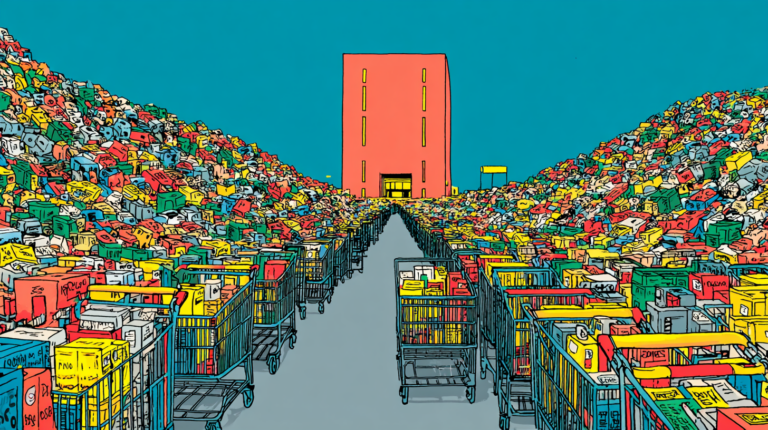
Bulk discounts are the backbone of modern retail. A big reason why warehouse clubs like Costco or big retailers like Walmart have attractive prices is that they negotiate lower prices from suppliers in exchange for large orders. Those savings get passed along to consumers like you and me. That is why Americans can buy groceries, household goods, and electronics at prices that would have been unimaginable a generation ago.
Yet the Biden FTC attempted to use the Robinson–Patman Act—an anti-predatory pricing—to attack that very arrangement.
If regulators succeed in moving this case forward, the result won’t be greater fairness. It will be higher prices.
As Asheesh Agarwal, a former Assistant Director of the Office of Policy Planning at the FTC, wrote on March 27, “the FTC alleges that the distributor violated the Robinson–Patman Act by offering better prices to some retailers than others, harming competition.” However, Southern Glazer’s contends that, “after years of investigation, the FTC still cannot identify a single unlawful transaction.”
Per a March 17 discovery filing, the FTC even admitted as much!
Agarwal summarizes:
When asked whether the FTC could identify any specific diverted customer, an agency witness responded: “The FTC cannot identify any diverted customer. As of today, discovery is ongoing.”
Pressed on whether the FTC could identify a retailer that lost profits due to alleged price discrimination, the same witness admitted: “I can’t identify an instance of a retailer suffering… lost profits as a result of discriminatory conduct by Southern.”
Unfortunately, this war against big-box stores is nothing new.
When they began to expand their presence significantly across the US in the 1980s and ’90s, many people worried these stores would spell doom for locally owned and operated merchants.
After all, the local corner grocery stores and clothing shops, the arguments went, could hardly compete with national chains that were able to stock and sell goods much less expensively thanks to volume pricing. At the end of the day, despite personal loyalty to local business owners, consumers would make their buying choices based on affordability.
But the advent of big-box stores hardly quenched the entrepreneurial spirit. Instead, local businesses found other avenues to pursue—independent bookstores, novelty coffee shops, artisan bakeries, fitness studios, pet groomers, musical instrument stores, and many more have thrived in the new economy.
The number of small businesses has more than doubled across the US since the 1980s, totaling more than 36 million today, accounting for nearly 46% of private-sector employment.
Mom-and-pop stores didn’t disappear—they adapted.
In the meantime, consumers continue to enjoy the lower prices and convenience provided by large national retailers which exist in nearly every community, big and small, offering lower prices and a wide range of choices.
There are thousands of big-box stores covering almost every part of the country. While the numbers fluctuate, one source lists more than 5,000 Walmarts and Sam’s Clubs, more than 2,800 Kroger grocery stores (under various banners), nearly 2,000 Targets, about 2,000 Home Depots, roughly 1,700 Lowe’s stores, and more than 900 Best Buy stores, just to name a few.
While the buying points and strategies may vary, the core business model remains the same. By making purchases in large quantities, major box retailers can negotiate lower per-unit costs from manufacturers. Big-box stores are better able to withstand global market shakeups by absorbing fluctuations rather than immediately passing them on to customers. Customers enjoy wider access to national brands. And by often manufacturing their own store brand versions to compete with popular products, big-box stores help keep national brand prices in check.
That’s why it’s disturbing when government crusaders try to disrupt a successful business model that works for manufacturers, retailers, and consumers. It’s particularly galling when such a disruption comes from an agency charged with protecting consumers.
Fortunately, current FTC Chair Andrew Ferguson, as well as Commissioner Maureen Olhausen, are deeply skeptical of this Biden-era case.
When his former boss, Lina Khan, brought the Southern Glazer’s case forward, Ferguson wrote, “We must exercise sound judgment in deciding when to enforce the Act. We fail to do so here.” Olhausen concurred, writing that the complaint “condemns conduct that is plainly innocuous or even pro-competitive.”
Even better, the FTC, now run by Ferguson, recently threw out a similar case against PepsiCo. The agency under Biden had alleged that Pepsi was violating the Robinson–Patman Act by providing discounts to big-box stores, but Ferguson’s FTC said no.
Now that Ferguson oversees the commission, and now that the legal momentum is on their side, there is a good chance that the Southern Glazer’s case will soon find itself in an FTC wastebasket.
Fingers crossed. Our Costco and Walmart savings may hang in the balance.