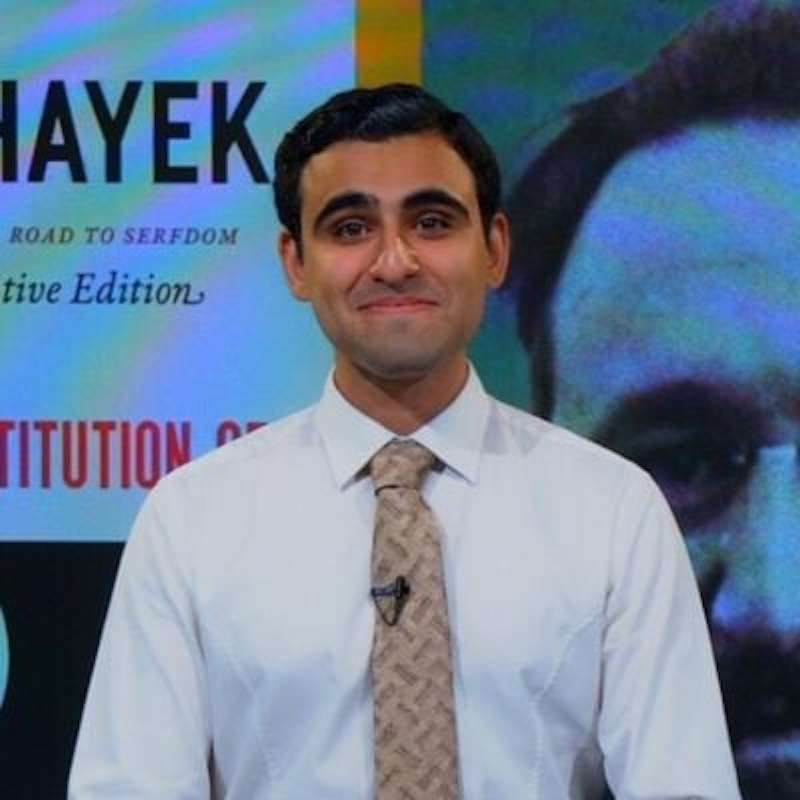
Kevin Warsh, Trump’s nominee for the next Federal Reserve chair, understands how the system works and, more importantly, what is fundamentally wrong with it.
Few macroeconomists have been as influential over the past half century as Robert Lucas. He won the Nobel Prize in economics, and his famous Lucas critique reshaped macroeconomic thinking. In his Presidential Address to the American Economic Association, he declared that the “central problem of depression prevention has been solved.” Five years later, the 2008 financial crisis struck. For a long time, many economists believed that double-digit inflation belonged to history. The Covid era proved them wrong. Recessions and high inflation remain real dangers, not relics of the past. That is precisely why Kevin Warsh, Trump’s nominee for the next Federal Reserve chair, is exactly what the Fed needs. He understands how the system works and, more importantly, what is fundamentally wrong with it.
So, who is Kevin Warsh?
As an undergraduate at Stanford, he worked as a research assistant to Milton Friedman, and he has retained his teacher’s scepticism toward Federal Reserve overreach and intervention in financial markets. Friedman famously suggested that the Federal Reserve could be replaced with a computer. Warsh’s rhetoric about shrinking the Fed follows the same logic: a central bank that tries to do everything—tackle climate change, unemployment, inflation and growth—will succeed at none of them. The Fed is effective only when it focuses on a narrow mandate and delivers.
As Warsh has written, “The Fed has neither the expertise nor the prerogative to make political judgments in these areas.” That applies just as well to the Bank of England. Warsh’s idea of a central bank is one which isn’t on the front page of newspapers (except the times of crisis), it is one that is boring, and only focuses on price stability. He is right to criticise central bank activism. The price of a central bank’s activism is a risk to its independence and responsibility which is paid by consumers with higher inflation.
This is why Warsh matters for the world’s most important central bank. He served as a Fed governor from 2006 to 2011, having been nominated by George W. Bush. His main disagreement with former Fed chair Ben Bernanke concerned the scale and persistence of quantitative easing. What began as an emergency response to a financial crisis gradually became a permanent habit across central banks in the developed world. As Warsh wrote last year, “I strongly supported this crisis-time innovation,” but “when the crisis ended, the Fed never retraced its steps.” An unconventional policy became conventional, vastly expanding the Fed’s role in financial markets. Warsh emerged as one of the most prominent critics of this expansion, and the return of double-digit inflation during the Covid era vindicated his concerns.
Warsh argues that one of the main drivers of expanding government spending and the growing size of the state lies with the Federal Reserve itself. The Fed created the era of easy money, which bred irresponsibility in both government and markets. As Warsh explains, “Members of Congress found it easier appropriating money knowing that the government’s financing costs would be subsidised by the central bank.” When governments know the Fed will always be there to finance deficits, fiscal discipline becomes optional. But the most serious consequences appear in financial markets.
Central banking in the age of easy money has produced a regulatory paradox. On the one hand, large banks are effectively assured that if they fail, they will be rescued as they were in 2008. On the other hand, this assurance encourages excessive risk-taking: profits are privatised, losses socialised. The policy response has been ever-expanding regulation, peaking in the Biden administration. Yet no amount of regulation can solve the fundamental problem created by bailout incentives. This is a classic knowledge problem. Regulators simply do not know how banks and financial firms should behave in all circumstances.
This is why the claim that the 2008 crisis resulted from insufficient regulation is so flawed. It assumes regulators knew when and how the crisis would occur and that, armed unlimited wisdom, they could have prevented it had they possessed more power. The real problem isn’t a lack of regulation, but easy money—the guarantee that large financial institutions will be supported whatever risks they take. Remove that guarantee, and much risky behaviour would disappear without the need for massive regulations.
What Warsh calls for is a regime change inside the Fed: a return to what a central bank should do which is ensure price stability. He is known as an “inflation hawk,” and his prescription is straightforward. The Fed should focus on money, not on inclusive employment, climate change or other political objectives. Central bank independence depends on insulation from politics, and the best way to achieve that is to concentrate on price stability, the purpose for which the Fed was created in the first place. As Warsh and his mentor Milton Friedman both understood, inflation is a choice.