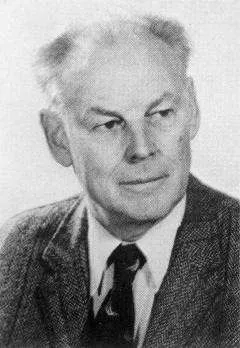
In a delightful foreword to Rene Wormser’s Conservatively Speaking (Wayne E. Dorland Co., Box 264, Mendham, New Jersey 07945, 323 pp., $10.00), Bill Buckley says the author does much of his writing, so to speak, in the subway. Since Mr. Wormser rivals Albert Jay Nock in the art of relevant quotation, it is obvious that a library as well as a subway seat has been involved in the creation of a remarkable book. What Bill is trying to tell us is that Mr. Wormser, a lawyer and estate planner, is the most diligent man alive. Like Anthony Trollope, he can write anywhere. Conservatively Speaking is a Herculean effort to understand every possible aspect of our contemporary muddle, both domestic and foreign. A President of the United States, seeking proper counseling on ways to meet the manifold problems of the republic, could substitute Rene Wormser for an entire cabinet without fear of losing anything in the exchange.
There is art in the composition of Rene Wormser’s book. He begins by telling us how we were misled by liberalism. By this he means contemporary liberalism, not the classical kind. The liberal, he tells us, “shows little faith in the capacity of the individual to take care of himself.” It follows in the liberal’s mind that Papa State must know best: hence the contemporary liberal’s addiction to controls and the quasi-socialism of paternalistically determined transfer payments. Mr. Wormser quotes from some of his own past writings to make his points. He also quotes Milton Friedman.
Mr. Wormser wisely follows his chapter on liberal misleading with discussions of the liberal suborning of education and liberal penetration and control of communications. The quotations come thick and fast here. So do the names. Back in 1905, which was long before Tom Hayden and Jane Fonda started to preach the virtues of “industrial democracy,” Jack London and Upton Sinclair created something called the Intercollegiate Socialist Society, which later became the League for Industrial Democracy.
A Collectivist Bias
The worst of it was that Jack London and his Fabian socialist friends infected our professional educators, from John Dewey at Columbia Teachers College to the authors of the Carnegie Corporation’s report on education for the “new age of collectivism.” The collectivist bias of George Counts and William Kilpatrick, both of Columbia University, has been transmitted to the National Education Association, whose Political Action Committee on Education has a terrifying political clout. Educators with a leftist outlook have trained a whole generation of journalists and TV and radio commentators. The poisoning of the wells of thought has been antecedent to the legislative debacles which Mr. Wormser next considers.
Mr. Wormser deals with ‘tour disastrous inflation” in a chapter that neatly reconciles the thinking of the Friedmanites, who contend that inflation is a purely monetary phenomenon, with the reasoning of Lawrence Fertig, who thinks that the satisfaction of the demands of the big labor unions has something to do with the case.
The Friedmanites are right when they say that it is the politicians who start the printing presses running at the Treasury. But Wormser observes that there are “inflation propellants” (a most felicitous phrase). When labor strikes for wage increases that are in excess of productivity increases, it forces the politicians to give an inflationary boost to the money supply in an attempt to absorb higher prices. Insistence on the government’s duty to create full employment is an obvious “inflation propellant.” So are government interventions of all sorts. Inflation is admittedly a monetary phenomenon, but the politicians would not seize upon it if what Wormser calls the “propellants” were not at work in society.
Wormser thinks a basic “propellant” to inflation was set in motion when we abandoned the gold standard. He quotes von Mises: “The eminence of the gold standard consists of the fact that it makes the determination of the monetary unit’s purchasing power independent of the measures of governments. It wrests from the hands of the economic Tsars their most redoubtable instrument.” True enough, if budgets were balanced, inflation might be contained without going back to gold convertibility. But without the discipline supplied by a fixed standard of value, the temptation to inflationary spending is too strong.
Mr. Wormser’s estate planning specialty enables him to discuss our “egalitarian” tax system with both wisdom and justified passion. Our tax code so thoroughly penalizes savers that it is a miracle that the economic system expands at all. In taking money away from producers, our welfare state shrivels the very tax base that is needed to sustain cradle-to-grave security.
Money paid into the social security fund is dissipated, and taxes must be substituted for the income that should be coming from the investment of State-collected insurance funds. We are now bungling our energy problem by failure to let the market work. And economic hopelessness has something to do with the wave of crime, particularly among those who can’t find employment because of unrealistic minimum wage legislation.
Foreign Policy
On top of our domestic bungling, we have had a disastrous foreign policy. Mr. Wormser thinks we have permitted ourselves to be used by nations more experienced than we. We rushed to pull the Allies’ chestnuts out of the fire in World War I. Woodrow Wilson could not prevent a thoroughly bad peace. His League of Nations could not correct the mistakes of Versailles, and Hitler was the inevitable result. Franklin Roosevelt did no better than Woodrow Wilson—the World War II settlements let Joe Stalin move deeply into Europe. We forswore our own legal heritage when we stooped to Bill of Attainder justice at Nuremberg. This does not excuse the seizure of American hostages by the Iranian “students.” But Nuremberg, in any long-term perspective, means that we do not come into any international court with clean hands,
Wormser is rightly critical of our policy of fighting no-win wars. He thinks we would do better without the United Nations. The U.N. has acquiesced in the separation of East and West Germany. It remained inert while the Berlin Wall was being built. It did not protest the invasions of Hungary and Czechoslovakia by Russian tanks. It has done nothing about Fidel Castro’s Hessians in Africa. But it did take action against Rhodesia, a country that threatened no one.
All through the period of detente we have fooled ourselves. The loss of Iran has left us vulnerable in the oil-bearing Middle East. The West needs the oil of Iran and Saudi Arabia but in pursuing detente the West has allowed itself to fall behind in the armaments needed to defend the oil routes.
In spite of everything Mr. Wormser retains some optimism; after all, we have had a “tax revolt,” at least on the Pacific coast. Rene Wormser is confident enough in his own powers to feel that his own estimable book is not a “vain and futile exercise.”