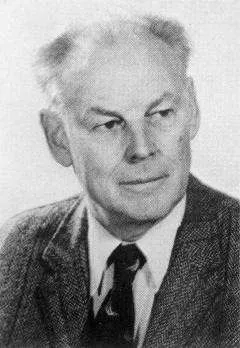
Auberon Herbert’s The Right and Wrong of Compulsion by the State, and Other Essays, edited and with an introduction by Eric Mack (Liberty Classics, 7440 North Shade-land, Indianapolis, Indiana 46250, 426 pages, $9.00 cloth, $3.50 paperback), is an astonishing book to come upon after all these years. What modern libertarians know as voluntarism, Herbert, who died in 1906, called voluntaryism (the “y” in the middle of the word gives it an odd ring to my ear). The creed of voluntaryism, as worked out by Herbert in a busy quarter-century of pamphleteering, speech writing and magazine editing, was thorough and logically convincing. A logical series of deductions from England’s own individualistic theory of natural rights, Herbert’s doctrine should have caused his countrymen to stand fast against the collectivist ideas seeping in from continental Europe. But the more that Herbert wrote, the less influence he seemed to have.
What is astonishing is that his beautifully written and rigorous essays have been quite forgotten. I confess that I had never heard of Herbert until Isaac Don Levine dug him out to present him in a series printed in Plain Talk Magazine of prophets who “saw it coming.” In all these years of Herbert’s eclipse, the fame of Bernard Shaw, H. G. Wells, Sidney and Beatrice Webb and the Fabian Society grew. The English Liberal party, badly infected with the Statism that Herbert decried, dwindled while the Labor Party waxed fat. There was the Beveridge plan for cradle-to-grave security, and the English Tories, Statists themselves, went along with it. How it all could have happened—and, of all places, in the England of John Locke, Edmund Burke, Adam Smith, John Stuart Mill, Richard Cobden and John Bright—is one of the world’s great mysteries. The debacle can’t be blamed on John Maynard Keynes, who was a mere Bloomsbury dandy when the Fabians were riding high.
Not so many years ago George Dangerfield wrote a nostalgic book call The Strange Death of Liberal England. The very memory of Auberon Herbert was one of the casualties of the 1906-1912 period. He was drowned, fathoms deep.
Ideas Live On
Yet every one of his voluntary ideas retains its vitality. The reason is that common sense continues to flow in subterranean channels even in periods of extreme collectivist debacle. Herbert tangled with the British socialist J. A. Hobson, and it is Hobson’s name that has been remembered. Hobson’s theory that the fact of our social interdependence justifies compulsion in the organization of human life has been accepted by all our modern “liberals.” But the Leonard Read who insists that we all have a vested interest in the uncompelled differences of human beings would recognize Herbert as a doughty champion of a truth that should be obvious. Herbert accused Hobson of tricking himself with words. Hobson’s phrase, “the social entity,” is, as Herbert said, a literary creation.
If an individual is molded and formed by “society,” Herbert argued, it can only mean that he is molded and formed by other individuals who are the components of that society. Even supposing that a social entity can exist apart from individuals, the thoughts that the individual thinks act upon the social entity. So what is claimed for one must also be claimed for the other. You arrive at the truism that people influence people. The contrast between society and the individual is an unreal one, for society is individuals. You might as easily, so Herbert says, contrast “pence and pounds.”
Hobson’s strange syllogism consists of a non sequitur: “We all influence each other by words and our writings; therefore we are all to be yoked together under a system of intellectual compulsion, chosen for us by others.” “Literature apart,” says Herbert, “I think Mr. Hobson will admit that it is a bold transmutation of unlike things into each other—voluntary service and the free exchange of influence, passing into universal compulsion of each other, worked by the votes of a majority.”
The Limits of Majority Rule
Herbert’s criticism of the fetish of majority rule is devastating. Why, he asks, should there be any more magic in numbers than in a king, a tyrant or an oligarchy? The accident that three people may prefer one thing while two people may prefer another hardly justifies the rule of the three over the two. If there is common ownership—say of a piece of property—a majority vote is a convenient way of settling differences. But when ownership is not involved, rule by majority vote can be just as tyrannical as rule by a dictator.
Auberon Herbert quit the British parliament because he had been convinced by Herbert Spencer that it was wrong for a majority to try to coerce minorities in the employment of their energies. He was never quite an anarchist, as the word had come to be understood. He believed in the limited state, with the government empowered to use force against individuals who invaded the rights of others. But beyond that, Herbert wanted all things determined by individual action or voluntary association.
He solved the knotty problem of taxes in his own individual way. Mildred McLearn, the modern proponent of voluntary taxation, would be interested in Herbert’s statement that “the power to levy taxes compulsorily seems to me the inner keep, the citadel of the whole question of liberty . . . until that stronghold is leveled to the ground, I do not think that men will ever clearly realize that to compel any human being to act against his own convictions is essentially a violation of the moral order, a cause of human unrest, and a grievous misdirection of human effort.” Herbert advocated letting people finance the government’s few legitimate payrolls (for police, the courts, the sanitary services and the army) by voluntarily trading small sums for the right to exercise the franchise at the polls.
Compulsory Schooling Opposed to Workingman’s Interest
Leonard Read has recently called for a movement to separate state and school as our founding fathers once separated state and church. Examining his “first principles” way back in 1880, Auberon Herbert told the British workingman that he would be “selling his birthright for the mess of pottage” if he accepted the “rate and tax” paid by others to maintain a system of compulsory public education. The compulsory tax-supported school, he said, would allow the rich to intrude themselves into the poor man’s home affairs. The state would be telling the school child’s parents that henceforward “you need have no strong convictions, and need make no efforts of your own, as you did when you organized your chapels, your benefit societies, your trade societies, or your cooperative institutions. We are the brain that thinks; you are but the bone and muscles that are moved.”
Eric Mack, in his introduction, tells us just enough about Auberon Herbert’s life to make us want more. Evidently Herbert could have had a long career in parliament if he had not decided to chuck it to become an advocate of a consistent libertarianism. Such integrity is a rarity in any age. The irony of Herbert’s eclipse is compounded when we contrast his eloquent prose to the jargon-ridden stuff put out by Beatrice and Sidney Webb who, strangely, carried the day with their “inevitability of gradualism”—going, as we must see it now, the wrong way.