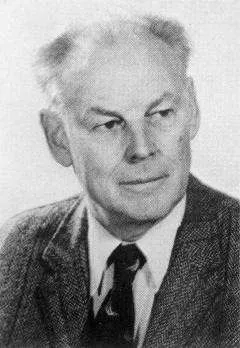
Frank S. Meyer, who writes the fortnightly column called “Principles and Heresies” for the National Review, is totally uncompromising when facing his collectivist enemies. But within the conservative movement he is the great conciliator.
This does not involve Mr. Meyer in legerdemain, but it does require of him considerable deftness in analysis. In The Conservative Mainstream (Arlington House, $8.00), an extremely well-arranged collection of his columns, articles, and reviews, Mr. Meyer is careful to make his own position absolutely clear. He is a “libertarian” more than he is a “traditionalist.” The libertarian, he says, takes as his first principle in political affairs the freedom of the individual. In a free society the power of the state must be limited to protecting the individual in his inalienable rights, as they are menaced from within the nation and from without. Where the libertarian philosophy is strictly applied, the state taxes only to support the police, the courts of law, the military forces, the public services that guard the individual against disease and the invasion of privacy, and the currency that is used in contractual relationships. Mr. Meyer is under no illusions that we live in a libertarian society today, which means that he does not support what passes for liberalism in an age of sloppy nomenclature. He is, in a way, a Whig, but without the nineteenth century Whig’s carelessness about letting a bit of socialism creep into the practical ordering of affairs.
Thinking as he does, Mr. Meyer has often been the target for traditionalist conservatives who think the pursuit of virtue is the only important consideration. Mr. Meyer parries the traditionalist’s assault upon his—and the libertarian’s—position by conceding that it is the duty of all men to seek virtue. But he insists on the need for individual freedom if the pursuit of virtue is to have any human or moral significance. Virtue, if compelled by an unlimited government, is, as Mr. Meyer puts it, a mere “simulacrum” of the good. The virtuous individual must make his own uncoerced choice between good and evil if he is to be something more than a zombie.
Means and Ends
So Mr. Meyer comes to his conclusion that modern conservatism must be a fusion of two different historical streams of thought. Freedom is an end, as the libertarian has always held. But it is an end only at the political level. When the higher ends of the human being are considered, freedom at the political level becomes the means which enables the individual to make his own moral and religious decisions for himself.
Since power cannot be wished out of existence, as the pure anarchist might wish, both the libertarian and the traditionalist wings of the modern conservative movement must insist on the continued relevance of the thinking of James Madison to American conditions. The powers of the central state must be divided and balanced, and the none numerated powers must be left to the voluntary associations where they are not considered to be within the discretion of the local governing unit. The Madisonian would reject both the authoritarian extreme of nineteenth century conservatism and the utilitarian extreme that betrayed John Stuart Mill into socialism in his old age. There is room for “providence,” “honor,” and “valor” in Mr. Meyer’s Madisonian fusion of the conservative and libertarian streams of thought. As Mr. Meyer says, the champion of a freedom that is founded on the “deep nature of man” does not revise Patrick Henry. He does not say, “Give me liberty if it doesn’t mean risking war; give me liberty, but not at the risk of nuclear death.”
The traditionalist conservative who quotes Aristotle against Mr. Meyer’s “fusionist” position runs up against Mr. Meyer’s own superior knowledge of Aristotelian ethics. “In order to be good,” said Aristotle, “one must be in a certain state when one does the several acts, i.e., one must do them as a result of choice and for the sake of the acts themselves.”
From Abstract to Concrete
Mr. Meyer is more willing than most journalists to argue in terms of abstractions. But the bulk of his book applies the abstract “principle” to the concrete instance of modern “heresy.” Thus Mr. Meyer is able to take on such enemies of his own conservative fusionist position as John Maynard Keynes, Robert McNamara, the majority members of Chief Justice Earl Warren’s Supreme Court, Lyndon Johnson, the Kennedys, Senator Eugene McCarthy, the more “New Dealist” of the Republican Party (Javits, Lindsay, Nelson Rockefeller). At the other end of the contemporary spectrum, one finds Mr. Meyer attacking the Populism of George Wallace, who would substitute for the “liberalism” of the Eastern Establishment the tyranny of the majority as “pure will,” untrammeled by “considerations of freedom and virtue.” Wallace is against the modern liberal’s urge to impose a “utopian design” on society. This in itself is good. But in his campaign against the “pointy heads” and the “briefcase toters,” Wallace combines “nationalist and socialist appeals” (he is for the Welfare State in Alabama) and betrays a “contempt for the intellect in all its manifestations.” His “polar opposite” of the modern liberal’s “political perversion” is just another perversion. It is not “true conservatism.”
Naturally Mr. Meyer is very much concerned with foreign policy. He takes communism seriously. Marxism is devoted to the ultimate destruction of capitalism, the bourgeois order, or whatever you want to call the Western way of life. This being true, the confrontation of East and West cannot come to an end without surrender by one side or the other. (The surrender could be peaceful, depending on internal political overturn in Moscow and Peking, or in Washington, London, Paris, and West Berlin.) Since Mr. Meyer is in no mood to surrender, he insists on fighting the Cold War, and even such Hot Wars as the one in South Vietnam, which was forced on us by inept statecraft. If we and our allies are to be overrun by the communists, the opportunity to pursue virtue would obviously be closed to everyone save a few congenital martyrs. There would be no more scope for argument between traditional conservatives and libertarians such as Mr. Meyer; indeed, there would be no fundamental arguments of any type. We would be back in the catacombs, facing a new Dark Age.
Differences Among Friends
Mr. Meyer’s insistence that Soviet intentions are wholly dishonorable leads him into controversy even with some of his generally anticommunist colleagues such as James Burnham. Burnham, as Mr. Meyer sees it, has ceased to be wholly persuaded that Moscow must, by virtue of Leninist doctrine, be committed to an expansionist program forever. This seems to Mr. Meyer to be a repudiation on the part of Mr. Burnham of the old anticommunist position which regards Leninism as inherently imperialistic, and therefore continuously menacing to the capitalist world. Mr. Meyer’s own thinking is that Moscow pursues “co-existence” purely as a tactic. It is aimed at making the Soviet Union’s western front safe, thus freeing the communists to follow a strategy of subversion and the promotion of “people’s war” and “liberation” in the old colonial regions of Asia, the Middle East, Africa, and Latin America.
In the opinion of this reviewer, Mr. Meyer is correct in his assumptions. But surely Mr. Burnham, however he may have nodded in a particular instance, is in fundamental agreement with Mr. Meyer. After all, the author of the Suicide of the West can hardly have gone over to the cause of self-destruction through the lack of eternal vigilance.