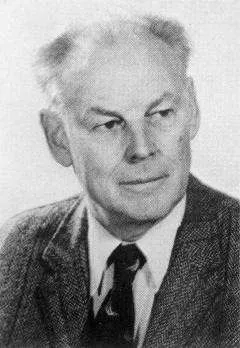
Secretary of Defense Melvin Robert Laird picked himself a good man when he asked Professor G. Warren Nutter of the University of Virginia to become his chief adviser in the Pentagon on the economic potential of those nations which we must assume will be our enemies should any major war develop. The latest proof of Nutter’s soundness as a thinker and researcher is a little book called The Strange World of Ivan Ivanov (World Publishing Co., $5), which contrasts the life of an average head of household in Soviet Russia with that of John Doe, average American.
The book has a score of good features, not the least of which is Professor Nutter’s love for a humorous story. But what makes it really noteworthy is that Professor Nutter is not fooled for a minute about the meaning of the Soviet menace. The Russian economy creaks and groans at every joint; it can’t satisfy human desires for the good life. But this same economy, which turns out a gross national product that is about a third of our own, manages to support a fearsome military establishment. Professor Nutter is able to report both sets of facts, the economic and the military, to his boss, which means that nobody in high executive place in Washington should be misled about Soviet capabilities.
Ivan Ivanov, the Russian common man, gets the short end of the stick precisely because his rulers regard intercontinental ballistic missiles, an ABM system, submarines, tanks, MIG planes, and a huge standing army as top priority matters. But it is an old story that totalitarian governments can only produce for war. You can’t plan to produce for peace, for peace assumes almost as many personal objectives as there are human beings. One man will want a car, one a special kind of house, one the leisure to go fishing instead of behaving like an economic man. There is no way of catering to this sort of thing except by a free market system, which, by definition, a totalitarian state cannot tolerate and still hold on to its monopoly of power.
Being a Mont Pelerin economist, Warren Nutter understands this thoroughly. He isn’t surprised that the Soviet economic strength, or lack of it, is a poor gauge of its military power, and vice versa. He tells a story about a Western military aide watching a Soviet aircraft battery in action in World War II. The man was fascinated by the accuracy of the guns and the skill with which they were handled. When the action was over, the aide tried to light his pipe with Soviet-made matches. A dozen of them broke. Throwing the remaining matches to the ground, the exasperated fellow turned to his companion and asked, “How can people who make and man guns like those produce matches like these?”
This is the Soviet economy in a single joke. It’s something to worry about in war. But it will never, never catch up with the West in times of peace.
Tied to the Land
Agriculture in Soviet Russia is incredibly inefficient. It uses a labor force nine times that of ours, yet manages only to produce an output some 70 or 80 per cent as large. There are one hundred acres of arable land for every tractor in America as compared with four hundred in Russia. The Soviet peasant keeps the Russian cities fed from his little private plot, which he is permitted to keep by a Communist Central Committee that knows famine always follows when the private plots are abolished. Countrymen in Russia are not permitted to move into the cities without special permit; if they were not, to all intents and purposes, serfs, bound to the soil as much as any peasant in the times of the czars, there would be a mad rush to get out of the villages. Only the industrial workers in Russia are allowed to quit their jobs. The result is an annual turnover of 22 to 30 per cent. The Soviets can’t admit there is any unemployment, since everyone is supposed to work. But in the large cities there is actually an unemployment rate of 8 per cent, while 25 to 30 per cent of the population are normally without jobs in the small and medium-size cities.
The “general welfare” of Ivan Ivanov is a travesty of the phrase. By our standards, says Professor Nutter, Ivan lives in a slum and enjoys a standard of life half-way up to the U.S. poverty line. The U.S. has 1.4 automobiles per family; the Soviets have two cars for every 135 families. In America there are 480 telephones per thousand persons; in Russia the figure is 30 per thousand.
How Freedom Is Curbed
Material wealth, of course, is not everything. But Ivan Ivanov does not enjoy the blessings of liberty in his slum. If he wants to write, he is up against a state monopoly of everything from newspaper presses to book publishing companies, to say nothing of the forests that provide the material for paper. Russian authors who permit their work to be published abroad without Central Committee permission are still jailed, even as in the days of Stalin. If Ivan Ivanov wants to join his fellows in a crowd, it had better be for a government purpose, such as demonstrating before the Red Chinese Embassy or assembling on May Day to watch the soldiers file past.
Attendance at church is permitted; but if Ivan Ivanov is not an atheist, he can’t hope to join the Communist Party. Ivan has a democratic right to vote, but the candidates he is asked to support are all designated by the government. Ivan’s son goes to school, but his textbooks are centrally selected, and his literacy permits him only to read the party press and such ancient classics as are deemed politically safe. (He can, of course, listen to foreign broadcasts, but he had better not acton anything he hears.) Since neither Ivan nor his son can have any private property beyond a few bonds and personal effects, no private defenses can be rigged up against the state.
The upper classes in the Soviet Union, meaning the big bureaucrats, army officers, and party functionaries, get the best of everything, from country villas to choice seats at the ballet. But Ivan Ivanov can only look at the good things of life from afar. He must shop at the state stores, he must apply for housing from the state, he goes to state schools for education. If Ivan Ivanov lives in a city, it will be in a space that is unbelievably confined. On an average, there are 2.3 persons living in each room in the Soviet cities.
So it goes inside Russia. It is small wonder, then, that the satellite countries such as Hungary and Czechoslovakia hunger to return to their old Westward orientation. The Soviets are bound to extend their tyranny outward, or the communist bloc would completely disintegrate.
If it were just a matter of economic competition, the West would have nothing to worry about. Unfortunately, the Communists know how to subvert. And they have achieved “nuclear parity” with us, which means that we can’t laugh them off.
EDMUND BURKE: A GENIUS RECONSIDERED by Russell Kirk (New Rochelle, N. Y.: Arlington House, 1967), 255 pp., $5.
THE SPECIOUS ORIGINS OF LIBERALISM: THE GENESIS OF A DELUSION by Anthony M. Ludovici (London: Britons Publishing Company, 1967), 192 pp., $4.
Reviewed by Edmund A. Opitz
No book about Burke is a substitute for reading the man himself; but it is helpful to have a manual which supplies a ground plan, so to speak. We need to know something about Burke’s life and career; his education, intellectual lineage, and major preoccupations. Russell Kirk has written a fine primer, which may also be read with profit by anyone wishing to assess Burke’s contribution to the stock of Western thought about man and society. Burke’s genius was evoked by the events which engaged his professional political interest; by the growing tension over the American Colonies, by the British in India, and especially by the revolutionary events in France.
Burke was a public man and most of his literary efforts were in the form of speeches occasioned by issues which no longer concern us; but to the examination of these issues Burke brought a powerful mind, a set of enduring principles, and a richly stocked background of historical knowledge. His Speech on Conciliation with the American Colonies is part of our history, and so is the Speech on American Taxation; but they are of more than historical interest. Viscount Morley once observed that these two speeches, plus Burke’s Letter to the Sheriffs of Bristol, “… comprise the most perfect manual in our literature, or in any literature, for one who approaches the study of public affairs, whether for knowledge or for practice.”
Then there is the long and prescient work on the French Revolution. Many people, then and now, view the upheaval in France as a movement of emancipation, and Burke, too, championed liberty. “It is our inheritance,” he wrote. “It is the birthright of our species. We cannot forfeit our right to it but by what forfeits our title to the privilege of our kind.” Why then did he oppose the French Revolution with all the vigor at his command? Because he viewed these events as unleashing a set of ideas which are hostile to liberty. Majoritarianism or popular sovereignty appears to remove the old shackles which have hamstrung “the people,” only to replace them with new restraints on individual persons—in the name of “the people”! Thus emerges totalitarian democracy with tyranny over each in the name of all.
Burke opposed the theoreticians who regarded society as a mere mechanical arrangement of parts, to be disassembled at will and slapped together again according to some late model speculation. He did not, however, slip into the opposite error of supposing society to be an organism; but society is somewhat analogous to a living thing in that social change is not to be accomplished on the instant by a kind of surgical transplant technique. We of the modern world have had sufficient experience with revolution, one would think, to know that this crude method at best gets rid of a few rats by burning down the barn. People are involved in any kind of social change; and if persons are not to be violated, development and progress in society must be accomplished prudently and by almost imperceptible degrees under the radiating influence of ideas. This insight, and the patience that goes with it, is what Burke instills in a reader.
If we were to paste today’s label on the system Burke opposed it would read “Liberalism.” This body of doctrine has been ably criticized in recent years, but Mr. Ludovici manages to drive in a few shafts from his own unique perspective. This man, in his ninety-first year, and with a score of books behind him, is a much neglected thinker. He’s an aristocrat who is critical of European aristocracies, an artist who has watched the world grow uglier, an individualist in an age of mass man. The modern world will not like what this gifted man says about it, which is one measure of the importance of hearing him out.