The World of andrew Carnegie
If you scratch a historian, you find a politician. At least that’s the way it’s been ever since the New Deal and the New Economics conquered the academy. Arthur Schlesinger, writing about the Age of Jackson, couldn’t resist imposing the face of Franklin D. Roosevelt on Old Hickory. Hard Money and Free Enterprising Democrats of the eighteen thirties were turned into partisans of the New Frontier and the Great Society. William Graham Sumner, who attacked the plutocracy of his day and actively opposed the Spanish-American War, was transmogrified by our Richard Hofstadters and our R. G. McCloskeys into a Social Darwinist and an imperialist. The Populist tracts celebrated in Vernon Parrington’s Main Currents in American Thought figured in a whole literature of the nineteen twenties and thirties as the Wave of the Future. So it has gone for two or three historiographical generations.
The rage to turn the past into the present has made for lively controversy, and helped many a man to a Ph.D. No doubt it is a sure cure for unemployment in Academe, for, if the past has always to be made over into a blueprint for what is going to happen next week, it means that the history books must be changed every decade. But what happens to the Exterior View in all this chopping and changing? How can we treat our ancestors with simple understanding of their own reactions to their own contemporary problems? How can we read reality into their economics, their morality, their religious feelings?
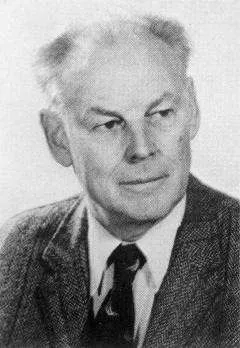
In his The World of Andrew Carnegie: 1865-1901, Louis M. Hacker has addressed himself to the tremendous task of explaining the most symbolic of our nineteenth century competitive enterprisers in terms of the intellectual and moral forces that beat in upon him. This isn’t designed to be a history of the Carnegie Steel Company, though you will find such a history in it. What Louis Hacker has done is to reconstruct the ethos of an era, giving us long and detailed sections on what was being said and done by judges and law courts and labor organizers and farmers and railroad men and bankers and schoolteachers and clergymen to enforce the so-called Puritan ethic of nineteenth century America. The socialists and anarchists are here, too, but mostly as a premonitory growl off stage. Hacker does not overestimate their importance as of the eighteen eighties merely because America became something else after Andrew Carnegie had passed from the scene.
Behind the Cliches
The ground-breaking importance of Louis Hacker’s book derives from the author’s willingness to get behind the clichés of a full half-century of historical writing. We have been told often enough that the development of the United States in the post-Civil War period was achieved at the expense of the farmers. This is the Populist version of history. The farmer, so the legend runs, sold his product in a world market at low prices and bought his machinery in a protected market at high prices. To continue the legend, the railroads rooked him with high freight charges. Moreover, since the railroads had cornered much of the best land, getting alternate sections as free gifts along their rights of way, the farmer supposedly couldn’t add to his acreage without mortgaging himself to the hilt. With the cards stacked against him, the farmer had to go into politics. He created his Farmers’ Alliances, his Granges, his Populist Party organizations —and eventually captured the government in Washington when the old Populist platforms were taken over by the New Deal.
The only trouble with this history, as Louis Hacker shows, is that it doesn’t fit the facts. True enough, we had high tariffs in the late nineteenth century. But the U.S. market was so big and so wide, and there were So many competitive units, that the tariff did not have much effect on the price level once American companies had grown beyond the “infant industry” stage. By 1880, says Hacker, the U.S. was making more Bessemer rails than Great Britain; by 1890, more pig iron; and by 1895, our prices for both were lower than those of the British. While industrial prices in this country were dropping in the 1870-1900 period, the value of America’s farm plant — in land, buildings, animals, implements, and machinery — increased 104 per cent in constant dollars as compared with 24 per cent for 190020. The Gross Product per farm worker increased 60 per cent in the four decades following the Civil War.
Agrarian Mythology
As for land, it isn’t true that the railroads made a killing at the farmer’s expense out of the domain they got for next to nothing. The railroads did everything they could to promote settlement of the West, establishing land departments and selling their land grant windfalls on easy terms. Meanwhile, freight rates went down along with the interest rates charged by the banks. If the growth of check money is made part of the post-Civil War equation, there was an expanding currency throughout the whole period of squawking about the demonetization of silver and the desirability of retiring the Greenbacks.
Since Louis Hacker can quote yards of statistics to bear him out, how are we to account for the agrarian radicalism that colored the latter years of the nineteenth century? Mr. Hacker points out that the old Middle Border states — Wisconsin, Illinois, Michigan, Indiana, Ohio — did not go for the Bryanite nostrums. Populism, which swept the Mountain States, the High Plains states, and the South, had special causes that were bound up with the drought cycle in the treeless plains and the crop lien system wherever cotton was grown. The western farmer went into politics because he was a disappointed speculator. He had sold his Indiana or Iowa land for a high price and had moved out into western Kansas or Dakota in hopes of repeating his real estate killing. But the drought cycle caught up with him in the late eighties. The U.S. Army engineer and geologist, John W. Powell, had predicted the return of drought conditions to what had once been called the Great American Desert, and Powell was a true prophet. When the rains ceased to come after 1887, the speculator farmers streamed back East to complain to the politicians.
The disappointed land speculators found eager allies in the western silver mine lobby and among the tenant farmers of the South. The villains, of course, were the Gold Bugs, the Wall Streeters, the “international bankers.” The cry went up that only a national circulating medium that amounted to $50 per person would prevent depression. But, as Louis Hacker shows, there was no dearth of money in a country in which “the steady increase of bank deposits and of the substitution of checks for notes kept the total money supply at a high level.” Bryan failed in 1896 because the country saw through the Populist delusions.
Remarkable Progress
The Hacker conclusion is that there wasn’t very much the matter with America in the post-Civil War period. Competition had served the public well. The “robber barons” took their profits, but these were plowed back into industry — and “the American people and the American economy were the real gainers.”
The facts being what they were, it is small wonder that the American Federation of Labor, which believed in pushing for higher wages that would have come with increased productivity anyway, should survive where the more Marxian labor movements expired.
Mr. Hacker fleshes out his story of Carnegie’s world with a wealth of fascinating detail. There are beautiful biographies of jurists (example: Supreme Court Justice Stephen J. Field), of sociologists (William Graham Sumner), of Populist radicals (Ignatius Donnelly). There is a whole section devoted to the growth of the Carnegie steel companies up to the time of their merger with the Morgan-Gary-Moore companies to make up the United States Steel Corporation.
With the growth of Big Government, everything has been changed. Mr. Hacker doesn’t think the modern world is necessarily an improvement on the world that created Andrew Carnegie. But whatever our opinions may be, Carnegie’s world deserves a more patient understanding than it has received from our recent historians. Mr. Hacker has written a great book that will become more definitive as our perspectives clear.
THE BALANCE OF PAYMENTS: FREE VERSUS FIXED EXCHANGE RATES by Milton Friedman and Robert V. Roosa (Washington, D. C.: American Enterprise Institute for Public Policy Research, 1967), 200 pp., $4.50.
Reviewed by Mary Jean Bennett
Our gold position and the precarious situation the dollar is in are effects, not causes. They are the consequences of unsound fiscal and monetary management that has been going on for not less than two decades —management that has been very deceptive and illusory to the American people, even to those in responsible private business and financial positions who should have known better than to subscribe to or to condone what was being practiced. Now ironically it is pressure from the outside that is exposing what we should have realized from the inside long ago.
What happens to the official value of the dollar is not what should be worrying us most. What De Gaulle and others do to our gold supply is superficial. Rather we should be vitally concerned (genuinely worried) with why the official value of the dollar is threatened contributions. In addition, there has been a rising tide of payments controls ranging from the Interest Equalization Tax legislated in 1963 to Congressional questioning in 1968 on whether Aunt Louise from Des Moines should be quite free to travel abroad this summer.
ARTHUR H. SMITH, Senior Vice-President and economist of the First National Bank in Dallas, from a guest editorial in The Dallas Times Herald, March 17, 1968.
The plight of the dollar, as mirrored in the great international money crisis and long persistent U.S. balance of payments deficits, has aroused all manner of debate and actions such as removal of the 25 per cent gold cover from our currency, curbs by the President restricting private overseas lending and investing, and possible restrictions on foreign travel.
Debate has ranged from protectionism to cutting loose from gold altogether — i.e., letting the exchange rate of the dollar seek its own level, “floating” among the currencies of the world.
The issue of fixed versus floating exchange rates was skillfully debated at length last year in a public forum sponsored by the American Enterprise Institute for Public Policy Research. On the rostrum were two articulate and highly knowledgeable debaters: fixed-rate defender Robert V. Roosa, former Under Secretary of the Treasury for Monetary Affairs under Presidents Kennedy and Johnson and now a partner of Brown Brothers Harriman and Company in New York; and floating-rate defender Milton Friedman of the University of Chicago, former president of the American Economic Association, adviser to Goldwater during the 1964 campaign, and now a columnist in Newsweek.
Both Roosa and Friedman bemoan the accumulated U.S. payments deficit of more than $37 billion since 1950. This tremendous sum has been financed by payments from our gold stock, down by more than half to less than $12 billion, and by a vast build-up in short-term dollar liabilities, up to more than $30 billion. These claims could easily withdraw all the remaining gold in official U.S. monetary reserves — given further breaches of foreign confidence in the dollar.
The accumulated deficit also has been “covered” by complex and oftentimes unpublicized central bank arrangements including currency swaps, “Roosa bond” flotations, and London gold pool.
At this point, the two debaters part company. Roosa is a defender of the status quo, of the current fixed rate system, of what the Administration has done to plug the payments gap. He comes out foursquare for a new international “paper-gold” currency unit to help expand international liquidity and sustain growing world trade. (Since the debate, Roosa’s successor, Treasury Under-Secretary Frederick L. Deming, has also endorsed without reservation the new Special Drawing Rights (SDR’s) authorized by the International Monetary Fund meeting in Rio last September.)
Professor Friedman, deft innovator and free market exponent that he is, wants a sharp break with the status quo. He blames the persistent U.S. balance of payments deficits on fixed exchange rates, on what he calls bureaucratic price fixing. He holds that currency exchange rates should become free market prices determined primarily by private dealings the world over. He argues that the payments problem would yield to floating exchange rates because there could not be a surplus or a shortage in the sense of eager buyers unable to find sellers or eager sellers unable to find buyers; fluctuating prices would stir the necessary eagerness. In addition,
Floating exchange rates would put an end to the grave problems requiring repeated meetings of secretaries of the Treasury and governors of central banks to try to draw up sweeping reforms. It would put an end to the occasional crisis of producing frantic scurrying of high governmental officials from capital to capital, midnight phone calls among the great central banks lining up emergency loans to support one another’s currency.
To put it mildly, Friedman’s position doesn’t sit well with Dr. Roosa. Fixed-rate defender Roosa, while conceding the fixed-rate system is far from a perfect model, says that at least it provides an established scale of economic measurement, easily translatable from one nation to another, enabling merchants, investors, and bankers of one country to do business with others on known terms — knowing, for example, with reasonable accuracy just how many Japanese yen would be equivalent to one Swedish kroner or one Mexican peso.
In other words, contends Dr. Roosa, without fixed exchange rates international trade and investment would deteriorate. Merchant, investor, banker, and foreign exchange dealer would grope for the exchange rate that would enable them to make workable economic calculations. Uncertainty would foreclose many a deal. Hedging through forward exchange transactions would be all but impossible because no exchange dealer could handle wild currency swings.
“I am very much afraid,” says he, “that the rate for any currency against all others would have to fluctuate so widely that the country’s own trade would be throttled and its capital misdirected.”
Friedman rebuts, pointing to the stable Canadian currency experience from 1950 to 1962 when the Canadian dollar “floated,” and to the increasing financial chaos caused by the “voluntary” investing-lending guidelines of President Johnson (further aggravated since then by the new mandatory controls announced on New Year’s Day). Clearly, Friedman gets the upper hand in the argument.
So the brilliant debate goes, pro and con, rebuttal and counter-rebuttal, including some incisive questioning of the intellectual adversaries themselves by competent forum participants. One question overhanging the debate like the sword of Damocles was not raised but maybe its answer was too obvious. That question is: Whither the dollar?
THE LAST HERO: CHARLES A. LINDBERGH by Walter S. Ross (New York: Harper & Row, 1968), 402 pp., $7.95.
Reviewed by Robert M. Thornton
Charles Lindbergh has been in the public eye since 1927 when he piloted a single engine plane nonstop across the Atlantic from New York to Paris. A tragic kidnapping case five years later brought unwanted publicity; and during the period just before Pearl Harbor Lindbergh was involved in the controversy over American foreign policy. These things most of us know, but there is much more to Lindbergh’s life than has appeared in the headlines.
There is, for instance, Lindbergh’s pioneering work in the early days of two modern-day wonders: organ transplants and space travel. Lindbergh worked with French scientist Alexis Carrel during the nineteen thirties in the development of a perfusion pump to keep organs alive outside the body. He was helpful also in securing financial backing for Robert Goddard’s experiments in rocketry and offered much-needed encouragement to the neglected inventor. And all the while Lindbergh has been an enthusiastic promoter of aviation science, choosing to earn his pay as a commercial airline consultant rather than seeking a big salary for the use of his name. His goal has ever been real accomplishment, not mere fame and fortune.
Ross called Lindbergh “the last hero” because the flight across the Atlantic was so much a one-man feat. Lindbergh raised the money to finance the flight, helped to design and build his plane, The Spirit of St. Louis, plotted his own course, provisioned his plane — planned the entire trip with remarkable care for detail. No disparagement of today’s astronauts is intended, but they can function only as members of a huge team backed by billions of dollars in taxpayers’ money, corps of technicians, and batteries of computers. And Lindbergh was a hero because years of adulation did not shake his integrity. Nor did strong opposition prevent him from relying on his own judgment, even at the risk of his life. We can better understand his spirit of independence after reading how he was raised. Lindbergh senior believed a youngster should learn responsibility at a tender age, and young Charles was encouraged to act on his own initiative.
Contrary to his public image, Lindbergh is not withdrawn or aloof. In the weeks after his solo flight to Paris, when he was almost held in reverence by everyone he met, a flying buddy from early days delighted him by a bit of roughhouse after Lindbergh had accidentally sent him tumbling. How much better this, said Lindbergh, than to be treated like royalty. And, too, Lindbergh was fond of pulling practical jokes on his friends and family. Here was a warm, sensitive human being forced by the poor taste of reporters, columnists, and newspaper readers to resort to all sorts of subterfuges so that his family might enjoy privacy and live a fairly normal life.
Lindbergh was one of the best-known members of America First, an organization opposing American entrance into World War II, but he put aside his objections once this country had entered the conflict. Lindbergh’s opposition to the war had made him persona non grata with the Roosevelt administration, and he was refused a commission in the Air Force. However, a plane manufacturer did take advantage of his talents, and Lindbergh, in order to do a good job advising his employer, actually flew fifty combat missions in the Pacific Theater as a civilian! He was then in his forties —an old man among fighter pilots —but he was a skillful pilot and his experience and knowledge proved invaluable.
A people cannot survive without heroes, and it cannot flourish unless its imagination is captured by heroes of the right sort. America has had its share of such men, and Lindbergh would be the first to say that more are yet to come.
