Public and Private Enterprise
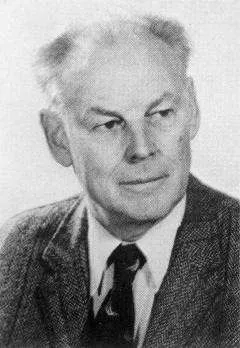
In addition to being a good economist, John Jewkes, the eminent Professor of Economic Organization at Oxford, is a man with an exquisite taste for historical irony. His Public and Private Enterprise (University of Chicago Press, $2.25), which is made up of his Lindsay Memorial Lectures given at the University of Keele, invokes Alexis de Tocqueville at the beginning. But it is not to hail the many prophecies of that remarkable Frenchman which happened to come true. Rather it is to quote from one of Tocqueville’s rare historical mistakes.
“Everywhere,” so Tocqueville said of the eighteen thirties, “the State acquires more and more direct control over the humblest members of the community, and a more exclusive power of governing each of them in his smallest concerns…. Diversity, as well as freedom, are disappearing day by day.”
This was written at the time of the Jacksonian revolution in America and the movement toward free trade in England. Far from “disappearing” in the eighteen thirties, “diversity” and “freedom” were just about to take off on the grand flight that was to make the nineteenth century such a wonderful period. What Professor Jewkes is intent upon establishing is to show that Tocqueville was right in retrospect if wrong in prospect, for the world previous to the eighteen thirties — the world of mercantilism and emperors who said “l’etat, c’est moi” — was indeed a world in which diversity had a hard struggle. For just about a hundred-year span after 1830, history was to reverse itself. But now, as Professor Jewkes laments, Tocqueville’s words might correctly be applied. “Everywhere, and not merely in Socialist countries,” says Jewkes, “that part of the national income taken in taxation; of the working population employed by the State; of capital expenditure incurred by public authority, have all been on the increase over the past thirty or forty years.”
Professor Jewkes does not expect a powerful reversal in social and political thinking that will change things. All paths, he says, “seem to lead to wider government responsibilities.” Professor Jewkes doesn’t like the contemporary intellectual atmosphere, but the noteworthy thing about his Lindsay lectures is that they don’t tangle head-on with prevailing dogma. Instead of affirming fundamental doctrine, Jewkes suggests a rather pragmatic cost-effectiveness approach to affairs. He speaks of the lessons to be drawn from “the case-by-case method.”
And so, without any fanfare about basic principles, or the philosophy of freedom, we get down to Professor Jewkes’s cases.
Jewkes on Education
Education is one thing that concerns Jewkes. He wonders about the “rate of return” to the community from the push to eradicate the college drop-out problem. The cost-effectiveness of trying to force-feed the expansion of university training is questionable. Says Jewkes, “A person who is trained as a doctor instead of becoming, say, a carpenter will presumably show higher earnings in consequence. But if many more doctors were trained, the earnings of doctors themselves, including the existing doctors, would fall. It is conceivable that the total earnings of all doctors might decrease. Would the rate of return on investment in education then be considered negative?”
This is the sort of dryly ironical skepticism that pervades Professor Jewkes’s book. He doesn’t like the accent on using the schools to solve problems that seem to demand immediate attention. For when a drive is on to educate more people in, say, industrial design or the commercial use of foreign languages, the stress on specifics may “tend to drive out of the curricula those broad subjects of study which no one can defend as having direct relevance for economic expansion but which contribute much to general intelligence and the instinct for orderly living without which economic achievement would be inconceivable.”
Jewkes likes generalists. But not when the generalists are conformists. “University education, even at its best,” he says, “tends to bring about conformist thinking; for Universities cannot operate without standard tests and procedures.” Jewkes has no good answer to the problem of battling conformity, but he does at least raise the question “of providing leisure and resources by which the young can learn in their own ways and pursue their eccentricities.”
Curiously, he is very skeptical of the value of spending huge sums on “research and development.” “If we take the United States alone,” he says, “where the statistics are most complete and where research expenditure has reached astronomical levels, the annual percentage rate of growth in industrial production is not higher than it was half a century ago. The number of patents taken out in that country have not been increasing.” Jewkes wonders at the fact that “Japan, which shows the most impressive rate of economic growth in recent years, has not engaged in research and development on any extraordinary scale.” On the basis of Jewkes’s evidence one would have to say that endowing a young man with funds and sticking him in a fancy laboratory is not necessarily the way to enable him to “pursue his eccentricities” in a fruitful manner.
The conclusion to be drawn from Professor Jewkes on the subject of education is that the state might pay less attention to it without any adverse effects on the body politic. But Jewkes doesn’t belabor the point.
Other Governmental Failures
The cost of a National Health Service is another subject which Jewkes inspects in his dryly ironical way. He concludes that a free national service paid for largely out of general taxation “not only discourages people from paying privately for their medical services but leads them to be content with a service of lower quality than they might otherwise have been prepared to pay for.”
Professor Jewkes does not attack the prevalent idea that “the outstandingly successful new function of government in our time has been the maintenance of full employment.” Instead, he remarks on the “happy-go-lucky fashion” in which governments have accepted this new responsibility. “Persistent inflation” has been one result of carelessness. Government intervention to wipe out “massive unemployment” may justify itself to Jewkes “on the critical counts,” but the “recent efforts of governments positively to engineer economic growth have been among their most palpable failures.”
A Case for the Free Market
Instead of going minutely into the failures of government-fostered “growthmanship,” however, Professor Jewkes ends his lectures by making a case for the “free market as a strong civilizing influence.” He thinks capitalist publishing has done more to civilize people than anything that socialists have done anywhere. The paperback book, he points out, “was devised and has been spread over great markets by men looking for private gain. The interest in great music has been stimulated in recent years by many inventions but especially by the long-playing record and refined devices for reproducing sound, which were invented in the laboratories of commercial firms and widely distributed by many firms in vigorous competition. The sense of form and colour has been fostered all over the world by the opportunity of amateur activity and experiment through the cheapening of the camera.”
If our young are really looking for a man who questions all the cliches, Jewkes should be their prophet. He is not as flashy a phrase-maker as Galbraith, but he is a far more effective critic of what has become the new “conventional wisdom.”