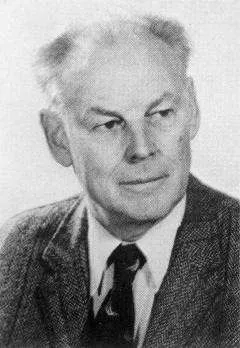
Man Of Letters
To those of us who cut our intellectual eyeteeth in the early nineteen twenties, Albert Jay Nock’s Freeman was a great liberator. It was not that one necessarily perceived a marked degree of clarity about fundamental philosophy behind it, for its contributors included socialists and planners along with Single Taxers and freewheeling libertarians. The sense of gay exhilaration that pervaded it, however, suggested that the editor was a self-starter—and when, in the middle of the nineteen thirties, Nock published his Our Enemy, the State, his devotees were blessedly open to entertain the idea that Mr. Roosevelt’s New Deal was basically a trap. In retrospect one could see that The Freeman had been the great conservator of the idea of voluntarism: even its hospitality to socialist writers was to be understood as a civilized gesture to the First Amendment. Nock as editor had had his basic point of view—but aside from that he was willing to let well-written arguments proceed.
Nock, of course, had been a Single Taxer, which seemed to some of us to be neither here nor there in a country in which an abundance of land was traded on the open market and thus could hardly be engrossed. But the Single Tax was Nock’s means to an end. The end itself was the free use of energy, the exercise of one’s God-given rights without coercion by the state.
The Growth of Ideas
How had Nock’s ideas been formed? Where, in a period of collectivist drift, had he gotten his education? In his own Memoirs of a Superfluous Man Nock indicated a rather clear line of progression: he had, as he said, studied Greek and Latin, which had given him historical insight into the reasons for the rise and decline of the two great ancient civilizations; he had been led to a profound contemplation of Mr. Jefferson’s theory that where the state could do something for you, it could do something to you; and he had, after reading Henry George, and Herbert Spencer’s The Man vs. the State, been skeptical of Lincoln Steffens, Frederic Howe, Robert M. La Follette, and other early twentieth century reformers who proposed an increase in state power in specific fields that needed ad hoc attention. It was all a very neat and orderly education as Nock outlined it.
Well, the Memoirs of a Superfluous Man remains a great essay in self-understanding, but with the publication of Selected Letters of Albert Jay Nock, collected and edited by his son, Francis J. Nock (Caxton, $4), it becomes apparent that Nock, in writing his intellectual autobiography, remembered the grand contours and tended to forget the bumps along the way. The interesting thing about these letters, many of them written to Ruth Robinson, the illustrator of Nock’s Journey into Rabelais’s France, is that their author, like most of us, had to feel his way toward a mature theory of the proper limits of governmental power. Nock’s reading of the Greek and Latin classics, of Jefferson’s writings, of Spencer and Henry George and Gumplowicz and Franz Oppenheimer, may have been taken in orderly progression, but the meaning of what he read had seeped in at highly irregular intervals. Arid it was obviously experience rather than reading that brought Nock eventually to his mature way of looking at things.
First, a Reformer
In the beginning of his journalistic career, which started when he was some forty years old, Nock was more of a statist reformer than he preferred, in later years, to remember. As his son Francis points out, he was capable of writing in September of 1914 that “private gifts” of parks and playgrounds to a city tended “to blunt the city’s sense of duty and corrupt its self-respect.” Parks, so the Nock of 1914 thought, “should be municipal institutions in a complete sense,—a public investment that the city puts its money into because it is very much worthwhile to do so.” Whatever one may think about the distinction between buying park land out of tax money and taking it for the municipality as a gift from an individual, the Nock who made the distinction was certainly not pondering Jefferson’s theory that if the state could do something for you, it could by the same token do something to you. Parks, when they are not the result of free gifts, are made by exercise of eminent domain—i.e., forcible seizure by the political authority. One would have thought that Nock, as a Jeffersonian, would have favored acquiring parks through voluntary bequest.
Again, when Nock went to visit the city of
Nock’s disappointment with
He had heard that the
Well, when Nock finally arrived in
It was while covering stories for the reforming and muckraking magazines that Nock really got his libertarian education. The facts of life gradually illuminated the theory he found in the libertarian books. What he saw in
Cats and Dogs and
The Nock letters, whether they are to Ruth Robinson or Brand Whitlock or H. L. Mencken or Paul Palmer, show the “educable” man in action. And it was always an amused and amusing man who allowed events to confirm or reject his theories. Nock did not believe in banging people over the head to convince them. His letter to Bernard Iddings Bell in June of 1944 shows the Nock whimsy at its most playful. “As against the dog,” he wrote
This would hardly do as a Ph.D. thesis on the influence of animals on history, for the Chinese, despite respect for the cat, went communist anyway. But it was Nock’s way of bringing principles to the attention of a correspondent. Nock never stood on a soap box, which is one reason why his voice is still heard.
The Ultimate Foundation Of Economic Science by Ludwig von Mises (D. Van Nostrand Company, 148 pp., $4.50).
Reviewed by Percy L. Greaves, Jr.
The science of economics has been erected, step by step, on a foundation of such simple, but fundamental, premises as the following:
“The characteristic feature of man is action… purposive action… conscious behavior…. To act means: to strive after ends, that is, to choose a goal and to resort to means to attain the goal sought….
“Actions are directed by ideas, and ideas are products of the human mind…. Theory… is the search for constant relations between entities or, what means the same, for regularity in the succession of events…. Causality… is a priori not only of human thought but also of human action.
. Cognizance of the relation between a cause and its effect is the first step toward man’s orientation in the world and is the intellectual condition of any successful activity. ..
“Man meditates about the conditions of his own self and of his environment, devises states of affairs that, as he believes, would suit him better than the existing states, and aims by purposive conduct at the substitution of a more desired state for a less desired that would prevail if he were not to interfere.”
The above quotations are from the new book by Ludwig von Mises, world renowned author of Human Action and a dozen other books no economist should ignore. His latest volume not only probes the basic roots of all human action, but also exposes the ill-founded basis of some key fallacies that now stand in the way of human progress.
“Economic progress,” as Mises writes, “is the fruit of the endeavors of the savers, of the inventors, and of the entrepreneurs.” Where there is no inflation or credit expansion the “progressive accumulation of capital and the improvement of technological methods of production that it engenders would result in a progressive drop in prices…. The amount of goods available for consumption would increase and the average standard of living would improve, but these changes would not be visible in the figures of national income statistics. “The concept of national income entirely obliterates the real conditions of production within a market economy…. The ‘national income’ approach is an abortive attempt to provide a justification for the Marxian idea that under capitalism goods are `socially’ produced and then ‘appropriated’ by individuals. It puts things upside down. In reality, the production processes are activities of individuals cooperating with one another. Each individual collaborator receives what his fellow men—competing with one another as buyers on the market—are prepared to pay for his contribution.”
Among the other myths that Mises smashes is the anarchists’ dream of a peaceful society without any government. He points out that “man alone among all living beings consciously aims at substituting social cooperation… for the law of the jungle. However, in order to preserve peace, it is, as human beings are, indispensable to be ready to repel by violence any aggression, be it on the part of domestic gangsters or on the part of external foes. Thus, peaceful human cooperation, the prerequisite of prosperity and civilization, cannot exist without a social apparatus of coercion and compulsion, i.e., without a government.”
Mises also explodes once more the still popular myth that “one man’s gain is necessarily another man’s loss.” This Mercantilist doctrine, traceable to Aristole, is still the basic fallacy of many protectionists, as well as those who worry about an unfavorable balance of trade or payments.
“In the market economy the better people are forced by the instrumentality of the profit-and loss system to serve the concerns of everybody…. In its frame the most desirable situations can be attained only by actions that benefit all the people. The masses, in their capacity as consumers, ultimately determine everybody’s revenues and wealth…. What pays under capitalism is satisfying the common man, the customer. The more people you satisfy, the better for you.
“This system is certainly not ideal or perfect. There is in human affairs no such thing as perfection. But the only alternative to it is the totalitarian system, in which in the name of a fictitious entity, ‘society,’ a group of directors determine the fate of all people.”
This little book deserves to be read and inwardly digested by all who seek enlightenment on the economic and political problems of our times. If it is, economics will again be taught in our colleges, and mass media will present a more realistic interpretation of world events. Political interferences with the moral actions of men will gradually disappear, while living standards will advance by leaps and bounds.
