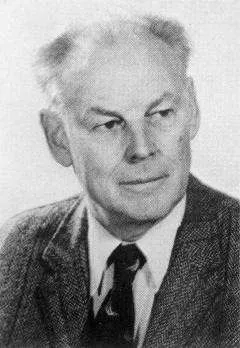
Talking with Albert Galloway Keller, his disciple and successor as head of the sociology department at Yale University, William Graham Sumner once remarked of his Folkways, originally published in 1906, that it was “as good as a bond. I just got sixty dollars from it. More than I ever got from any other book.”
This self-congratulatory statement, as Keller recalls, was made in 1908 or 1909, when Folkways was selling a mere few hundred copies a year. Sumner, who died in 1910, would have been greatly surprised if he had lived to watch the snowballing effect of the book he likened to a “bond.” It was selling in the nineteen twenties at a faster pace than it had ever achieved in Sumner’s lifetime. And now, in 1960, a full half-century after its author’s passing, it has reached the ultimate in canonization with the publication of a paperback edition (Dover Publications, Inc., 692 pp. $2.49). The book is still “as good as a bond.”
Whether its influence has been wholly good is another matter. In one sense it represents the summary of a whole lifetime of study. In another sense, however, it is a negation of that life. As a great pioneer work in codifying the comparative manners and morals of peoples, it broke ground which sociologists have been following ever since. Every time a Margaret Mead journeys to Samoa or New Guinea, for example, to note how Polynesians or Melanesians or Micronesians conduct their courtships or prepare their foods, it is because of currents set in motion by Sumner. The “cross-cultural survey” which Yale sociologists are currently engaged in making comes straight out of the Folkways and Sumner’s and Keller’s subsequent work on The Science of Society.
Sumner started a digging for fundamentals, a spade work that is absolutely necessary if we are to discover the truths that animate human beings under the stress of varying life conditions. Someday this spade work may give us a true
Sumner distinctly was not a “relativist” in economics or political science in the years before he decided to push beyond economics and politics into the still unexplored realms of sociology—or “societology,” as he preferred to call it. And if he has become the patron saint of a whole breed of relativists in sociology, it is, I think, a semantic misinterpretation of the man based on his own confused use of such terms as “natural law” and “right.” If he had lived and thought about the supposed relativity of “right,” he would certainly have pushed through to the idea that the very reason for investigating the customs of the Bantus, or the habits of the Marquesas islanders, or the class structure of Newburyport, Massachusetts is to isolate and state prevailing uniformities in human behavior, both in its workings and its consequences. Science, as Alfred North Whitehead reminds us, is the search for uniformities in the midst of flux; its metaphysical assumption that truth—or “law”—can be found is the reason for its being. If there were no uniformities in nature—if, indeed, all is flux—there could be no science.
“Relativism,” indeed, is simply a way station in the quest for certainty, an admission that things have not yet been reconciled as “science” of social behavior. But in his own work in the Folkways Sumner often prejudged the case, insisting that morals and ethics—the stuff of the human thought-action-thought sequence—are always relative to time and place. In the “mores,” he said, it is “might that makes right.” “There’s nothing right or wrong but thinking makes it so.”
A Semantic Misrepresentation
Sumner did not actually believe this for a minute, of course. He would never have said that the protective tariff is good because the “mores” accept it. He would never have justified a “grab” either by the “plutocracy” or by a predatory labor or farm group on the specious plea that the “general welfare” requires “intervention” to “correct” the workings of “laissez faire.” He would never have argued that a society which has never known civil liberty is just as “right” as a society in which men can sleep safely in their beds without fearing the invocation of ex post facto laws, or bills of attainder, or judgment by a Star Chamber court. Sumner would always have commended the sobriety and thrift of his favorite character, the “forgotten man” who unfortunately is compelled to pay for every “absurd effort to make the world over.”
parts of a unified field. If, paradoxically, the current hypotheses about certainty must always be set forth on a tentative basis, it is because we recognize that it is the searcher himself that is fallible, not the truth which he hopes, someday, to nail down for all time.
Elusive “Natural Laws”
Sumner disliked the term “natural law” because of the slipshod way it was used in his lifetime to justify a number of unrelated things. But if we are to have a valid jurisprudence, we must posit a “natural law.” And if there is a natural law governing the proper selection of “positive”—or “legal”—law, then there are “natural rights” that can be derived from that law. The Jacobins of the early nineteenth century, and the socialists of Sumner’s own day, had assumed a whole tissue of “rights” that had no discernible connection with the laws dictated by what men were faced with in scratching a living in a world of more or less scarce materials and limited time and energy. The socialists spoke of the “right” of everyone to a living, or of the “right” to shares in the “boons of nature.” The “rights of man” were judged by Jacobin and socialist to be the arbitrary gift of the State as the regulative organ of society, not an induction about the “inalienability” of life, liberty, and property derived from the self-evident truth that men rise to greater heights of creativity and welfare if they are free.
Naturally, Sumner resented and scorned the Jacobins and the socialists as soft-headed. But, in abandoning the use of the idea of “natural law” and correlative “natural rights” merely because collectivists had corrupted the old phrases, or because metaphysicians had assumed that “law” had literally come out of a burning bush, Sumner prejudiced his own idea that a “science of society” might someday be possible. The “law” that underlies any science of human behavior must be “natural.” And if human beings are to make the best of that “law,” they must have “natural rights.”
The Case Against Coercion
On many pages of the Folkways the reader gets the idea that the “mores” are purely whimsical. But on other pages the “mores” are modes of response to the necessities imposed by the “competition of life.” Sumner noticed that human beings seldom exalted a tooth and-claw individualism for very long: they combined by families, by blood-groups, and by societies, to gain the values of cooperation in winning more from nature than they could get if everyone’s hand was set against his neighbor’s. But if “communalism”—or the making of communities—was a basic part of the “mores,” it usually depended on individual and family responsibility for the deployment of energy. Extreme compulsion could be found in many places on the earth’s surface. But life was less “brutish and short” in societies that had made progress in civil liberties, and in the fluidity of combinations. Men, said Sumner, might overlook many of their differences to practice “antagonistic cooperation” for the sake of larger ends. Even in low forms of life there is “symbiosis.” But forms of cooperation cannot grow or adapt as easily when they are forced by legal compulsion.
Not All Folkways Are Best
All of this is obvious in Folkways—which is tantamount to saying that Sumner was on the track of some good definitions of “natural law.” He refrained from drawing certain conclusions largely because he knew that different civilizations have developed different sets of characteristics, summed up in the old Greek word, “ethos.” The Orient had gone one way, the Occident another. India differed from China, and both India and China differed from Japan. Yet Sumner, the moralist, could not resist remarking that certainfolkways are “harmful.” And he spoke as a judge when he said that India “furnishes a great number of cases of harmful mores.” The “harm” of caste rules, he said, “is so great that of late they have been broken in some cases, especially in regard to travel over sea…. The Hindu folkways in regard to widows and child marriages must also be recognized as socially harmful.”
“Diseases of the Mores”
In other words, there are standards of judgment above the mores to which folk behavior everywhere must be compared. Sumner used the phrase, “diseases of the mores”—which again implies an intuition of the healthy ideal. Sumner says of “human interests” that they require “thrift, selection, and preservation.” “Capital,” he says, “is the condition precedent of all gain in security and power, and capital is produced by selection and thrift.” Furthermore: “Primitive folkways are marked by improvidence, waste, and carelessness, out of which prudence, foresight, patience, and perseverance are developed slowly, by pain and loss, as experience is accumulated, and knowledge increases also, as better methods seem worth-while.”
For the unblinkered reader the question naturally arises: Are “primitive folkways” as “right” as the folkways that are the result of the “increase” of knowledge? Sumner never posed the question of “right” in such terms; if he had, he would not have said that “might makes right.” If it is true that “whatever is, is right,” then change itself is humanly meaningless. And Sumner’s own predilection for a society governed by a mature conception of the value of civil liberty would be just another whimsy.
Self-Righteousness
The harm that is done by Folkways is that it confirms the “emancipated” student in the idea that since any custom is as “right” as any other, there can be no rational choice between political and social systems. If “right” and “wrong” are in the mores themselves, then if a people wishes to turn over the conduct of its affairs to a tyrannical central committee, there is nothing to stop it in the name of any higher morality. The mores, having sanctioned socialism, or communism, or fascism, or the concept of top-down planning, or the Robin Hood State devoted to leveling the rich “down” and the poor “up,” will have simply created a new standard of “right.” It will judge itself in terms of itself.
To this harmful conclusion that may be drawn from Folkways, the over-all warning of Sumner—that the mores are not lightly to be set aside—stands as an antidote. Sumner stood with Burke in warning his readers against the “social engineer” type of mind; over and over again he insisted that the attempt to cut into the tissue of existing society and remake institutions in accordance with rational blueprints must result in great social harm. The top-down planner might seek order, but he usually sowed the wind and reaped chaos. Of the Russian czars pursuing a “westernizing” policy, Sumner remarked: “By their policing and dragooning” they have “spoilt one thing without making another, and socially Russia is in the agonies of the resulting confusion. Russia ought to be a democracy by virtue of its sparse population and wide area of unoccupied land in Siberia. In fact, all the indigenous and most ancient usages of the villages are democratic. The autocracy is exotic and military.” Substituting the commissars for the czars, the description might fit the Soviet Russia of today. Proof enough that the mores are stubborn and slow to change!
A Prodigious Beginning
Keller once called Folkways a “tired” book insofar as its later chapters, the ones that amass the evidence to prove the generalities, are concerned. But, while the book is certainly neither as lively nor as incisively logical as the many essays on liberty that Sumner wrote before he had quit political science for sociology, the “tired” quality is probably an illusion. The fact is that Sumner had marked out enough work in the ground-plan of Folkways to keep a whole army of investigators busy for a generation. The book sometimes drags from the weight of its hundreds of fact-jammed categories. But it took a prodigious energy to write it—and a truly “tired” man would have quit before its completion.
A younger man would have gone on after its completion to tackle the problem of constancies and uniformities in the behavior of man, the social animal. And a younger man would have been concerned with rectifying a contradictory position on the subject of natural law. But it is given to no one to do more than a certain amount of work in a lifetime. Sumner had at least three careers; he was, successively, clergyman, political economist, and sociologist. Since sociology was the preoccupation of his old age, his accomplishment in marking out the boundaries of an entirely new science is remarkable.
The proof of Sumner’s prodigiousness is that Folkways is still a classic, still able to compete for a market on the paperback stalls fifty years after its author’s death.
The Language Of Dissent by Lowell Mason.(Cleveland, Ohio: World Publishing Company. 314 pp. $5.00.)
Reviewed by Percy L. Graves, Jr.
Some bureaucrats may be just paper jugglers. Others may spend most of their time trying to find new paths to expanded power or prestige. But a brave few, who understand the rich role of freedom, are veritable bastions in the defense of individual liberty. One such libertarian is Lowell Mason, former Federal Trade Commissioner and author of The Language of Dissent, a very readable book on the dangers of modern bureaucracy in these United States.
Long years within our malignant bureaucracy have taught Mr. Mason that “no one acquires a love of liberty working for government. You either bring it along with you or you never have it.” When government provides you “the opportunity to impose your own brand of virtue on others,” liberty is seldom your guiding concept.
“Bureaucracy,” he tells us, “never explains, never denies, never defends. It rolls with all the punches, and the only effective attack against bureaucratic tyranny is through the official channels of dissent.” And so, as a Federal Trade Commissioner for eleven years, Mr. Mason filed a series of “I am against it” minority decisions. His dissenting opinions, which appear as part of his book, were well reasoned and clearly expressed. When they were placed before higher courts, the judges agreed with him as often as they did with the majority decisions he opposed.
His raison d’ etre is to “fight tyranny.” He finds the fight “dull and monotonous…. It consists almost entirely of a lot of petty recognitions of the petty encroachments, arrogances, and cruelties of bureaucracy that lie hidden under the government’s sweet promise of security.” He also finds “little point in reciting the rules—the Constitution, the Bill of Rights, due process. People yawn when you do. There is nothing exciting about anything that seems as permanent as liberty. We treat it like a vase of artificial flowers on the parlor table. Apparently all it needs is a little dusting off on Flag Day and the Fourth of July.
Eternal Vigilance Needed
“But liberty is oh, so fragile. The purpose of this book is not to prove its strength but to demonstrate its weakness.
The former Commissioner found “plenty of trigger-happy bureaucrats who still today would sooner sue a businessman than eat.” He was “against it” when “the Federal Trade Commission sued the grocery boys for doing what the head of the Commission’s Washington Office had told them they could do.” He reports that “little effort is made to hide the fact that determining who shall be sued is like playing ‘pin the tail on the donkey,’ with everybody blind-folded.”
His book tells of businessmen starting complaints against competitors for doing what the complainants themselves may well have been doing. In one such case, he admitted that, under the law, there was no alternative but to force one small firm out of business for giving the same discounts as those given by all its unsued competitors.
He tells how precedents restrictive of our freedom are built up by orders against the once legal actions of: (1) Shady characters who shun lawsuits for fear their other, more questionable, actions may be exposed; (2) Firms that find it easier to change their ads or actions rather than defend their rights in a long and costly legal battle; and (3) Terrified little businessmen who shrink at sight of official badges and lack funds for the legal advice to fight back. Then, these unopposed cease-and-desist orders are forever after cited as the accepted law of the land.
Who would dare question a Federal Commission citing such an “established” federal ruling? The answer is big corporations. Only a well financed corporation can command the top legal talent needed to oppose the constant assaults on freedom by bureaucrats backed by taxpayers’ funds. And so “big bad business” is often our only defense against the bureaucratic attacks on the legal phases of freedom that it took so many generations to write into our laws and constitutions.
The Faceless Bureaucracy
“Top leadership in government,” the author tells us, “is generally ineffectual against the quiet, hardworking staff which pushes its pens noiselessly but with dedicated and ruthless unanimity across the dockets, briefs, statements of policy, and orders that tell people what they must do. It makes no difference how much a President declaims against a ‘swollen bureaucratic government in
Commissioner Mason warns us that the greatest tyranny has the smallest beginnings. Let a law open a crack in the legal bulwarks of liberty and the bureaucrats will soon produce a gaping hole. Mason’s law for this procedure holds that “bureaucracy will arrogate to itself all power available under a statute in spite of the limitations against tyranny in the Constitution. This it will do, quietly and unobtrusively, through decisions at the lowest rung of the quasi-judicial ladder where the issue seldom meets the eye of the public.”
As Mr. Mason states, “There is no finish line anywhere in the race for liberty. It is a race our ancestors started, and our heirs will be running long after.”
This book should be read for an understanding of the little noticed legal erosions of our liberty that our daily papers seldom find worthy of adequate reporting.