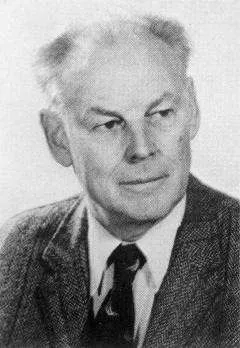
There never was anything wrong with American capitalism that a purer conception of freedom couldn’t cure, and Europeans—at least some Europeans—are at last catching on to the fact. Here we have Massimo Salvadori, a continental European who teaches at Smith and
Salvadori’s book comes to us with an introductory commendation by Adolf A. Berle, Jr. Father Bruckberger’s essay is vouched for in a foreword by Peter Drucker. Berle, who once thought that the big corporations would take us all captive, is a recent convert to the view that countervailing forces can be counted on to force a “corporate conscience” on Big Business. As for Drucker, he has always believed that the American Revolution was, in reality, a counterrevolution carried out in the name of ancient English freedoms against the growing despotism of eighteenth century European monarchs.
The intelligence brought to bear on these books by their sponsors is, then, quite in line with a burgeoning recognition in many quarters that social systems which do not honor the “primacy of the person” (Drucker’s phrase) in all realms, the economic included, must become intolerable. This shift in the intellectual weather is all to the good. It is, however, a question whether the new proponents of economic freedom really understand the full implications of what they are talking about. Let us see.
Does History Justify “New Deal”?
Salvadori is perfectly sound in most of his history and most of his generalizations. He knows that any comparative audit of systems must prove socialism to be inferior in all respects to capitalism. He commends Bradford Smith for saying, in 1957, that “all Marx’s dire predictions about capitalism have been reversed…. the level of living for workers has risen, their hours have been shortened, income has been more evenly distributed, agriculture is being subsidized instead of exploited….” He realizes that capitalism in
Surely, such thinking is on the side of the angels. One may read all of Salvadori’s book, however, without encountering any real attempt to understand the social forces of the past thirty years in
Salvadori is personally willing to accept a good deal of government intervention in the economy on the ground that it reduces the tensions of life. He does not see that for every tension that is lessened by government action, another one is created. (Satisfaction because of increased “security” is negated by dissatisfaction with a decrease in take-home pay.) Nor does Salvadori see that the cumulative effect of interventions is to create a general feeling that no one has rights that need be respected or duties and obligations that one should be expected to fulfill.
Security Lost Through Inflation
A steadily augmenting social security program may, theoretically, reduce the “tension” of fearing the onset of old age. But when social security is paid for out of inflation, it does not really alleviate any fear. Meanwhile, when government promises to take care of the elderly, children may drop the problem entirely. It is no longer incumbent upon them either to help their own parents or to save for themselves. By relieving them of “strain,” then, the government has also relieved them of the necessity of decision. At some cumulative point, interventionism must serve to create a society that is incapable of the practice of any significant freedoms at all.
No doubt Salvadori’s answer to this would be that Americans still have plenty of scope for the practice of freedom as long as two-thirds of the rich fruits of their energies are left in their own hands. In a world of steadily increasing productivity, he might say, the government’s percentage of a “take” can be expanded without hurting anybody. But if Colin Clark is right, an expanding tax take must have its adverse effect on the very nature of productivity itself. Salvadori seems not to recognize the problem in its American guise. Yet it is surely important to “the economics of freedom.”
Father Bruckberger’s Image of America is like Salvadori’s book in that it begs the question of the New-Fair Deal. As an explanation of pre-1932 American development, set down for a European audience, Image of America is generally excellent. It explains how the consumer came to take command over the American productive system. It recognizes the role that innovation plays in keeping the American corporation trim and happy without reaching for cartel status. It appreciates the importance of the penny economies that can result in high wages, large profits, and low prices once a “break-even” point has been passed.
Men and Ideas
Father Bruckberger has a neat trick of driving his meaning home by use of contrasting personalities. He dramatizes the difference between the American and the French Revolutions by setting off Thomas Jefferson, who urged
If Profits Are Taxed Away?
Henry Ford occupies a key position in Father Bruckberger’s book, which is quite as it should be. But if Ford was right about the need for high plow-back of profits into efficient machinery, low prices, and a low over-all cost of labor gained by the seemingly paradoxical device of offering a high individual incentive wage, then surely Father Bruckberger is wrong in his refusal to worry about a high-tax or a high-inflation economy. Profits can’t be plowed back when the government takes them; low prices can’t be maintained when taxes account for a third of the retail cost of a car. And high wages tend to become meaningless when they are eaten up by inflation and by steadily mounting payroll deductions for a whole slew of things which the worker may or may not want.
Father Bruckberger says the Ford system wasn’t “capitalism”; Massimo Salvadori, on the other hand, thinks it foreshadowed “people’s capitalism.” But these are semantic quibbles, entered in the record for the sake of good “public relations” with countries that are jealous of
