
Understanding how trade works.
It’s spring, which is bad news if you have pollen allergies, but is good news if you are planning to buy or sell a home: this is typically the busiest season for home sales. If you are buying a home or selling a home, the concept of value is one that is very important to keep in mind. Why is one buyer willing to offer more than another for the same house? Or why would a seller be willing to lower the price of their home?
Everyone places different values on goods, and the same person can even place different values on the same good under different circumstances. But what gives something value, and why does it matter?
DUST: The Determinants of Value
In the real estate industry, value is typically described as being determined by four characteristics with the acronym DUST: demand, utility, scarcity, and transferability.
- Demand: a buyer’s belief that a good will fulfill some felt want or need, backed up by the ability to buy it. Of course, there are some things that I might want or need, but I simply can’t afford. A yacht might be nice, but without purchasing power to back it up, I can’t satisfy that want, and so I create no true demand.
- Utility: the capacity of a good to satisfy some wants or needs that an individual may have. A cordless drill, for example, is a handy tool, and has a lot of utility for specific projects around the house. Luxury items, by comparison, might not be “useful” in the traditional sense but may convey utility through the signaling of prestige. Utility is what drives the desire, or demand, to obtain goods.
- Scarcity: there is simply not enough “stuff” in the world to satisfy everyone’s wants and needs completely. The fact that there is a finite supply of goods is what necessitates choice—we all have to make trade-offs between things that we want.
- Transferability: the condition that ensures that markets exist for the goods we want to exchange. If you buy a house from me, we exchange ownership (a bundle of legal rights) of different goods—the house and the money. Without transferability, no exchanges could take place.
Something needs to possess all four of these characteristics to have value. For example, water is necessary for our survival (high utility), but we typically don’t think of it as valuable. William Smart, in the book An Introduction to the Theory of Value, wrote about this exact topic:
To change utility into value there must be, not only a capability of satisfying want, but a felt dependence of some want on the particular good containing the utility… As capable of quenching thirst, all water is useful, but it does not obtain any value till some limitation of the available quantity makes it the indispensable condition of a satisfaction.
When we have what amounts to an unlimited amount of an item, even though it has utility, it lacks economic value, because it is missing one of the elements described above—scarcity. Since we don’t have to forgo something else to get the additional unit of water, we don’t have to figure out what we are willing to trade to get it, and so it doesn’t have value in the economic sense.
What Is Value?
Carl Menger, in Principles of Economics, defined value as “the importance that individual goods or quantities of goods attain for us.” Where do the determinants of value originate? Early economists proposed that value was somehow intrinsic to the good itself. For example, the labor theory of value proposed that the quantity of labor and other inputs used to create a good gave that good its value.
But this idea has problems. It is resource-intensive to mine an ounce of gold from the earth; but an ounce of gold obtained from an industrial mining operation and an ounce of gold that you might be lucky enough to find at the bottom of a riverbed would have exactly the same value.
Value Originates in the Mind
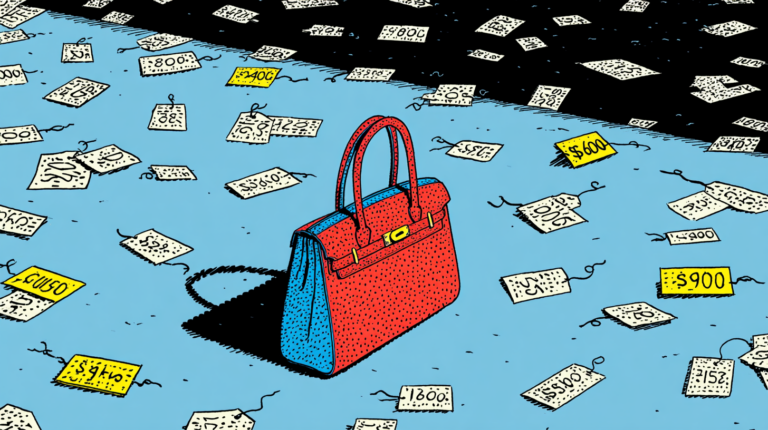
If value cannot be found intrinsically in objects, where does it come from? The answer is that value is a subjective assessment that individuals make about goods inside their own minds. As Ludwig von Mises summarized:
Value is not intrinsic; it is not in things. It is within us; it is the way in which man reacts to the conditions of his environment. Different people and the same people at different times value the same objective facts in a different way.
The factors that lead to value are subjective and context-specific.
As scarcity implies that we have to make trade-offs about the costs and benefits of things, we will all have different subjective assessments about what we are willing to give up to acquire things—which is why people might reasonably make different offers for the same house.
Subjective Value Drives Trade and Entrepreneurship
F.A. Harper noted that value is not only subjective, but also relative: a loaf of bread does not have an independent value separate from all other things for “Mrs. Jones”:
The value of the loaf of bread is the relationship of the bread to something else Mrs. Jones wants. In a money economy, she will usually think of the relative value of bread in terms of money—the particular form of value which we call “price.” She will decide whether the bread has a superior or inferior value to the 29¢: if superior, she may buy the bread if it seems to her the best use for the 29¢; if inferior, she will keep the 29¢ or buy something else.
This is good news: since we all have different subjective value scales for goods, this allows us to be able to trade and mutually benefit from each exchange. If Mrs. Jones buys the bread for 29¢ (imagine anything costing 29¢ today!), that means that she places a higher value on the bread than on the money that she exchanges for it. Conversely, the store owner values the money more highly than the loaf of bread and therefore was willing to trade. Both parties were willing to exchange something that they valued less in return for something they valued more. As a result, both of them end up better off from the trade than if they had not traded.
Understanding the mutually beneficial nature of trade is essential to business and entrepreneurship. For example, if you are selling your house, knowing what buyers value can help you to identify home improvements that can increase your home’s perceived value. As a business owner, it is difficult to design products and services for customers without first understanding what challenges and pain points they experience. After all, if you create something and there is no demand for it, then your business will not be successful.
Value is subjective and exists in the mind of each individual. When we make decisions to buy something, we are making subjective value calculations, which allow us to find opportunities to trade with one another in an open marketplace and, in the process, increase our mutual well-being.