
Anti-ESG laws and free speech.
Earlier this month, US District Judge Alan Albright granted an injunction against Texas Senate Bill 13 (“SB 13”), a state law aimed at curbing “woke capitalism” and environmental, social, and governance (ESG) practices. Over the past few years, these practices have taken the form of regulations, reporting requirements, and credit metrics on areas including environmental impact and diversity. Conservatives have pushed back on ESG, believing that these initiatives have enabled progressive ideology and values to undermine business investments. Texas was one of the first states to implement “anti-ESG” laws, and the legislative effort has spread to over a dozen others. Congress has also taken action: in January, the House passed a bill to limit the use of such non-financial criteria in retirement investments.
Lawmakers have good reason to be skeptical of ESG principles and their effects on investment. However, Judge Albright’s ruling is a potent reminder that overly expansive legislative fixes can skirt too close to civil liberties and ultimately fail to achieve their intended objectives.
In 2021, Texas enacted SB 13 to prohibit state investment and contracts with financial firms “boycotting” energy companies, thereby protecting the companies from compelled ESG requirements. According to the statute, boycotting includes “refusing to deal with, terminating business activities with, or otherwise taking any action that is intended to penalize” a company because it is involved in fossil fuel production and does not commit to meeting environmental standards beyond what is legally required. The State Comptroller is required to make a list of all financial companies that engage in boycotting, using publicly available information and requests for written verification.
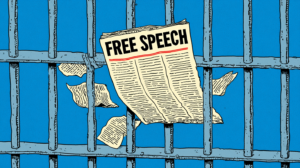
According to Judge Albright, this ban is too expansive and enables the Comptroller to “blacklist” firms with which they disagree. In granting the injunction, he held that the law is “facially overbroad”; the terms are so broad that they sweep in and punish a substantial amount of protected speech. While Texas argued that it applied only to commercial conduct, which the First Amendment does not protect, Judge Albright ruled that the boycott definition permitted the State to penalize companies for a vast range of speech related to fossil fuels. “The plain meaning of the phrase ‘taking any action that is intended to penalize’ fossil fuels includes, for example, speaking about the risks posed by fossil fuels, advocating against reliance on fossil fuels, and associating with like-minded organizations,” all of which were regular actions for the plaintiff, American Sustainable Business Network. Moreover, the judge found that SB 13 was impermissibly vague, leaving unclear what conduct is prohibited and inviting discriminatory enforcement by the Comptroller.
To its credit, SB 13 and similar laws aim to address an important issue: the politicization of investment to the detriment of businesses and consumers. The term “ESG,” first used by the United Nations Global Compact, refers to the value-laden metrics that investors use to measure a company’s environmental and social impact. Proponents believe that this tool can help investors assess risk and long-term profitability through a non-financial lens, ensuring that the companies they work with are ethical and responsible. For example, ESG can take the form of greater reporting requirements and disclosures on sustainability, climate effects, and labor practices. While transparency has its merits, these practices have become tools for a small number of investors and regulators to impose their political preferences on large swaths of businesses and consumers. These actions are insulated from public accountability and differ sharply from a politician or company that willingly champions these same values, since the electoral process and market competition would check the latter.
Conservatives argue that management firms such as BlackRock are abdicating their fiduciary duties to clients and abusing their role as an intermediary when they impose ESG requirements. Under this view, ESG practices are creating market distortions by forcing businesses to conform to particular ideologies, which has a downstream effect on consumers as well as investors. In 2022, former Vice President Mike Pence likened ESG to the social credit scores in China, since a “low ESG score can be devastating” and make it “virtually impossible for a company to raise capital—and that is exactly the point.” Former Virginia Governor Glenn Youngkin, who previously served as co-CEO of Carlyle, a global investment firm, criticized ESG as untethering decisions from economics and empowering firms to tell companies, “If you don’t do X, then we’re going to penalize you, as opposed to just not invest with you.” Because of these concerns, Texas and several other states have enacted laws to curb ESG considerations, especially for state investments and contracting.
But state legislators should be cautious of overcorrection when drafting these statutory prohibitions and restrictions. Here, SB 13 erred by penalizing too much speech and granting government officials the authority to target organizations without proper guardrails.
The most salient criticism of ESG is that it imposes values and ideas without choice. An anti-ESG law that muffles a wide range of speech has a similar, coercive quality of its own and runs the risk of rising to the level of viewpoint-based discrimination.