
We’re launching a new video essay competition. Here’s why.
Every time you have a conversation, buy a cup of coffee, or decide what to wear, you’re taking part in the world of emergent orders. And that’s not an overstatement. Language evolves over centuries through countless conversations. In markets, prices and innovations arise from the actions of millions of buyers and sellers. Fashion trends are shaped by continuous individual choices. These systems are all examples of emergent orders: self-organizing patterns that come into being through the independent actions of people pursuing their own goals.
Emergent orders are everywhere—shaping our world in ways that are unplanned, complex, and essential to daily life. But they remain almost invisible to most people because they are difficult to explain and communicate. We like simple stories, but emergent orders involve numerous actors and processes, evolving gradually. We seek intentionality and direction, but emergent systems defy linear narratives. Their beauty lies in a harmony that unfolds without a master plan.
This challenge of communicating the complexity of emergent orders is exactly why we at FEE have decided to launch a new video essay competition: Economic Marvels. We hope to inspire creators to explore and reveal the hidden networks behind everyday objects, turning the seemingly mundane into a window into the self-organizing systems that shape our world.
Previous attempts to convey this complexity-through-simplicity have highlighted what happens when we try to replicate emergent orders by design… and fail. The Toaster Project and the $1,500 Sandwich are examples of attempts to produce everyday items without modern economies of scale—and why they fall short.
The Toaster Project, undertaken by British designer Thomas Thwaites, set out to build a toaster from scratch. Thwaites intended to mine and process all the raw materials himself. It was a simple yet ambitious goal that turned into a nine-month endeavor.
Along the way, Thwaites faced countless challenges: smelting iron ore in a microwave, struggling to produce plastic, and traveling to remote mines and oil rigs. Despite his determination, the result was crude—a toaster that worked for only a few seconds before breaking.
The Toaster Project cost Thwaites around $1,500, but that figure is just for his out-of-pocket expenses. If you consider the time he spent (nine months of effort), the actual cost in terms of labor and opportunity would be much higher. Thwaites could have bought a new toaster at the time for about $5.
The $1,500 Sandwich project followed a similar spirit. In his YouTube series How to Make Everything, Andy George set out to create a sandwich entirely from scratch—growing wheat, making salt from seawater, milking a cow, and more. George’s endeavor spanned six months and took him over 4,000 miles. He grew vegetables, pickled cucumbers, and even slaughtered a chicken for meat. The result was a sandwich that cost $1,500 in materials and labor, along with countless hours of work.
Both projects serve as powerful reminders of how emergent orders bring us affordable, high-quality goods, and make visible the often-invisible networks that sustain our modern lives.
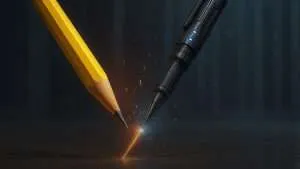
Another way to tell the story of emergent orders is by celebrating success through the lens of complexity. Leonard Read’s I, Pencil captures this beautifully. A pencil may seem like the simplest of objects, yet it is the product of an intricate dance of countless people, skills, and processes around the world. From the lumberjacks who harvest the cedar to the miners extracting graphite, to those who blend the lacquer and assemble the eraser—no single person even knows how to make a pencil from start to finish, yet this humble tool comes into being through their combined efforts.
More recently, NPR’s Planet Money decided to follow the complexity behind another seemingly simple product: a T-shirt. They tracked the T-shirt-making process across multiple countries, beginning in the cotton fields of the United States, where the raw material is grown and harvested. From there, it travels to Indonesia to be spun into yarn, then to Bangladesh and Colombia, where it is woven into fabric and sewn into shirts.
The Planet Money team documented the entire process through video, interviews, and interactive storytelling, making the complex global supply chain more accessible and engaging for their audience.
FEE is now inviting creators to join this tradition by sharing the stories of familiar objects. We want to discover new and fresh narratives of emergent orders through the Economic Marvels competition. We are calling on creators and storytellers to show, through video essays, how familiar objects conceal intricate networks. Submissions can include animation, footage, graphs, AI, and any other tools at your disposal.
We hope participants will explore supply chains, innovation, and market dynamics. They can begin with any branded object and trace the intricate web behind it—whether it’s a video game, a smartphone, a shoe, a car, or any other product that captures your imagination. Just be sure to choose a specific branded product—like a particular car model, rather than cars in general.
In hosting this competition, we hope to inspire in the rising generation a deeper understanding of the world that forms around us.
So dive in, explore, and help us see everyday items in a new way.