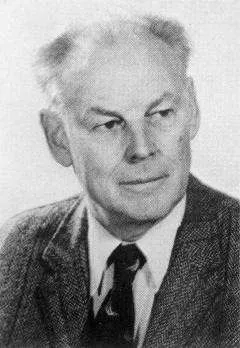
Mr. Chamberlain, noted critic, journalist, and editor, regularly presents “A Reviewer’s Notebook” in THE FREEMAN. Among recent works is his exciting analysis of The Roots of Capitalism (Princeton: D. Van Nostrand, 1959).
On January 30, 1883, William Graham Sumner, Yale’s controversial professor of political and social science, stood before an audience in the rooms of the Brooklyn Historical Society and delivered a soon-to-be famous speech on “The Forgotten Man.” This Forgotten Man, so the professor said, was the victim of a conspiracy. Aspiring to no office, desiring and giving no trouble, the Forgotten Man did his own work without complaint. He might be the average savings bank depositor bent on adding his mite to the productive capital of the world; he might be a workingman who had scraped together enough money to build a small two-family house whose second story could be rented to meet the mortgage payments. But, despite his own willingness to stand on his own feet and ask nothing of the world, the conspirators would not leave him alone.
No, the Forgotten Man was the C in what was shortly to become a famous social equation—the sacrificial goat whom A and B (the professional do-gooders and their allied politicians) forcibly levied upon to support D, the chronic ne’er-do-well. The vice of such a formula, so Sumner informed his Brooklyn audience, was that C was allowed no real voice in the matter. He might vote to protect himself, but the votes of D, a poor but numerous category that could be easily manipulated by the politicians, were as the leaves of the trees compared to the meager strength which C could bring to the polls. And so, though he might have a bedridden aunt to support, or a deserving nephew to send to trade school, or merely some children of his own to educate, the Forgotten Man had nothing left for the private charities that, blessing giver and receiver alike, make Christianity a living thing.
Warming to his subject—and thinking, no doubt, of his own strongly independent father, Thomas Sumner, whom he was to describe at a later date as belonging to “the class of men of whom Caleb Garth in Middlemarch is the type”—the Yale professor remarked that the Forgotten Man was “not in any way a hero (like a popular orator); or a problem (like tramps or outcasts); nor notorious (like criminals); nor an object of sentiment (like the poor and weak); nor a burden (like paupers and loafers); nor an object out of which social capital may be made (like the beneficiaries of church and state charities); nor an object for charitable aid and protection (like animals treated with cruelty); nor the object of a job (like the ignorant and illiterate); nor one over whom sentimental economists and statesmen can parade their fine sentiments (like inefficient workmen and shiftless artisans).” No, the Forgotten Man was none of these things. He worked and voted, and—generally—he prayed. But, said Sumner, he always paid. “All the burdens fall on him, or on her, for it is time”—so the professor added—”to remember that the Forgotten Man is not seldom a woman.”
The Young Crusader
The Sumner who took up the cudgels in 1883 for the steady, uncomplaining, abstemious C spoke as a fire-breathing crusader yearning to right a grievous wrong. One can see this Billy Sumner as he was in the early eighteen eighties, a tall, vigorous, somewhat harsh man of 43 given to a fastidious disdain and a limp handshake which warned people he was no backslapper. His imposing brow was already “magnificently bald,” his greenish eyes were sharp and piercing, his clothes immaculate, even a trifle foppish. An enemy of his views on the tariff has left an unforgettable impression of his “iron” voice: it “shot out like a charge from a gun, combining a growl with its roar, and ending the sentence with a peculiar snarl from the throat, as if he would rivet his statement in your mind past all removal or dissent.” Then there was “a strong nose which, from its commanding central position in his face, constantly took part, as if swiveled for the purpose, in an extraordinary series of smirks and grimaces, some vicious, some sardonic—all mischievous and threatening.”
Threatening or not, the professor’s undergraduate students at Yale loved both voice and grimaces: Billy Sumner in the eighties, not yet the remote and ghostly figure he was to become when he deserted economics and political science to pursue the folkways and the mores to their points of origin, was invariably voted the most effective teacher on the faculty.
No Record of Dissent
The audience that listened to Sumner on that January night of 1883 has left no record of dissent from his idea that C—the Forgotten Man who always Paid—actually existed. Moreover, when Sumner later in the year expanded his thesis about the “jobbery” practised on C in a little classic of social science called What Social Classes Owe to Each Other,* no one rose to challenge the feeling that Sumner had put his finger on a most important problem.
This, at our particular vantage point which looks back on the eighties as individualistic in the extreme, must seem something of an oddity. Indeed, it is even astounding. For consider what the world was in the placid days of 1883. Of special relevance to Sumner’s speech, it was a world without the graduated, or “progressive,” income tax. In fact, there had been no income tax at all since the purely temporary—and unconstitutional—one that had helped pay for the Civil War. True, there had been public monies and lands dispensed to railroads, and there was the ever-present tariff. But the U.S. was, in the early eighties, still close to the soil—and the necessities of life were, despite the tariff, largely produced and sold in a locally competitive world.
The politician in the eighties, in fact, had not yet figured out a way of getting more than a pittance out of the Forgotten Man. Though religion, in a decade that had begun to digest Darwinism, was a softer, weaker thing than it had been in previous generations, the tithes still taken by the churches as purely voluntary offerings must have far exceeded the “welfarist” collections of government. A poor immigrant in the eighties—a Carnegie, say, or a Jacob Schiff—could keep his money and die a millionaire. The Forgotten Man in the eighties may have been forgotten—but it was hardly the “radical vice” of the political schemes cooked up for his spoliation by philanthropists looking to spend Other People’s Money that really hurt him. If the Forgotten Man “always paid,” it was because he couldn’t resist an appeal to his better nature to give voluntarily. If he was broke, it was not because the State mulcted him. It was because he believed in Sumner’s own Law of Sympathy.
A Time of Hopefulness
The salient fact about the early eighties, as the Forgotten Man himself looked upon them, was their atmosphere of general hopefulness. Though strikes were worrisome in a world that was just beginning its adventure in industrialism, the depression of the seventies, which had been particularly bad in the new railroad towns, had long since yielded to the new business optimism. The railroads were running again without interruption, trainmen’s wages had been restored, and the bigconsolidation of the lines into interstate systems was under way. Meanwhile, as the cyclical upswing was on, the western roads were laying thousands of miles of new track. Immigrants from northern Europe and, latterly, from Hungary and Italy and Poland, had been passing through Castle Garden at the port of New York by the thousands, and despite the fears of Terence Powderly’s Knights of Labor, the railroads and steel mills and mines had absorbed them without any great disaster to the jobs of the native-born. As an editor of the American Iron and Steel Bulletin noted in 1883, the overloading of the labor market, where it existed in the coal-mining and iron-ore mining districts, was not due to depression. It was due to “the very prosperity of our country, which tempts large numbers of foreigners to come here.”
On the farm border of the early eighties the bad times of the “Granger years” had lifted. Crops were moving to market at a profit to both the farmer and the railroads. Land could still be had for the asking (and for nominal registration fees) in the West, and for as little as $1,000 in borrowed capital a young man could put up a shelter and buy horses, wagon, harness, plows, seeds, and enough of the new Glidden barbed wire to get a start on his 160 free acres. Though historians, accepting the Populist charges of the nineties at face value, have argued the “grasping” nature of eastern money-lenders, the fact is that money rates on the Kansas and Nebraska farm frontiers dropped from 12 per cent in the seventies to 7 and 6 per cent in the nineties. Moreover, the ratio of farm foreclosures to loans was not remarkable save in the extreme drought years of 1888-89, which were still far over the time-horizon in 1883.
Money for the western farmer did not come primarily from a greedy “Wall Street” in any event; it was assembled for loan purposes by the insurance companies and by land mortgage companies which were organized everywhere from New Hampshire to Kansas to tap the funds of individuals or families with capital to spare. Not wishing to be saddled with real estate, these companies did their best to keep the farmer in business. In many instances the record of forebearance on the part of the lender was very good indeed; as John Davenport, a New York State lender with extensive western interests, wrote to his Iowa agent in the seventies, “Where a man has had bad luck in crops or sickness, give him time.”
Discounting the menace of the drought-cycle, which was not yetunderstood in the early eighties, the fact that a farmer could get his start as his “own man” for a thousand dollars in easily borrowed money made it impossible for anyone to claim with a straight face that the pioneer was oppressed by a greedy East. He took his chances like everybody else—and often he sold his acres on a rising market to go elsewhere as opportunity beckoned all the way to the Pacific Coast.
No “Big Business” Bogey
In common with most of our recent historians, Allan Nevins and Henry Steele Commager have shed crocodile tears over the fact that it took two bushels of wheat to “buy” a dollar in 1890 where that same dollar could have been bought with one bushel in 1870. But these historians are forced to note elsewhere—and without any tears—that when four men on a farm can do the work of three hundred by using a combine, and when a mechanical corn husker “replaces eight men with one, [and] the corn sheller fifty,” prices for farm products could hardly remain unaffected.
There remains the theory that the new “trusts” of the eighties bore down heavily on the Forgotten Man. But when Sumner was making his speech in Brooklyn, the big movement toward consolidation was largely limited to Rockef eller’s Standard Oil Co. and to the railroads. The so-called lead, whisky, and sugar trusts dated from 1887; the beef and farm equipment trusts came in the nineties. What the backward looking historian forgets is that a vast number of smaller companies had to exist before they could be combined into a big one: the very creation of a “trust” implied a burgeoning and job-creating economy at the base. Moreover, the creation of a big company did not keep new small concerns from springing up, as any comparison of old and new Stock Exchange listings will show. Small business kept its pace with big business in the very years when the feeling against “trusts” was at its height. And it has been keeping pace ever since.
In his own less gloomy moods Sumner himself forgot his worries about the Forgotten Man. Some twenty years after his speech in Brooklyn he inserted into his Folkways a salute to “our own time” as “one of advance on account of great unoccupied territories now opened at little or no cost to those who have nothing.” “Such a period,” he said, “is one of hope, power, and gain for the masses. Optimism is the philosophy. All the mores get their spirit from it… no mistakes will cost much.” And again, in a later passage in the Folkways, he remarked on “the effect of the creation of an immense stock of movable capital, of the opportunities in commerce and industry offered to men of talent, of the immense aid of science to industry, of the opening of new continents and the peopling of them by the poorest and worst in Europe…. Men are in demand, and an increase in their numbers increases their value….”
If one looks back upon the New Haven to which Summer returned after the Forgotten Man speech, the mystery of his forebodings increases. Here the effects of “movable capital” and “the immense aid of science to industry” had been apparent for a generation. With the linking of the railroads in the eighteen forties to New York in one direction, and to Hartford and Boston in the other, the population of the old colonial town had surged upward. Gone was the overgrown village of Sumner‘s own undergraduate days. The wineglass elms, planted at the century’s beginnings by old Senator Hillhouse and the Reverend David Austin with their own hands at no cost to the Forgotten Man, were still there, lifting their graceful arches over the downtown streets. But beyond the Green and its three churches, beyond the original “nine squares” of the old first families, there roared the black workaday community which had been brought into being by a long line of Yankee inventors spurred on by Sumner’s own supposedly “classical” Yale.
The streets that ran past the old town pump and past Yale’s Old Brick Row were still muddy canals in late March and early April, necessitating iron foot scrapers on every doorstep; but down the middle of Chapel Street ran tracks for horse-drawn trolleys. The town’s water was supplied through mains owned by a private company; and where gas lighting had been limited to the senior Professor Benjamin Silliman’s home in the late eighteen forties, now more and more home owners had thrown away their old sperm candles and gone over to the new lighting.
Prosperous New Haven
Indeed, New Haven might have been summed up as “Sillimans’ progress.” The older Silliman had taught his science largely from the books. But in the forties the younger Silliman—Benjamin, Jr.—had, with a liberal outlay of his own money, set up the first college chemistry laboratory in the United States. It was from this laboratory that there emerged, some time later, an analysis of the commercial possibilities of a “rock oil” specimen from western Pennsylvania—and on the basis of Silliman’s word a New Haven businessman, George Bissell, and James
Townsend, a local banker, sent out Colonel Edwin Drake, a railroad conductor with newfangled ideas about drilling, to sink the world’s first oil well. New Haven was too far from oil country to keep control of the business—but it started it.
New Haven‘s Yale had, indeed, been serving an optimistic nation in more ways than supplying it with Congregational ministers ever since its Jedidiah Morse, the “father of American geography” as well as the sire of the inventor of the telegraph, had put together the first geography book to be published in the young nation. At the end of the eighteenth century Yale’s President, Ezra Stiles, had mingled his concern for Greek, Latin, Arabic, and Hebrew with a passion for astronomy and metallurgy and the raising of silkworms—and a later procession of far more academic and other-worldly college presidents had not been able to eradicate the cosmopolitan Jeffersonian effect of Stiles’ influence. The “Yankee” end of the Puritan college had split off in 1861 to become the Sheffield Scientific School, a development made possible by Joseph Sheffield and by a group of New Haven businessmen including Oliver Winchester, the arms manufacturer, and Eli Whitney, Jr., son of the old inventor.
The first Eli Whitney had taken much encouragement from Ezra Stiles. He had failed to make a fortune from his cotton gin, which, despite his patent, had been pirated all over the South by local manufacturers. But Whitney had recouped by pioneering the production of interchangeable rifle parts from standardized dies out in his factory by Lake Whitney—and this more than anything else had set the pattern for the town Sumner knew.
It was a town of many “firsts” besides that of the first geography book and the first standardized dies. In little things there were Sheldon Hartshorn’s first hinged buckle and William Gee’s loom for weaving suspender webbing, two products dating back to the time of Sumner’s childhood; and, going further back to the days of the early clockmakers, there was the inventiveness of Simeon Jocelyn, who had desisted from his business of engraving grandfather clock faces long enough to create the first practical pruning shears. Amasa Goodyear, father of the man who was to discover rubber vulcanization, had brought into being the spring steel tine pitchfork, a famous New Haven export of its day. With the forests of Ohio being cleared for the raising of hay and grain, the steel tine fork was as practical an object as
Edward Beecher’s and Thomas Sandford’s New Haven-made device for mass-producing the phosphorous match. And the new railroads of the young American Republic would not have been able to cross a river if a New Haven architect, Ithiel Town, had not designed a wooden truss bridge which would bear the weight of the earliest steam cars.
The New Haven to which Sumner returned in 1883 had not yet seen an automobile—or a “hellvahgen,” as Sumner was to call the first horseless carriage that came to his attention. But already, in the eighties, New Haven had made the automobile business a possibility. When cars came, they would need gasoline from Silliman’s and Colonel Drake’s rock oil; and they would need the rubber which New Havener Charles Goodyear had first vulcanized by treating it with sulphur and heat until it had hardened into usable forms. Moreover, the industrial process that had been started by Eli Whitney was to prove peculiarly adaptable to the making and assembling of the automobile, as Henry Leland, a man who had been trained in New England gun factories, was to prove to an astounded English audience when he dramatically disassembled and then put together again from scrambled parts a number of his Cadillac cars.
Even as Sumner was lamenting the sad fate of the Forgotten Man, New Haveners were pioneering some of the first commercial companies to match the creativity of the inventors. The first telephone directory in history, giving numbers for all of fifty subscribers, had been issued in 1878 by the District Telephone Co. of New Haven, which had set up the first commercial switchboard on a borrowed kitchen table. In 1881—two years after Thomas Edison had made an incandescent bulb that would burn for practically all of two days—New Haveners had started the New Haven Electric Light Co., the first after Edison‘s own pioneering company in New York City. It failed in 1883 but was soon started up again with sufficient new capital to provide for electric street lighting and to put an end to the horse-drawn trolley.
In addition to the newer ventures there were the old standbys which had made New Haven the industrial center of southern New England even before the Civil War. There was the Brewster carriage works (among some forty other carriage companies); there were the clock companies; there was the thriving Fair Haven oyster business; and, out in the Newhallville suburb below the Sachem’s Wood, there were the great Winchester repeating arms works set downamid scores of workmen’s homes. There were cigar makers, who attracted German and Dutch immigrants; there were boot and shoe makers; and there were the builders of pianos and organs. So the local fruits of a generation of inventiveness and enterprise were ripening in his own home town as Sumner bemoaned the fate of the Forgotten Man.
A Profound Prophecy
How are we to account for Sumner’s pessimism amid the evidence that the Common Man, far from being “forgotten,” was blessed with hope and opportunity in that New Haven clime of 1883 as he had never been blessed before? Was it merely that Sumner, who was to become America‘s first trained sociological digger, had not yet learned how to project a trend from heterogeneous isolated facts? The answer, far from being a testimony to obtuseness, must be set down as a tribute to Sumner’s “inner eye”: the man was a prophet. He had studied in Germany in the years of Prussia‘s climb to ascendancy in the German Federation; and he had already taken the measure of the “socialism of the chair.” Where he nourished his doubts of the new German ideologies, his academic colleagues, including a whole new generation of economists, had more and more tended to succumb to the blandishments of the German “institutional” and “historical” schools which were enamored of state intervention in the industrial process. Sumner was an early believer in a theory later formulated by John Maynard Keynes, that the “encroachment of ideas” is far more of a constitutive agent in the fashioning of society than any set of purely physical facts. The “encroachment” of the notions set afloat by the scholars of Bismarck’s realm was very much in Sumner’s mind when he lamented the plight of the Forgotten Man in 1883. He knew that if the Forgotten Man was not already being compelled to lift the burden of the ne’er-do-well D in the early eighties, he would not long remain immune.
Quite aside from the academic influence there were other trends which had aroused Sumner’s suspicions. The tariff, that first monument to American statism, was already an old story in 1883; and the tariff, as Sumner foresaw, would be a goad to every pressure group to get “its own.” The Greenbackers and Grangers were comparatively quiescent in the early eighties; but it was not for nothing that Sumner had been a long-time student of the American currency, which had periodically run to wildcat issues and to the effects of an oversanguine theory that silver could arbitrarily be held in a fixed relation to gold. Then there was the latent penchant of the American for a collectivist utopianism—the old Fourier and Brook Farm strain which would erupt anew into the Bellamy clubs in the wake of Bellamy’s Looking Backward. Meanwhile Henry George had already gathered his first army of Single Tax prophets—and Sumner suspected that any widespread application of George’s principles would put the disposal of natural resources into the hands of tax apportioning politicians, who have never been solicitous of the needs of the enterpriser in any clime or time.
It is as a prophetic utterance, then, that we must take Sumner’s speech on the Forgotten Man in its own original setting. False though it was to the immediate circumstances of New Haven and the rest of America in 1883, it was to become true as gospel for the America of the future. Sumner had the seeing eye as an early sociologist—but more important than his eye was his attunement to the hidden voices of coming ideological commitments. In misdescribing the present for that Brooklyn audience on January 30, 1883, he smelled the future. And the audience, in offering no recorded protest, must have smelled the future, too.