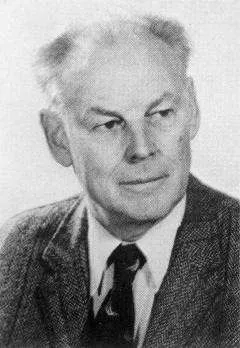
Rickenbacker (Prentice-Hall, $7.95), the autobiography of Eddie — or Edward V. — Rickenbacker, has been hailed as a modern Alger story. Though Eddie, who never went to high school (indeed, he never finished the seventh grade), was certainly a poor boy who made good, the Alger description doesn’t quite fill the bill. In the Alger stories, as I remember them, luck was as important as pluck, and there was usually some kindly benefactor present to push a willing boy along. Captain Eddie certainly had more than his share of the luck when it came to outwitting death on automobile race tracks, in the skies, or on the sea. But he never married the boss’s daughter, and in his various professional careers he had to fight for every last break he ever got.
Eddie’s book makes mincemeat of practically every shibboleth that governs our Great Society age. He came from the wrong side of the tracks, he was left fatherless at the age of thirteen, he was a school dropout, he spoke German at home and had an atrocious English accent, he was a member of a gang that specialized in breaking globes on gas-burning street lights, and his first full-time job was with a glass factory that worked him from six in the evening till six in the morning in complete defiance of the child labor laws. If the crude “environmental” theory which stresses the societal impact on children were true, Eddie would surely have taken to crime. But in his case the “family” — which can provide its own environment even in a slum —prevailed.
His father, a Swiss German who had emigrated to Columbus, Ohio, was a scrabbler who saved enough out of working as a railroad laborer to buy a small lot on which he built his own house.
There was no electricity in the house, no running water, and the only heat came from the kitchen stove. Eddie’s mother, a Swiss of French origin, was devoutly religious. The father corrected Ed-die’s youthful gang escapades with the switch; the mother sent him at kindergarten age into the backyard to plant potato eyes. There was nothing permissive about life in the Rickenbacker household, but Eddie’s six brothers and sisters made things happy and interesting. Eddie looks back on his grammar school days with nostalgia, even though he was called “Dutchy” and “Kraut” and had to fight his way into school in the morning and out again in the afternoon.
His Start in Auto Racing
Eddie went to work in 1904 to help support the family. He had a hankering to understand any machinery that was related to transportation. The times were propitious, for the Wright brothers had flown their first plane the year before, and Henry Ford had just started the Ford Motor Company. Eddie kept changing his jobs until he had landed one with a garage. He sneaked an electric car out one night to get the hang of driving. Realizing there was more to mechanics and electricity than simple repair work, he started a course with the International Correspondence School in mechanical engineering. He discovered that a man named Lee Frayer was actually making horseless carriages right in Columbus. When Frayer turned him down for a job, he slipped into the Frayer shop the next morning and swept it clean as a token of what he could do if he were hired. Frayer broke down and hired him.
Lee Frayer deserves a spot in industrial history, for he was the first man to make an American car with a left-hand drive. He liked to race, and he soon had Eddie sitting beside him as his mechanic. Eddie proved to have a sixth sense about engine performance, and it wasn’t long before he was racing himself. This was the automotive pioneer’s way of practicing public relations to increase sales. Eddie saw good men killed, and he had dangerous skidding accidents himself; his car rolled over three times on one occasion, tossing him about under the cowl and dislocating his collarbone.
World War I Ace
His miraculous escapes as a racing driver led him to believe that Somebody Upstairs was protecting him, saving him for some unique destiny. When World War I broke out, Eddie just had to become an aviator. His luck took him to France despite the story spread in England that he was a German spy, a Prussian nobleman who was really the Baron Edward Von Rickenbacher. A lie about his age got him into primary flying school. He picked up pointers from the famous French-American Rauol Lufbery of the Lafayette Escadrille, and he made his first flight over the German lines in an unarmed plane before he had had any gunnery training. Eventually, the Americans were provided with guns, and Eddie developed the aerial marksmanship that made him the “ace of aces,” with twenty-six “kills” to his credit.
Eddie’s wartime reputation was his only capital when he came home in 1919, but it was good enough to land him in the automobile manufacturing business as vice-president and director of sales of the Rickenbacker Motor Company. The firm’s product was of Eddie’s own designs, but he went broke trying to establish the superiority of four-wheel brakes. The prevalent theory in the middle nineteen twenties was that four-wheel brakes would cause a car to skid rather than grip the road. Eddie lived to see the four-wheel braking system accepted, but by then he was out of the automobile manufacturing business with a debt of $250,000.
Characteristically, he refused to declare himself a bankrupt. On his reputation he raised the $700,000 that was needed to get control of the Indianapolis Speedway.
Evidently the old excuse for horse racing — that it “improves the breed” — actually holds true when it is adapted to automobile racing. Eddie’s experience as the Speedway’s entrepreneur convinced him that the grueling five hundred miles of the Indianapolis Memorial Day race “are equal to one hundred thousand or more miles of ordinary driving on the highways and byways of America.” It would require ten or fifteen years of routine testing, he says, to equal the job done on the Speedway in one day. Thus, without the Indianapolis race, “your new automobile would be no better in many ways than a ten-to-fifteen-year-old car.” The newer disc brake, the hydraulic shock absorber, and the low-slung frame all came out of the Indianapolis race, and so did the thirty-thousand-mile rubber tire.
Eastern Airlines and World War II
Eddie couldn’t compete as an automotive designer and manufacturer against General Motors, Ford, and Chrysler, but Detroit’s loss here was the airline business’s gain. As the genius who put Eastern Air Lines together in the thirties, Eddie proved to his own satisfaction that it is possible to run an airline profitably without continuing government subsidy. As the leading air transportation man in the nation, Eddie still had Somebody Upstairs looking after him. He survived a terrible crash near Atlanta, Georgia, in 1941. A year or so later he took off on a wartime mission over the Pacific. His plane missed its Canton Island stop, ran out of gas, and had to be ditched in a lonely stretch of sea that was beyond SOS radio reach of any American station.
The story that Eddie tells about his twenty-four-day ordeal on a rubber life raft, with only a captured sea gull, a rubbery shark, and a few fish to eat and an occasional bit of drinking water from a rain squall, is one of the classic true adventure sagas of the century. Eddie, who had faced death before, knew how to nerve his fellow castaways to the point of wanting to live until help came. Again Somebody Upstairs was with Eddie. Six out of seven survived the twenty-four days, and when they were finally rescued, there wasn’t an atheist among them.
Eddie’s book is pleasurable as sheer narrative. It is also bone and marrow of our automotive and aviation history, and everyone who aspires to understand the first two-thirds of the twentieth century will have to. consult it.
YOU ARE EXTRAORDINARY, by Roger J. Williams (New York: Random House, 1967), 242 pp.
Reviewed by George Charles Roche III
“IN OUR CROWDED WORLD is civilization moving ahead toward the time when tombstones can be mass-produced on an assembly line — all bearing the same epitaph?
“HERE LIE THE REMAINS OF A NORMALIZED STATISTIC”
Dr. Roger J. Williams, professor of biochemistry at the University of Texas and a distinguished research scientist with a long record of scientific achievement and professional recognition, thus frames a question of increasing concern to all thoughtful men in the mid-twentieth century. The answer which Dr. Williams provides in You Are Extraordinary is reassuring: “If you are concerned about the real and lasting significance of individuals, if it all seems hopeless and you are pessimistic about the ‘inevitable trend’ toward doing away with individuals, I have good news for you from the scientific front. There is now abundant evidence — I have assembled a conclusive assortment in this book — that on our arrival as newborn babies each of us brings along a host of highly distinctive inborn characteristics. This raises us to such a level that we as individuals cannot be averaged with other people. Inborn individuality is a highly significant factor in all our lives — as inescapable as the fact that we are human. Individuality can never be obliterated.”
Our Distinctive Minds
You Are Extraordinary is not only heartening news for those who value the individual; it is also fascinating reading. In terms comprehensible to any layman, the author brings to light a wealth of information and speculation concerning the rare and widely differing facets displayed by individual human beings. “If normal facial features varied as much as gastric juices do, some of our noses would be about the size of navy beans while others would be the size of twenty-pound watermelons.” The reader is taken on a tour of human physiology to demonstrate how different from our fellows each of us actually is. These tremendous physiological differences, the author goes on to show, still are small when compared with the most important phase of individuality: the highly distinctive mind each of us possesses.
Dr. Williams approaches the subject of the individual’s mind in a variety of ways. His chapter on the differences among individual nervous systems is not only an excellent demonstration of his thesis but is a highly interesting collection of scientific information concerning what makes you and me tick. In addition to his neurological evidence, the author also stresses the wide differences in personal preference displayed by individuals in virtually every aspect of their lives. He takes time to give graphic examples concerning the varying amounts and patterns of sleep, exercise, and sport required by individuals.
One of the most penetrating of the author’s demonstrations of individual difference is the connection which he makes between sensory perception and the interpretation of that sensory information made by the individual’s brain. Dr. Williams emphasizes that not only do our senses provide us with different information from individual to individual, but that the really distinctive part of human perception lies in the widely varying interpretation which the individual’s brain places upon the sensory information which it receives.
You Are Extraordinary makes hash of the “statistical average” approach to the “Science of Man.” He points out that all too much of modern social thought is premised upon an “average” man who in fact has never existed. Why do social sciences persist in generalizing about “man,” when in fact only men, only individuals, make up society? Dr. Williams has a devastating answer: “One of the underlying reasons why ‘man’ is of great interest to academic people — more so than to those who deal in a more practical way with people — is the desire to develop generalizations. This, to many, is the equivalent of developing a science. Students of society have tended to envy the physical, chemical, and biological sciences because of the marvelous progress that has been made in these areas. These sciences have been eminently successful in establishing generalizations; it is but natural that social science should emulate them, and try also to develop generalizations. What generalization could be more attractive as a starter than ‘All men are alike.’ It seems to be in line with the Declaration of Independence, and to foster brotherhood.”
A Scientific View of Man
In the mistaken attempt to make the social sciences more “scientific,” concepts of heredity and individuality have been excluded. Now, at last, a distinguished scientist himself comes forward to point out that attempts to divorce individual difference from the study of man have been hopelessly unscientific, since the findings of modern science actually indicate the widest possible individual differences among men. Removing the reins of control from the hands of the social planner, Dr. Williams poses the question of social progress in truly meaningful terms: “Each of us is born with distinctive equipment — more equipment than we learn to use. Each of us has the responsibility of living his own life, and making the best use of the equipment he has. Everyone can accept as a challenge his own individuality and the freedom with which he is endowed. With what we have, how can we do the most?”
How indeed can man “do the most”? The author of You Are Extraordinary insists that men can hope to understand their society only as they come to understand the real people who make it up. He indicts modern education for attempting to train people in uniform patterns, frequently with irreparable damage to the individual and a loss to society of that individual’s productive and creative capacity. He indicts the group approach to human beings as one of the great barriers to improved race relations, making the excellent point that a man cannot be viewed as an individual unless he is considered apart from the attributes of race.
The Individual in Society
In area after area of what are today regarded as “social problems,” Dr. Williams directs a penetrating analysis which emphasizes the importance of the individual if society is to function: “The need that society has for individuals is most real; it encompasses every part of life and will continue as long as society lasts. There are thousands of kinds of day-to-day jobs as well as more inspiring ones that need to be done, and a multitude of special gifts must be possessed by individuals if these jobs are to be done well….”
You Are Extraordinary thus stresses both the physiological and psychological importance of the concept of individuality and speculates upon the revolutionary impact of such a new scientific doctrine for virtually all fields of human endeavor. Dr. Williams insists that these ideas will revolutionize psychology, philosophy, and most other disciplines touching upon social organization. He holds forth the exciting promise that great vistas of further discoveries still lie ahead, once men fully appreciate that the study of the individual is the proper key, the only key, to a meaningful study of mankind and its problems.
No prisoner of scientism, Dr. Williams calls for an enlargement of science to deal with “beauty, love, and religious worship.” As a scientist, the author barely enters the area of political economy. He does, however, point the way for a scientific view of the individual which will add a new and vital dimension to the political, economic, and moral case for freedom.
THE GLORIOUS QUEST, by James R. Evans (Chicago, Chas. Hallberg & Co., 1967), 127 pp.
Reviewed by Norman S. Ream
When a city fire department held a disaster drill, which included evacuating a large office building, the fire chief was asked about the results. He replied, “We emptied the place in six minutes. We thought that was pretty good, but at five o’clock when the quitting bell rang everyone got out in three minutes.”
Freedom versus coercion! Illustrations of how the former out-produces the latter are available on all sides, but innumerable people who assent to the idea with their lips continually deny it with their deeds. That, of course, is why we must continually use reason, persuasion, and example to make our case.
The Glorious Quest offers us seven principles by which to judge an economic system. These principles are aimed at measuring every idea on the basis of whether it encourages the utilization of free creative human energy.
Ideas, even false ideas, as Richard Weaver pointed out some years ago, do have consequences; and the ideas which encourage men to display the highest standards of moral and ethical behavior are those ideas which create an environment demanding individual responsibility. The Glorious Quest is a living commentary on what ideas can do. The author, a young businessman, was himself captivated by ideas shared with him by another young businessman. Those ideas led him into a vast reading program which finally culminated in the present book.
Here is an excellent introduction to the free enterprise philosophy based on sound fundamental ideas drawn from many sources. Radio commentator Paul Harvey has suggested that the seven principles laid down in the book provide an excellent standard against which every aspiring politician and lawmaker should measure himself. Beyond that, however, they provide a measurement by which each citizen can measure his own political and social ideas.