If you want instant enlightenment, Henry Hazlitt’s Economics in One Lesson is still the desired text. If you want enlightenment in great depth, there is Mises’ Human Action. But if you are looking for something in the “in between” category, the new Foundation for Economic Education edition of Faustino Ballvé’s Essentials of Economics: A Brief Survey of Principles and Policies, translated from the Spanish by Arthur Goddard ($3.00 cloth, $1.50 paper), is your meat.
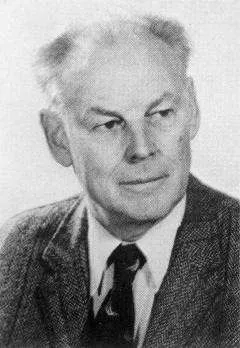
Dr. Ballvé was a Spaniard, born in Catalonia, who became disillusioned with his country in the thirties, when the life choices of anyone who wanted to stay home in Spain seemed to be narrowed down to the either/or of Fascism or communism. Having studied economics in England, where he managed to resist the Fabians, Dr. Ballvé had had some acquaintance with the idea of libertarianism under-law that one used to think of as peculiarly Anglo-Saxon. He took his philosophy with him to Mexico in 1943, where he wrote Diez lecciones de economia, or, as it was translated for the French edition, L’Economie vivante. The English language edition, which was first published by Van Nostrand in 1963, includes some substantive changes made for the French public.
Dr. Ballvé must have had his Catalonian brothers in mind when he wrote his book, for his clear distinctions seem directed to the emotional libertarian, particularly common in Latin countries, who tends to think of freedom as a synonym for anarchy. The emotional libertarian goes in for syndicalism. But syndicalism, as Dr. Ballvé saw it, resulted in group interferences with the market, and pushed an economy in the direction of corporativism, which demands state control of the syndicates and so negates the original impulses of anarchistic individualists. Having forsworn the aberration of his countrymen, who seem to have a genius for turning things into their polar opposites, Dr. Ballvé was in an exceptionally good position to bring the principles of classical liberalism to a Latin audience.
Freedom of Choice
Classical liberalism presupposes rights, which must be guaranteed by law and protected by the courts. In economics, the right to life, which is fundamental, becomes the right to own and to exchange what one owns in the free market if one so chooses. (How else is one to support life as a right, not as something that one lives on sufferance of a tyrant?)
In translating his liberalism into the terms of economics, Dr. Ballvé refuses to talk about that unreal abstraction, the “economic man.” Like Mises, Dr. Ballvé thinks that all choices, whether economic or not, vie for an individual’s time and energy. Any choice of any kind affects the market: as Dr. Ballvé puts it, “the retirement of an entrepreneur of genial disposition can bring fortune or misfortune to many other entrepreneurs, just as the indifference of a truth-seeker to monetary considerations can, at a given moment, make both him and others wealthy.” Thus there is a competition “not only among vendible goods, but also among things that are, as we commonly say, ‘beyond price.’ “
The choices of men cannot be predicted; moreover, they cannot even be averaged. So there cannot be any “mathematical economics” apart from the science of statistics, which tells you what has happened, not what is going to happen. The future is unknown; it can be pushed into utterly unforeseeable forms by invention, imagination, the spirit of adventure, the willingness to take chances. Value is a subjective matter which becomes objectified in price as people trade “disutilities” (for them) for “utilities” (which are the other fellow’s “disutility”) You get rid of something you value less in order to pick up something you value more. And your judgment may or may not reckon with the “labor hours” it takes to make something, or with “intrinsic” value. The higgling of a whole slew of subjective desires takes place within the context of the available purchasing power (money and credit), and it is the “market” that makes the prices.
The state, of course, can inflate or deflate the prevailing price level by manufacturing or destroying money. Governments make depressions by following interventionist policies that expand credit without sufficient knowledge of what people actually want. Intervention, if it does not make a lucky guess, provokes malinvestment. In socialist nations this fills the storehouses with unwanted goods; in capitalist and semicapitalist nations, it piles up inventories that have to be sacrificed at a loss.
Consumer Oriented
Everything is fluid in Dr. Ballvé’s world. Wages are not paid out of any fixed “wage fund” in accordance with an “iron law of wages”; it is the consumer, in the last analysis, who pays the worker as well as the investor and the entrepreneur. The consumer makes the demand that brings out the supply, again within the context of the availability of money, goods, and services. Just who will get what out of the cycle of production, distribution, and consumption depends on many variables, none of which can be accurately predicted. The willingness of the working class to reproduce itself depends on general cultural considerations. “Poverty” is a subjective concept; what was “riches” to a courtier in the time of Louis XIV would be considered “poverty” by many today.
Dr. Ballvé is particularly good in his description of the economic process as a seamless web. Production, distribution, and consumption cannot be split apart. The production, in accordance with Say’s Law of Markets, releases the purchasing power (wages, interest, dividends, profits) sufficient to clear the market, with distribution figured as a cost. The numerous time lags that separate the act of production from the act of consumption overlap. There can be no such thing as general “overproduction,” although entrepreneurs may make bad guesses in individual instances that require a liquidation of inventories at a loss. If the state does not interfere with the rhythmic pulsations of the economic process, unemployment in specific industries will quickly disappear as the workers who have been temporarily inconvenienced by bad guesses go to work for entrepreneurs who are gifted with better foresight.
International Trade
The effort of separate nations to solve their problems on a socialist basis (which comes down to “national socialism” even though Marxists pay lip service to “internationalism”) leads to national impoverishment, for, if one cannot import what other people can make more cheaply, one is necessarily forced to forego manufacturing the exports which would buy the most for the least in the world market.
All countries have to import food and raw materials and manufactured goods if they wish to live well; the idea of raising bananas in the temperate zone, or making automobiles in the desert, is self-evidently idiotic. The law of comparative cost always holds. So, when nations begin worrying about the “balance of trade,” they are saying, in effect, that the price of a currency expressed in an exchange rate is more important than bananas, or automobiles, or whatever. This is a perversion that sacrifices the consumer to an abstraction; better let the currency seek its own level in the world’s money markets.
Dr. Ballvé’s description of a consumer-directed economics is not a description of the contemporary world. Governments everywhere seem to be in competition to promote a maximum amount of malinvestment by their constant monetization of new debt. Because of this, libertarians and conservatives have been predicting for years a recurrence of the 1929 crash. It doesn’t happen. But what does happen is that individuals are constantly forced to surrender more and more of their liberties while the governments go on inflating their currencies. The “controlled economy,” as Dr. Ballvé says, “drifts inevitably toward communism.” And, as Hayek said, “the worst get on top,” for the act of controlling requires tough individuals who are willing to use the club, the knout, and the jail sentence to get their way.
Dr. Ballvé’s little book runs to 99 pages of text, plus the space devoted to a foreword by Felix Morley and the prefaces to both the English and the Spanish language editions. For those who can’t find time to read Mises’ Human Action, Dr. Ballvé is a good introduction to the “science of choice.”