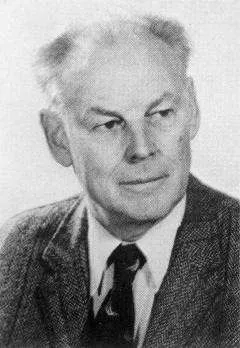
It is many years since I met Spencer Heath, a bearded gentleman (he’d be right in style now) who had a delightfully free way of looking at things. Among his many theories was one which made the landlord the center of an ideal economic and political—or maybe one should say a-political—order. Mr. Heath’s utopia was pre-Norman England, where, as his researches did much to prove, free men paid rent for productive land instead of taxes to unproductive politicians. It was Mr. Heath’s contention that a landlord could sell, for market value, everything from police and fire protection to public utility services without plunging a community into serfdom.
Naturally, Mr. Heath encountered many doubters. His book, Citadel, Market and Altar, didn’t make many converts. The world has wagged on since Mr. Heath died, and those who refused to listen to his theories haven’t noticeably advanced the cause of freedom or improved the quality of our life. Since children aren’t known for their pertinacity about carrying on the work of their fathers, a full generation has passed since Mr. Heath started outlining his theories.
Now a grandson of Mr. Heath, Spencer T. MacCallum, has mounted his charger to advance the cause of his grandfather. Mr. MacCallum’s book, The Art of Community (Institute for Humane Studies, Inc., P. 0. Box 727, Menlo Park, Calif. 94025. $4.00 cloth, $2.00 paper), is a legitimate extension of Citadel, Market and Altar, and it may be more convincing to the pragmatists among us simply because it proceeds by exploring current trends to show how people unconsciously turn to good theory when the practices resulting from bad theory have let them down.
Mr. MacCallum is a trained anthropologist, which means that he can look at community organization without blinking. He sees an “art of community” developing empirically, spurred only by the efforts of people to make profits by supplying services that states and municipalities have fumbled with so badly. To those who say that a community must be political in nature, he offers hotels, shopping centers, industrial estates, real estate complexes such as Rockefeller Center, condominiums, marinas, science research centers, and “new towns.” Some of these combine individual private ownership with paying fees for the use of common lands or common services that are open to all participants in a community venture. But the point is that one can buy protection or transportation or access to a swimming pool or a playground without going through the often disappointing rigmarole of politics to get it.
The basis of the “art of community” is contract. Ordinarily one thinks of contract as something that binds separate individuals. Mr. MacCallum is not against the individual ownership of homes or acreage, but the defect of such ownership is that it can’t ordinarily provide for police and fire protection and public utilities without bringing in the state. The atomized private plot is at the mercy of ”neighborhood effects” which the purchaser never bargained for. Accordingly he may find himself abandoning some of his own rights as a private owner by accepting zoning regulations, or by giving a right-of-way to a gas transmission company under threat of expropriation by state invocation of eminent domain. Mr. MacCallum thinks individuals could get better bargains by combining their units to form proprietary communities with central planning powers. The unreconstructed individual will bridle at this suggestion, but Mr. MacCallum quite soothingly insists that membership in a proprietary community must go by voluntary choice under contractual arrangements. One need not be forced to do anything; if one doesn’t like the decisions of the proprietary authority, one can sell his own particular condominium, or refuse to renew his lease.
Mr. MacCallum contrasts the downtown shopping centers in our congested cities with the new-style suburban shopping areas to make his points. The downtown merchants may all agree that they need more parking space near them for automobiles. But no one of them will willingly allow his own property to be condemned to provide parking space for the other merchants in his association. The political arm must be called in to bust a few recalcitrants so that others may benefit. Naturally, this creates bad blood or political corruption or both. Since politicians live to be reelected even more than they live to serve the community, they will do not what is aesthetically right but what is necessary to get the most votes the next time around.
In the suburban shopping center, the proprietor can make whatever decisions he wants, provided he doesn’t break one of his contractual promises. The proprietor sells a variety of services to those who like them well enough to make contracts to pay for them. The services can include parking, roads, lighting, landscaped common areas, police and fire protection, storm sewers, even sewage disposal.
Mr. MacCallum offers some fascinating bits of history of a sort that doesn’t usually get into the standard history texts. I’d like to know more about such characters as James B. Douglas, the pioneer of the Northgate “regional” shopping center in Seattle, who first worked out the theory of the “cumulative pull.” Douglas began by insisting on the “Noah’s Ark Principle” of supplying two competitors for every type of good that a shopping center had to sell. (Today the rule is obsolete; two are no longer adequate.)
Then there is Edward H. Bouton of Baltimore, whose Roland Park development provided for orderly residential planning adjacent to a shopping center. The pioneer of the industrial estate seems to have been Marshall Stevens, who built a ship canal from Liverpool to Manchester only to discover that the cotton millers, who had marriage ties with the cotton shippers of Liverpool, disdained to use his waterway. To save his canal investment, Mr. Stevens prepared a large tract of land in Manchester for industrial use, putting in the streets and supplying the utilities. He leased the land to various industrialists, thus creating Trafford Park, England’s first proprietary industrial park.
In their own way such pioneers as Bouton, Douglas, and Stevens were practitioners of Leonard Read’s “anything that’s peaceful” philosophy. They were communitarians rather than individualists, but they did not bring in that engine of compulsion, the state, to solve the problems of group living that they posed.
It is hard to see the whole world being saved by the development of proprietary communities. Some people want a more complete type of privacy than is to be found in planned estates of one type or another. But the world could only benefit by a vast extension of the sort of thing that engages Mr. MacCallum’s enthusiasm. As long as he sticks to contract as the binder in his “art of community,” no individualist, whether unreconstructed or not, can find fault with his theory. His book on the proprietary community is stimulating, and even the most obdurate live-alone-and-likeit individualists among our depleted tribe of voluntarists would do well to read and ponder Mr. MacCallum’s conclusions.