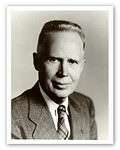
W. A. Paton is Professor Emeritus of Accounting and Economics, University of Michigan. He is author (or co-author) of a score of books and many articles, largely in the field of accounting. Since his retirement at Michigan, he has continued his writing and lecturing activities and has done part-time teaching at a dozen colleges and universities, in ten states.
There have long been widespread delusions and misunderstandings about personal services in relation to the market place, and the resulting interferences with employment procedure and the price-making process have had unfortunate consequences with respect to economic productivity and progress. The impact of the roadblocks to a free, competitive market for services, moreover, has been especially damaging to the welfare of the host of workers providing the lower levels of marketable skills — the very people that the interfering programs have often been set up to benefit.
Kinds of Personal Services
In commenting on this area of sloppy thinking and the accompanying harmful policies and practices I’ll first call attention to the persistent tendency to define personal services too narrowly. In a very primitive economy there may be a bit of justification for conceiving of “labor” in manual, physical terms — muscle applied directly to the necessary tasks with the aid of simple hand tools. But this conception is without merit in the highly-specialized, technologically-complex economic system in which we are now living and enjoying an amazing array of consumer products. Today muscles take a back seat for machines, and physical effort in production consists in large measure of operating power tools, such as driving a tractor on the farm, performing some chore on a factory assembly line, or tapping the keys of a computer in the office.
Further, to be realistic we must recognize that personal services required in our intricate exchange economy include a great variety of activities and functions — and the list is almost endless. In other words, there are many, many kinds of “workers” in the modern vineyard. In manufacturing, the extractive industries, transportation, power production, construction, communication, and other major lines we have researchers, designers, executives, salesmen, stenographers and so on as well as a variety of grades and groups of workers in factories and other operating facilities. Modern business, overall, requires the services of such people as bankers, brokers, insurers. In the professions, broadly defined, we find doctors, dentists, lawyers, accountants, teachers, writers, entertainers, and many other service groups, all functioning in the process of furnishing economic “goods” to the ultimate consumer. Every family, too, has contacts with painters, plumbers, electricians, retail store staffs, car repair men, barbers, and many other familiar service providers. In mentioning these examples of some main fields and specific occupations I’m simply trying to stress the point that a very broad range of personal services is associated with the present-day production pipeline at all stages.
Restricting the use of the terms “labor” and “worker” to certain callings and trades is especially objectionable in that it fosters the view that these activities have a preferential position on the productivity scale. Thus popular opinion continues to regard farmers, miners, bricklayers, and union members generally, as bona-fide “producers”, with those engaged in managerial and other “non-labor” roles relegated — in varying degree — to the status of parasitic poachers on output. That we do suffer from parasitism is not to be denied. Soldiering, featherbedding, sabotage, fraud, coercion, and other destructive and unproductive practices are a commonplace these days. But the loafers, vandals, and crooks are not confined to any one class or group. The office staff, and the top brass for that matter, may be as hardworking, as honest, and as truly productive, as the men out in the shop.’
I don’t find it difficult to include in economic “services” the contributions of those who make the basic decisions as to utilization of available resources and thus direct the course of production, acting as agents, so to speak, of the impersonal mechanism of the market. And there is some justification for regarding the function of savers and investors, who provide the capital and assume the risks, as a type of “service” — and one that is crucial to the existence of private enterprise and a free economy.
Relation of Services to Commodities and Physical Facilities
In viewing the market structure many tend to regard commodity pricing as entirely separate and distinct from personal-service pricing. This is unreasonable. This view, for one thing, overlooks the fact that from a cost standpoint a physical commodity on any market level, including the final stage of transfer to the consumer, is largely a bundle of service prices. The latent raw materials of our planet, including oceans and atmosphere, prior to discovery, development, conversion into useful forms, and transfer from one location to another, generally have little or no market value. In short, the process of commodity production consists essentially of the application of personal services of many kinds to the natural resources, raw materials, intermediate products, and commodities capable of satisfying consumer needs. And the end economic “good”, as has been pointed out by economists from time to time, is use, not molecular content.
Our manufacturing plants with their equipment, and all other productive facilities, may also be conceived as bundles of the many kinds of services required in preparing and putting together the materials required in fabrication and construction. And the services utilized must include the efforts of planners, architects, and other special skills, as well as the work of those operating the electric saws or handling excavating machines, cranes, and so on.
I don’t want to seem to be supporting the view that the market value of a specific commodity or facility is determined by a summation of service costs. In a free competitive market no producer is assured, continuously, that the price of his output will equal — or exceed — the costs he incurs. Moreover, costs will vary among suppliers during a particular period, although in a good market the price to all buyers for identical goods (taking into account all the attaching conditions) will tend to be the same. But the old socialist description of physical product as “congealed labor” does have a bit of merit, when broadly interpreted, in suggesting the importance of services in the overall process of production.
It should also be noted here that the so-called “service industries” are closely related to physical products and facilities, at various stages. For example, we like a comfortable seat in a building with good acoustic properties while enjoying the singing of the prima donna at the opera. We also recognize that a piano is needed for the accompanist, and that both performers require suitable garb for the occasion.
Services and the Market
It follows that the market for services is an integral part of the overall market mechanism, not a structure separate and distinct from the markets for commodities and physical facilities — in a sense consisting largely of embodied services. It also follows that harassment of the buyers and sellers of services as such, the imposition of a complex of restraints and controls, legalized or otherwise, strikes at the very heart of the market as a means of channeling productive factors and awarding output to participants. Efficient utilization of available resources, it is generally agreed, is the key to maximizing the flow of consumer products. And how can this be accomplished if decision-making is taken away from the users and providers of services?
It is true that a nation’s endowment of natural resources is not a negligible factor, but the attitudes and abilities of the people have often proved to be of primary importance. As has been pointed out by economic historians, the destruction of physical property —buildings, equipment, roads, and soon — in a devastating war may soon be remedied by even a defeated country if the population is energetic, capable, hardworking, and assuming that needed raw materials can be imported. Present-day Japan is an outstanding example.
From certain quarters we hear the familiar cry to the effect that “people shouldn’t be bought and sold like sacks of potatoes”. In the absence of some form of slavery, of course, the human being is not a marketable chattel. But personal services are most assuredly bought and sold every day, and the prevailing price — in the absence of interference by private or government agencies, and the impact of general misunderstanding and mistaken views — will be the result of impinging demand and supply influences. The pricing of services in a free, competitive market, conforms closely to the basic pattern of the pricing of commodities.
The idea that the buyer of personal services will exploit the service-furnisher, the worker, unless he is pressured by legislation or other means into paying what the service is worth, on the basis of economic productivity, is persistent and widely accepted. On the basis of long study and observation, and a dozen years in an administrative capacity in business operation, I find this view largely unfounded, at least on the American scene. Competition for services tends to be just as keen as the bidding for the available supply of raw materials and other commodities. If an employer is paying only $4.00 an hour for a certain type of service when the current value in the market area is $5.00 per hour, he will either be obliged to adjust his scale promptly or lose needed workers.
It is true that the market for services, in the short-run, tends to be somewhat less flexible and sensitive than the market for materials, even in the absence of interferences by government agencies or others. To shift the flow of services from one region to another of course requires suppliers of services to move, and such movement may be resisted, especially where families and older persons are involved. But in this country this influence has become minimal, with the availability of the automobile and other means of transportation and the erosion of sectional loyalties and prejudices resulting from increasing familiarity with country-wide climate and other conditions.
As already implied, the interfering pressures bearing on the labor market are generally directed at the employer. He’s the accepted villain in the play. But it shouldn’t be forgotten that if the employer is coerced by non-market forces this inevitably means that employees are also being affected. Dictated employer decisions are bound to have an impact on employee actions and welfare. And the overall result is hamstringing the market as a guide to economic conduct.
Tenure
 I want to add to the above comments some observations on the burgeoning restrictions on the rights of employers to select and dismiss employees, and the accompanying limitations on worker rights in seeking employment and holding jobs. I’ll begin by referring to the development of tenure for the “civil service”, starting long ago with legislation at the Federal level, and which has since been widely copied, in its main features, by state and local governments. The general objective of the various enactments and regulations, at least at the outset, was to do away with the “spoils system”, under which appointments were made — so the story goes — largely on the basis of political party affiliation, regardless of ability and character. In contrast the framework of commission control that has emerged is often described as the “merit system”.
On balance, in my opinion, the substitution of commission authority for the judgments of heads of departments and other administrators, including elected officials, has not worked out at all well. The selection process tends to be cumbersome and time-consuming, and influenced by all sorts of factors that have nothing to do with ability to perform (for example, preference granted to those who have served in the military forces). More serious is the virtual impossibility of discharging any individual who has secured a civil-service appointment, regardless of level of capacity and accomplishment. Once an appointee has come under the prevailing blanket of tenure he is almost entirely free from the risk of dismissal.
As a member of a university teaching staff for 45 years I can speak with more authority on the impact of tenure in that field. Long and close observation has convinced me that freedom from risk of dismissal for the teachers, following a brief probationary period, tends in many cases to chill incentive to improve, blunt any latent desire to work harder and more effectively. Unions for the teaching staff are now being advocated and formed on many college campuses — a sorry picture for people aspiring to professional stature. Moreover, it has become difficult to enforce adherence to the period of service required before tenure becomes effective.
A feeling of some degree of security in one’s job or position, needless to say, is not something to be deplored. A continuing fear of summary discharge is not conducive to good employee morale. But tenure should be earned, and maintained, by performance, not by rules and pressures that take the matter out of the employer’s hands.
Some Union Policies and Practices
The current stress on seniority, a major feature of union policy, is a serious obstacle to sound employment practice with respect to promotion and retention. Other things being equal the duration of a person’s experience might well be a decisive factor. But other things aren’t equal. People vary widely in native ability, attitude, integrity, and so on; health and age are important factors. Efficient utilization of personal services, the key to productivity and volume of output, simply can’t be achieved in any field if period of service becomes the sole basis for advancement and freedom from loss of job.
Compelling the individual worker to become a union member as a condition of employment is another highly objectionable policy, and one — unfortunately — which has acquired considerable legal sanction. This surely limits the worker’s right to choose, and discourages labor mobility, so essential to a good market for services. Moreover, the typical union member today has virtually lost his right to bargain as a supplier of service. He is one of a large group, under the thumb of well-financed union management — officers, shop stewards, and other staff groups. He can vote on occasion, it’s true, but he’d better vote right.
To suggest that threat of violence is a feature of current union practice is generally taboo, but that this factor is present and important is obvious to anyone willing to look at the record. Indeed, if all fear of danger to himself and family could be lifted from the individual member the harmful power of our unions would largely disappear.
The overall impact of union policies and practices has not been beneficial to those who have personal services to sell, including their own members. Union support of statutory minimum wage rates has helped to fasten this incubus on us, and the impact has been especially severe on those workers in the lower ranks from the standpoint of abilities, and has thus contributed mightily to unemployment.
Another aspect of union wage rate policies, often overlooked, is the restricting of increases for the especially talented and skillful. Observant personnel managers will admit, privately, that they would be glad to pay more than the top union scale to their best people, if this were practicable. Without much doubt there is a tendency in a leveling direction resulting from union tactics and demands, although possibly unintentional.
Perhaps the most absurd of all the many misleading phrases we are plagued by these days is “free collective bargaining”. The word “free” should certainly be deleted.
Enforced Catering to Minorities
Federal, state, and local governmental agencies, with help from many nongovernmental organizations and a host of do-gooders, have created a climate of irrationality with respect to the hiring of our racial “minorities”, so-called. Beginning with a relatively mild pressuring of employers to give fair treatment to Negro and minor minority group applicants the tide has risen to the point where such applicants are being pushed to the top of the list, regardless of qualifications. The development has taken on the character of a social obsession, with an unwillingness to permit any critical examination or discussion. In recent years the problem of female rights has been thrown into the hopper, although the women can hardly be regarded as a minority group. There is now quite a clamor for equality of the sexes with respect to job applications, in practically all fields, and “equal pay” for “equal work”.
Anxiety as to the welfare of the underdog is not altogether unwholesome, and no right-thinking male nowadays wants to see the ladies cast in the role of second-class citizens. The record of mankind on this score is rather miserable, and women still are treated badly in many parts of the world. But the fact remains that the sexes are not the same in important respects and that it is not unreasonable to take these differences into account in employment practices. If an accounting firm, for example, has had a number of experiences in which a smart young woman, with a keen interest in the field, has decided to marry and resign just about the time she was becoming an effective auditor you can hardly blame the organization for giving a promising male applicant the edge when recruiting from the ranks of college graduates.
But it seems clear to me that the degree of coercion to which employers are now subjected in their hiring practices is highly objectionable and a barrier to efficient utilization of our personal-service resources. By and large the employer should have the right to select staff according to his views of his needs. Outside agencies, governmental or otherwise, simply can’t be expected to take over the hiring function directly, and to swathe the employer in such a network of rules as to cripple his right to select employees is bound to result in loss of operating efficiency.
If the management of a restaurant decides to employ only women to serve their customers why shouldn’t they be permitted to do so? If a trucking company prefers men as drivers why should it be compelled to take on a female contingent? If it is traditional to employ males with some African blood as porters on railway sleeping cars why should the management be required to hire a quota of males of Caucasion extraction, or attempt to recruit women? If a clothing store considers tailors from abroad more efficient than those trained in this country (assuming there are such) it surely doesn’t make sense to coerce the business into changing its hiring policy. Indeed, if an employer — in a special situation — prefers employees with a Scotch accent that’s his business, not that of any governmental or private body trying to force its pet views on the enterprise.
It should be kept in mind that in a free market economy it’s the customer who calls the tune, and employers who don’t listen and conform aren’t likely to stay in business very long. The employer who caters to any personal prejudices he may have as to hiring practice that conflict sharply with customer attitudes will soon hear from his patrons. The market mechanism is a great disciplinarian, if permitted to function as such.
In short, I believe it would be a blessing if the government, at all levels, would abandon the attempt — now in full swing — to interfere with employer rights to pick their employees. And this doesn’t mean that I am protesting the basic role of government as an agency to protect us from violence, fraud, and other criminal actions, or that I wish to exempt employers from the police power.
Summary
I’ll summarize, briefly. In the present-day economic process a wide range of kinds of personal services is required, and no type of service essential to providing the great array of consumer “goods” found on the modern market has a preferential position on the productivity scale. Services permeate the economic pipeline at all stages, and in a sense commodities and physical facilities are bundles of applied services. Thus the process of production consists essentially in discovering, converting, transporting, and using the basic physical ingredients available, plus providing desired services as such directly to the ultimate consumer. It follows that services are an integral part of the overall market structure and that interference with the buyers and sellers of services, by governmental or other agencies, constitutes a crucial assault on the market mechanism in its role as a guide to efficient utilization of resources.
Today’s mounting wave of interference with the right of employers to select and discharge employees has taken many forms. Employee tenure, now highly developed in government service, has become firmly established in teaching and is a factor in other fields. Today the employer who fires an employee does so at his peril, whatever the cause, and the overall result of undue job security is impairment of the incentive to do well on the part of the employee and thwarting of employer efforts to spur efficiency in production. Some dominant union policies are clearly roadblocks to good staff management. Stress on seniority interferes with both the retention and advancement of employees on the basis of ability and performance. Forcing union membership as a requirement in obtaining and holding a job is an unjustified interference with both employee and employer freedom of choice, and legal sanction of this practice is truly an outrage. Individual initiative among the rank and file of union members is largely lost, and there is often a very real danger of persecution and violence where a member has the audacity to oppose the policies and decisions of the officers and their minions. Thus union membership often has a tendency to discourage the more talented and energetic, and union wage scales demanded often fail to do justice to the most able workers. At the same time union leaders generally support minimum-wage legislation, demonstrably an obstacle to the employment of workers at the bottom of the totem pole of productive capability.
The current and expanding pressure on employers to cater to minorities and women in hiring is certainly having an adverse effect on both the quantity and quality of services available to the market and also on the efficiency of the productive process and the volume of output.
1See my “What PRODUCTION Means,” Michigan Business Review, March 1973.
