If we knew beans—and I mean this literally—we would know that labor is a commodity. My dictionary states that a commodity is “any useful thing; anything bought and sold; any article of commerce.” This definition would seem to be acceptable to any economist.
Listen to a distinguished businessman who puts himself on the side of the overwhelming majority:
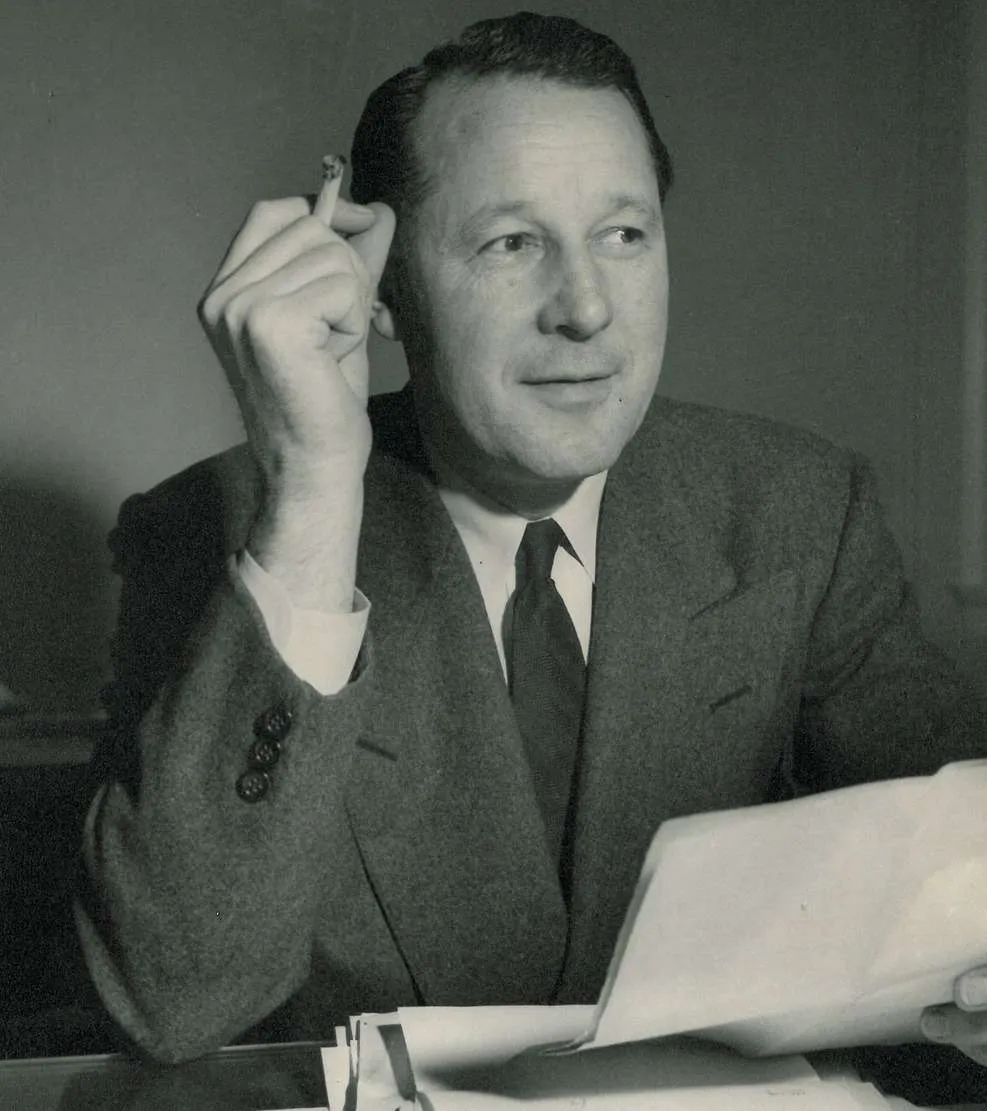
The concept of labor as a “commodity” is so outmoded that we don’t even talk about it today.¹
Granted, this concept is outmoded. Further, it is against the law: “The labor of a human being is not a commodity or article of commerce.”2 But it’s not the first time men have thought the truth had been outmoded. When a truth is out of style, or at odds with legislation, that’s precisely when we should be thinking, writing, talking about it—especially when the confusion is as costly as in this case.
The widespread impression that labor is not a commodity results in enormous economic mischief. If labor is not a commodity, then the argument seems to be that its price (wage) ought not to be determined by competitive forces of supply and demand in an open market. In other words, those who argue that labor is not a commodity would in effect deny the laborer access to the market—would compel him to find some other way to get what he wants from others.
Historically, that other way was for many laborers to serve as somebody’s slave—after having lost a war and being taken captive. The serfdom of the Middle Ages marked little if any improvement in these people’s condition. Not until the Industrial Revolution made it profitable for employers to compete to hire people to use tools was there much chance to live better lives. Capital and competition freed slaves to sell their services to the highest bidder in the open market.
The modern argument that labor is not a commodity generally implies that we who work for a living would fare better under compulsory unionism than in the voluntarism of the market. But this is only another form of warfare and slavery, and not a path to progress. This way—price and exchange control—is at the intellectual level of mirror smashing. It keeps others from seeing what we have to offer and us from seeing what they have to offer in exchange. So, let’s be done with the notion that labor is not a commodity.
Different Meanings
What lies at the root of such widespread confusion? Quite simple: Most people use one dictionary definition of labor only: “Laborers, operatives, and artisans as a body or class”—in a word, human beings. This figure of speech is useful for political purposes. The definition an economist must use is quite different: “The product or result of labor or work”—in a word, the productive effort of human beings. Interestingly enough, this definition has after it, archaic.
A laborer, be he the janitor or the president of the company, is a human being and not a commodity. No argument! But the labor or work of any human being, regardless of occupational status, is a commodity. About this there should be no argument among those who respect the dignity of every man, and would have him free to buy and sell in the open market.
We quite properly regard a bag of beans as a commodity. But what is a bag of beans, really? It is exclusively a manifestation of numerous forms of labor applied to the good earth, that is, it is a product of varying types of human energy. Except for Creation’s endowments—natural resources—in which man has had no hand, the bag of beans is labor and nothing else.
From an economist’s viewpoint, the dictionary misleads in still another way; it describes labor as “physical or mental toil; bodily or intellectual exertion, esp. when fatiguing, painful, or irksome, or unavoidable”—in a word, menial or servile effort. Were this correct, we would be forced to measure the value of labor by the amount of perspiration or degree of tiredness—an absurdity! We are all tool users. In today’s world, there is a mop or hoe or plow or truck or jumbo jet to augment labor. These are all tools—capital. The captain of a jet no less labors than does a carpenter or a plumber. It is economic nonsense to categorize as labor some lower form of human exertion, to draw a line between “the working man” and an inventor, for instance. Both are working men and oft times the latter labors and creates more than the former. It would be just as wrong to define labor as exclusively a higher form of exertion—the insights of Leonardo da Vinci, for instance. Quality or quantity of exertion has nothing whatsoever to do with what is or is not labor: labor is human effort, whether the exertion be muscular, mental, or spiritual.
In the case of a bag of beans, there’s the labor of men who till the soil, the labor of those who skinned the hides that went into harnesses, of those who grew and ginned the cotton that made the bags, of those who mined and refined the ore that made the plow and other implements—an endless profusion of kinds of labor ranging from ideas laboriously refined, to the labor of saving capital, to the labor-saving but labor-produced machinery—trillions of labor bits in that bag of beans!
Labor-Saving Effort
The accumulation of capital helps to emphasize the varying kinds of labor or effort. What is the nature of this effort? It is abstention from spending all of one’s income right now. For some, this is more difficult than pulling weeds; for others, it is the easiest thing they do. If the price we pay for capital—interest rates—were to be governed by how difficult it is for people to save, we would have to invent some electronic gadget, perhaps an “effort meter,” comparable to measuring the value of labor by the amount of perspiration. Capital, in this sense, is a commodity and, as the bag of beans, has its origin in a form of labor or effort.
Nor can we say that the bag of beans is an end product of labor. There’s a can of beans! Contemplate the labor in transport, of mining tin, and of all the labor that went into the canning factory—another profusion of labor bits, even to the kind of labor that goes into advertising and into the paper on which it is printed.
And the end is not yet. There are countless forms in which the canned beans are prepared and presented for human consumption—the labor of cooks and of recipe creators and all the labor bits that go into the accompanying ingredients.
The dish set before the king is labor—and so is the dishwasher, whether manual or mechanical!
The Value Depends on Buyers in the Market
Everyone will agree that a bag of beans qualifies as a commodity: “a useful thing; anything bought and sold; any article of commerce.” But the bag of beans is only one of the myriad forms in which labor is manifested. Labor, thus, is a commodity precisely as is the bag of beans.
All except socialist planners will agree that a bag of beans should go to market and find its price at whatever level free and willing exchange dictates. But very few in today’s world—even those who give lip service to free enterprise—will agree that a laborer’s labor should find its price in this manner. And all because most people entertain the notion that labor is not a commodity. They personify labor as a cartoonist’s figure in overalls, just as they personify capital as a top-hatted figure with dollar signs on his vest.
My labor, let us say, goes into raising beans. In this case, my labor goes to market as a bag of beans, so let my labor find its price in the market. But suppose I choose, instead, to hire out to a grower of beans. Then my labor—no different from the former case—should not find its price in the same way as the bag of beans? By what quirk of reasoning can such a deduction be drawn? This is not a reasonable deduction but only a conclusion falsely arrived at. It doesn’t make sense and no amount of labor can make sense of it.
Beans vary in quality. People will pay more for good beans than for poor beans. Beans also vary in quantity, that is, in supply. People will pay more or turn to other foods when beans are scarce and high-priced and will buy more when they are plentiful and low-priced. This is to say that people will use their judgment as to how much they will pay for labor going into beans. Can they be faulted for this? Of course not! Should you tire of beans, then you will pay absolutely nothing for such labor; and if every consumer were to feel the same, then labor manifesting itself in beans would receive nothing whatsoever. What’s wrong with this? Nothing! For isn’t the value of anything—labor as beans or labor as service—the amount that will be paid by buyers in willing exchange? To argue contrarily is to assert that what is of value to me—labor however it presents itself—is not a matter of self-determination. Shades of Marx!
Is Our Labor Needed?
The rebuttal, of course, is founded on the confusion of definitions, namely, that labor has needs whereas beans do not. True, regardless of the form our labor takes, we laborers have needs. But our labor, as one of the scarce factors of production in the economic sense, no more has needs than do the beans for they are one and the same. The only relevant question is this: Is our labor needed? If we are to gratify our needs as laborers, it’s up to us to see that our labor is needed, whether manifested in beans or writing or waiting on table. The sole sense in which labor can be said to have needs is the need for constantly improving performance, that is, a need for a greater marketability and exchange value. As I increase the attractiveness of my performance, my personal needs as a laborer can be increasingly gratified. Further, only I, not you, can effect the improvement of my labor. So far as my labor is concerned, you alone may determine what you will offer in exchange for it—and that’s the way it should be. I may accept your offer—or a better one—or none.
These confusions as to the nature of labor lead to mischief when we institutionalize the confusions. Witness the countless political enactments that subsidize labor in employments free choice no longer demands—Federal Urban Renewal, for example—or the tactics of the National Labor Relations Board or the coercive practices of labor unions. Lamented one industrialist, “We are now buying time, not labor.” The whole political pressure is away from the market—free choice—and in the direction of more money for less work and fewer hours. Instead of a concentration on the improvement of labor and its market attractiveness, the movement is toward monopoly, a forming of cartels. The cartel’s message is: Accept us for as little as we choose to give and at our price; you have no alternative; the most important decision in economic affairs is to be made by us and not by management or even by consumers. Take us as we choose to be or close shop.
It is not necessary, however, to read my explanations to see the fallacies in the current “labor” movement. There isn’t a single “pro-labor” member of Congress, a staff member of the NLRB, a labor union official, or one of their millions of members who really believes that a laborer should be paid more for his labor than a free and unfettered market has to offer. Not if we test their beliefs by their actions rather than by their pronouncements!
Merely observe that every one of these individuals—as does each of the rest of us—shops around for bargains. He’ll buy a can of beans from the store that offers it for 20 cents rather than from a store that offers the identical can for 30 cents. What do his actions prove? He is attempting to buy labor as cheaply as he possibly can, for that can of beans is but the manifestation of countless labor bits applied to the bounties of the good earth.
Were the actions of these people consistent with their pronouncements backed by coercion, they would buy the 30-cent can of beans; that is, they would insist on paying more for labor than the free market offers. Not until they engage in this foolish action will I believe they mean what they say by their anti-market pronouncements. It’s human nature and common sense for every bidder to buy services as cheaply as he can. But this does not force wages down. Nor is it a reason why laborers should mistrust the market. The overall scarcity of labor as an economic resource, and the competitive bidding for that scarce and valuable resource, is the only way in the world for the laborer to obtain the full value for his services and fully enjoy the manifold blessings of freedom. But we must be done with the nonsense that labor isn’t a commodity.
Getting to know beans is one way of restoring some economic sanity, of bringing to light a concept that has been too long outmoded.
—FOOTNOTES—
1Ira Mosher, President, National Association of Manufacturers, 1949.
2 The Clayton Anti-Trust Act, 1914.
***
The Most Hopeful Idea
I think the most hopeful idea in the department of economics is this: That it is possible for a man to make a lot of money without taking advantage of anyone else.
This means that one man may get richer without making others poorer.
National prosperity is the inevitable companion of individual prosperity, provided only that the individual’s prosperity is founded on production.
In this situation we have economic health and assurance of growth. No other system has ever been suggested which gives even a promise of comparable results. The present system works. It stimulates enterprise and distributes its benefits to all, including the unenterprising.
From The William Feather Magazine, January, ¹970