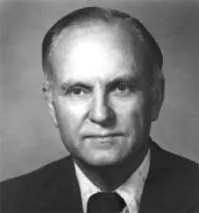
Dr. Sennholz heads the Department of Economics at
Most modern economists openly profess disinterest in ideological and political matters. They go about their studies, proclaiming ethical neutrality and freedom from bias, to specialize in a great many details of economic phenomena. The profession is more and more divided into groups specializing in diverse kinds of research so that few members are able to understand the whole field or relate to it the work done in these specialties. The writing of comprehensive treatises on “principles of economics” has virtually ceased and few students are ever introduced to the eternal principles of human action.
Yet, these same economists who claim the scientific dignity of ethical neutrality readily pass judgment on social and political affairs. In fact, they are busily undermining the classical economics that believed in the harmony of interests and social beneficence of the competitive private-property economy. Espousing the theory of “monopolistic competition,” they condemn the structure and working of the market system and the power of private firms which are said to administer their outputs and selling prices and fix their payments to labor. The main body of the profession embraces “Keynesian” doctrines and theories, which have dealt a severe blow to the economics of individual enterprise and promoted radical government intervention. Keynesians are convinced that the market economy fails to attain and maintain an appropriate flow of money through the system, or “effective demand” for all products, that it lacks over-all stability or steady growth. The system’s grave liability, they proclaim, is its failure to automatically correct its own maladjustments which occur as depressions and inflations.
These modern developments of economic theory contributed to the growth of new attitudes among the electorate and clamor for new public policies. Hence, the ideological and political trends toward new-style liberalism and control-type socialism. And above all, a new radicalism bubbles through the profession.
The old radicalism consisted of a few Marxian professors who had the rare courage to openly confess allegiance to the concepts and doctrines of their master. But while there are few professed Marxians in the American economic profession, a great deal of Marxism has swayed the thinking of countless economists. Marxian surplus value theory, commonly called “exploitation theory,” has been widely accepted in economic thought, in American legislation and labor policy. The Marxian theory of capital concentration and business monopoly is embraced by most Americans and is used as a guidepost by the Department of Justice in its antitrust activities. Finally, Lenin’s doctrine of capitalist colonialism and imperialism is widely accepted as the explanation of foreign affairs, causing our government to help purge European colonialism from all corners of the world.
The new radicalism represented by an organization of younger economists in the Union for Radical Political Economics, with counterparts in most other social sciences, demands drastic domestic reforms and an end to the war in Vietnam.
The private-property-individual enterprise order is summarily condemned in terms of Marxian analysis. In addition, it is criticized for its tendency to create such problems as inflation, urban decay, pollution, racial conflict, and many other ills of contemporary society.
Even economists schooled in the classical tradition are joining the chorus of vocal critics. The private enterprise system, they contend, does not lead to maximum welfare because many social costs are ignored in the calculation of welfare. Large blocs of externalities, which are social costs not included in private costs, are characteristic of the enterprise system. These externalities are destroying our physical environment and precipitating disaster for the human race.
Robert U. Ayres and Allen V. Kneese make such charges in an essay on “Production, Consumption and Externalities.” (American Economic Review, June, 1969, pp. 282-297). Private businessmen are discharging wastes into the atmosphere and water courses without cost to themselves. And consumers do not fully use up, through the act of economic consumption, the material elements that enter production. Almost 3 billion tons of residue are going back annually into our environment. This is becoming unbearable, especially in mass urban societies with growing populations and rising material output. Ad hoc taxes and government restrictions are not sufficient to cope with the growing problem. Central, or at least regional, control is needed; and above all, a new economics must be devised that considers waste disposal an integral part of the production and consumption process, and places it within the framework of general equilibrium analysis. “Under conditions of intensive economic and population development the environmental media which can receive and assimilate residual wastes are not free goods but natural resources of great value with respect to which voluntary exchange cannot operate because of their common property characteristics.”
Such observations reflect an unbounded faith in the political and bureaucratic process. No matter what the grievance may be, the blame is always laid on private property and individual enterprise, and the solution is always more government!
Who is Polluting?
Even some of the facts are grossly misstated. The worst offenders are not private businessmen in their search for profits, but government itself rendering economic services in a primitive manner. Urban communities are polluted by an increasingly formidable cascade of solid waste, such as garbage and trash, rubbish and debris. According to a preliminary report made in 1968 by the Bureau of Solid Waste Management in the U. S. Public Health Service, only 64 per cent of the nation’s people lived in communities that had refuse collection systems. About half of household wastes were collected by public agencies, and one-third by private collectors; the rest was disposed by householders themselves. Most commercial and industrial wastes were handled by private collectors. And most of the dumps and incinerators were operated by public authorities or licensed contractors working for public authorities.
These facts primarily indict government rather than profit-seeking enterprise for our environmental crisis.
Or take the pollution of our waterways. Who is discharging pollutants into streams and rivers, lakes and oceans? Lake Erie, the most polluted inland body of water, is an example. According to independent surveys, the city of Cleveland is by far the worst offender, followed by Toledo and Buffalo and other cities. Numerous public sewer authorities discharge thousands of tons of waste into the lake every day. So filthy is Cleveland’s Cuyahoga River that it catches fire occasionally and traps tugs and boats in its flames. Surely, Lake Erie would suffer no serious pollution were it not for sewer authorities established and operated by government.
Under common law, the beds of navigable bodies of water are government property. Can it be surprising then that government itself either is polluting the lakes and rivers or permits them to be polluted? To blame individual enterprise is an obvious distortion of facts.
It is true, public attitude toward government property usually differs from that toward private property. While the latter is generally respected and the owner protected in its use, government property is treated as a common good without an owner. Unless it is guarded by a host of inspectors and policemen, it is used and abused by the citizenry as if it were free. This common attitude can hardly be construed as recommendation for more government ownership or control over environmental resources.
The Air We Breathe
The third pollution that is often laid on the doorstep of profit-seeking enterprise is the contamination of the air we breathe. In a stinging criticism of the “conventional wisdom” of economics, E. J. Mishan of the London School of Economics and Political Science called the private automobile one of the great disasters of the human race. It pollutes the air, clogs city streets, and contributes to the destruction of natural beauty. The economic growth it represents conflicts with social welfare. (“Economic Priority: Growth or Welfare” in Political Quarterly, January, 1969).
Such a severe indictment of the automobile is tantamount to a rejection of one of the most splendid fruits of private enterprise. There are few, if any, private automobiles in collective economies, from Soviet Russia to Castro Cuba. The automobile means high standards of living, great individual mobility and productivity, and access to the countryside for recreation and enjoyment. In rural America it is the only means of transportation that assures employment and income. Without it, the countryside would surely be depopulated and our cities far more congested than now.
The air pollution in our cities, the smoke, haze, and smog, nevertheless present grave health hazards to millions of city dwellers. Is individual enterprise that manufactured those millions of automobiles not responsible for most of the city pollution?
Zoning and Other Intervention
Again, the blame for the intolerable pollution of city air rests mainly with government. In particular, three well-established political practices have contributed to the environmental dilemma. First, zoning has become a popular legislative method of government control over the use of land. Primarily applied in urban areas, zoning constitutes government planning along “orderly lines,” to control congestion in houses and neighborhoods, height, size and appearance of buildings and their uses, density of population, and so on. Surely, zoning has shaped the growth of American cities ever since the 1920′s when it became popular.
Take Los Angeles, for instance. Radical zoning ordinances made it the largest U.S. city in area, a vast sprawling metropolis of more than 455 square miles in which transportation is an absolute necessity. The resident of Los Angeles may travel a hundred miles every day to work, shop, eat, to attend school or church, or to seek recreation or entertainment. Public transportation cannot possibly meet the million fold needs of Los Angeles transportation; only the private automobile can.
Secondly, in nearly all American cities public transportation has deteriorated to disgraceful levels of inefficiency and discomfort. The private companies that first provided the service were regulated and taxed into losses, and finally replaced by public authorities. Under their control, mass transportation has generally deteriorated in quality and quantity while the costs have soared, as in the New York City subways, for example.
Public transport authorities are easy prey for militant unions. Politicians or their appointees cannot easily resist the demands of teamsters locals and their allies, despite the resultant inefficiency and high cost. The traveling public is frequently left stranded by organized work stoppages, slowdowns, and other union tactics. When public transportation is most urgently needed, in the vacation or holiday season, it is often struck by one of the unions.
The privately-owned mass transportation media are taxed by a host of government authorities until their services deteriorate or even sputter to a halt. The examples are legion. But the recent bankruptcy of the Penn Central
Railroad illustrates the point. Even in bankruptcy, public tax authorities are crowding the courts to force collection of their levies. While labor unions threaten nationwide walkouts, government tax collectors prey on railroad income and assets. And when a company finally petitions its regulatory authority to halt some loss-inflicting service, it may be denied the right to do so. If permission is granted, local courts may order the company to continue the service and bear the losses. Can it be surprising, then, that service reluctantly rendered is minimal and poor?
When public transportation is dismal, undependable and inefficient, neglected and uncomfortable, primitive and costly, people naturally provide their own transportation. And millions of private automobiles are clogging the city streets adding their exhaust fumes to the city air.
Finally, there is the tendency to treat road and highway investments, no matter how huge, as “free goods” that are available to anyone without charge. City governments endeavor to provide adequate approach roads for unrestricted use of the automobile, continually constructing new expressways on the city’s fringes. It is true, a great number of highway taxes are levied on those who use the highways. The Federal government collects taxes on gasoline, lubricating oil, new automobiles, tires and tubes. A highway trust fund established by the Highway Revenue Act of 1956 receives and expends the excise taxes, which are the sole source of funds for the Federal aid highway systems. But as soon as an expressway is completed it is overcrowded with countless automobiles speeding or crawling to the city. No matter how many millions of dollars were expended on its construction, it is “free” to the user who simply does not relate the tax on his gasoline or tire to a particular trip to the city. But even if he were mindful of the tax costs to him, the use value of the expressway, its convenience, speed and safety, may exceed by far the tax cost. Thus, millions of suburban automobiles are rushing to or from the cities on billion-dollar highways, adding their exhaust fumes to our environment dilemma.
Ignoring Property Rights
The problems of smoke, soot, noise, waste, and water pollution reveal unfortunate legal deficiencies in the protection of private property. The law has always been and continues to be inadequate in its treatment of property rights, in particular, the liability and indemnification for damages caused by the owner’s use of property. Ideally, the right of property as a market phenomenon entitles the owner to all the advantages of a given good, and charges him with all the disadvantages which the good may entail.
Over the centuries governments have again and again restricted or even abolished the rights of private property. At other times the law, either by design or default, shielded the owner from some disadvantages of his property, and charged other people with some of the costs, the external costs. Obviously, if an owner does not reap all the benefits of his property, he will disregard such benefits in his actions; and if he is not charged with all its costs, he will ignore such costs.
During the nineteenth century, legislation and adjudication reflected enthusiasm for the rapid industrial and commercial development. Legislators and judges understood the great importance of capital investment for economic betterment. They favored investments in industry and transportation and the productive employment of property. Unfortunately, they decided to hasten the economic development through tariffs, subsidies, land grants, and relief from some external costs. Thus, as the tariffs and subsidies encouraged some production, so did the relief from externalities. Some investments were made and some consumption took place just because part of the costs was shifted from the owners to other people and their property. The pollution of air and water was overlooked as a “public price” for economic progress, that is, some costs were shifted from one owner to another to encourage economic activity favored by government.
The growing awareness of environmental problems is laudable indeed. But the explanations given by “experts” today are taken straight from the armory of political and economic radicalism. The private property order is summarily condemned, and government is hailed as the only saviour from our self-destruction. More taxes and regulations, or better yet, comprehensive government planning and control, are to correct a deplorable situation. In reality, the no-man’s-land of “public property” and government manipulation of private property constitute the pollution problem. Only sincere respect for private property and its unbiased protection by the law can alleviate a deplorable situation.
***
Subsidizing A Crisis:
The shocked surprise in the spring of 1970, when the graduating class suddenly found out that they had to go out and look for jobs, may thus have been the first sign of a typical “inventory crisis”—which always takes everybody by surprise. Whatever the economic climate, the next few years will be years of sharp readjustment in the “careers market.” The “career” boom of the 1960′s is as much a thing of the past as the stock market boom in “takeovers,” “conglomerates,” and “growth ventures.”
PETER F. DRUCKER The Public Interest (Fall, 1970)