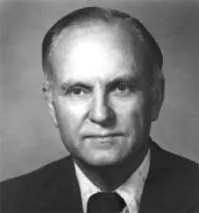
Dr. Sennholz heads the Department of Economics at Grove City College In Pennsylvania and Is a noted writer and lecturer on monetary and economic affairs. His latest book, Age of Inflation, describes our dilemma and offers recommendations for restoring a sound monetary system.
Until just a few years ago most people were indifferent to all questions of energy. They were as heedless of the very industry that produces heat and power as of many other industries meeting their daily needs. Surely they were aware of basic materials such as wood, coal, gas or oil burned to produce heat and kinetic energy. But the term “energy industry” was yet unknown. Even the dictionaries of economics designed to include the terms commonly used in college courses listed neither energy nor the energy industry. It was left to the 1970s to call attention to the industry and bring us the energy crises.
In retrospect there were earlier indications of things to come. By 1970 there was a United States Department of Transportation, a Federal Power Commission, and an Atomic Energy Commission. In 1973 Congress added the Federal Energy Administration to centralize all regulatory functions relating to oil. The Energy Research and Development Administration came into existence in 1974. In October 1977, the Department of Energy brought all these governmental functions together into a single organization under the direction of a Secretary of Energy.
This observation of demonstrable facts raises a fundamental question: was the growth of government intervention in all matters of energy the cause or effect of the painful crises that developed during the 1970s? If it can be proven that government intervention brought about the dilemma in which we find ourselves today, the solution can be no other than early reduction and ultimate abolition of this harmful intervention. But if the causes are found to be elsewhere, and the growth of government was merely a reaction to a new situation, we need to search for other solutions.
Surpluses and Shortages
Our search for an objective answer calls to mind a basic principle of political economy that may be applicable also to energy problems: whenever unhampered enterprise provides products and services, it tends to create surpluses that clear the market only through major sales campaigns. Its advertising message to the consuming public is to buy ever more and better products. Wherever government provides products and services, it invariably creates shortages that inconvenience the public and sometimes bring economic crises. Wherever government is in charge, its advertising message is always the same: consume less, eat less, drive less, let there be austerity! This has not changed from the wheat and bread shortages of 1918 to the gasoline shortages of 1979.
Where government is in charge and shortages inconvenience the public, we can observe yet another regularity. Through intensive publicity campaigns government officials and politicians point the finger of blame at one or several culprits who are bitterly denounced for selfishly causing the shortages. In televised press conferences the President of the United States himself may make ugly charges against oil producers, or any other producers whose regulated services are in short supply. Or he may point at some foreigners, e.g., the Arabs, as the culprits who sinisterly inflicted the evil on us.
When unhampered individual enterprise generates surpluses, there are no press conferences, no headlines and no charges. The public looks at them with indifference in a mood of affluence that comes from choice and selection. The press ignores them although it prospers from the paid advertisements that seek to market the products. Radio and television thrive on advertisement campaigns that pay for the amusement and entertainment of the public.
But all such reflections may reveal mere coincidences that have no bearing on the energy crisis. Perhaps the politicians are correct in pointing at the OPEC countries for charging too much, at the oil companies for seeking ever higher profits, and at the public for consuming too much.
In that direction of deliberation lies a wide open sea of arbitrary judgments. What is “too much”? Millions of people are giving different answers to this very question throughout their busy days. They are making their choices as they are consuming oil and gas for heat, refrigeration and air conditioning, turning on electric lights, operating power tools, or driving up to the service station to tank up on gasoline. They are giving vivid answers to the question in long lines waiting to buy more fuel. We must not blithely ignore or reject their answers, nor those given by the oil companies or OPEC spokesmen.
If millions of people are said to be wrong wanting too much, is it not likely that the critic who is censuring them is judging too much? Is he proposing to change human nature by his criticism? Or, is he a would-be tyrant who is longing to impose his judgment and will on others? To explain the energy crisis in terms of value judgments or culprit condemnations is to open the gates for arbitrary judgment and political power.
Is OPEC Causing the Fuel Crunch?
Such an explanation also leads to puzzling conclusions that seem to contradict human nature. If the Arab oil producers are causing our dilemma, why are they not accomplishing identical, or at least similar, effects on other nations? It is an established fact that they are treating their customers equally, charging identical prices and surcharges. But we know of no energy crisis other than ours. There are no reports of empty gasoline pumps in Europe, Africa, Asia, or Latin America, no empty oil tanks anywhere, except in these United States of America.
This observation is all the more startling as most of the oil we consume comes from wells within our national borders, while most foreign countries, such as Germany and Japan, lack any domestic production. And yet, they are prospering although the price of Arab oil has soared in those countries too. Surely, they too feel the pinch of rising energy costs, which reduces their productivity and income by corresponding amounts. Rising oil costs necessitate many changes in goods prices and readjustments of production patterns. But they do not breed an energy crisis that threatens to disrupt economic production and reduces standards of living severely.
Our energy crisis is all the more mysterious inasmuch as OPEC is accepting the United States dollar as its primary medium of exchange. Other buyers of Arab oil must scramble to earn dollars first before they can place oil purchase orders. But Americans can use their own currency for any quantity of Arab oil they may wish to acquire. Our monetary authorities may create any amount without cost, and thus facilitate the payment of Arabs with newly created money. That is, they can avail themselves of inflation as a tool of international finance, which partially shifts the burden of rising oil costs from the energy users to inflation victims. Thus the United States can victimize the Arabs themselves, who own large dollar balances, by exporting inflation in exchange for Arab oil.
It is obvious that such objectionable devices of international finance do not make for international peace and harmony. Since the United States was exporting inflation long before the oil producers combined to form an international oil cartel, we may understand the Arab reaction that led to OPEC. To them, joint action afforded the only way to adjust the price of oil to the ever-rising demand for oil payable in depreciating dollars. After all, there was no free and open Arab oil market on which the daily demand and supply determined the price.
Under Government Management and Control
The OPEC oil industry is a nationalized industry owned and managed by the member governments. They legislate every aspect of the industry from the allowable quota of production to the price of the product, and determine who may buy under what conditions, and so forth. Theirs is a political process that is very slow to adjust. When compared with the market process that facilitates adjustments from day to day, yea, minute to minute, the political process of managing an industry and marketing its products may appear irrational although its political planners are deliberate in devising their plans and adopting their policies.
In such a world of politics that seeks to manage nationalized industries, there is confusion and chaos—unless the governments as owners agree on a common plan and act jointly to restore some semblance of order. The international cartel arrangement is a natural manifestation of a world economy in which export industries are government owned and operated. It also points up the growing danger of international conflict through world-wide socialism.
It is idle speculation to deliberate on the world market of oil if market forces were unhampered and free to determine prices. If there were no OPEC, no nationalized oil industry, and no Department of Energy regulating and fixing United States production—just unhampered markets and unrestrained competition—the energy world would be quite different. Surely, the price of oil would be much lower without the staggering costs of politics. And there would be no energy crisis.
Are the Oil Companies Gouging the Public?
To many critics, Arab behavior alone does not explain the energy crisis. They are pointing at the oil companies whose profits have been rising in recent years. Most politicians and even the President of the United States are openly denouncing the “disgraceful” and “exorbitant” profits and are demanding a tough “windfall profits” tax. Some politicians even are clamoring for a speedy expropriation and nationalization of the companies.
It is difficult to ignore this crescendo of cheap demagoguery, which, when left unanswered, may lead to most harmful and regrettable legislation. Every effort must be made to refute and explode the political propaganda and repel the politicians who are anxious to extend their influence and power. Their attacks on the profits of one industry actually are attacks on the profits of all industries and on the profit system itself. Just listen to their charges against the energy industry. You will search in vain for a difference between those charges and those leveled against the private property order by the professional socialists and communists around the world.
It is rather inconsistent and therefore most puzzling that American politicians should be the most vocal critics of an industry that has been under their careful supervision and control. After all, the Nixon price control edict of August 15, 1971, was never lifted from the energy industry. Even today the ceiling prices as set by the Department of Energy are posted on every gasoline pump in the country.
The political attacks on the very industry that, under a heavy barrage of regulations and denunciations, continues to provide us with energy remind us of some gruesome tales of human behavior during the Dark Ages. When the black death was stalking Europe, public sentiment was often aroused against those people who bravely sought to alleviate the suffering, comforting the dying and healing the sick. Thousands of aging women who survived the disaster were accused of precipitating the disease through witchcraft and were put to a cruel death. Similar forces of darkness now accuse the American oil industry, which provided the people with an abundance of cheap energy for most of this century, of creating the shortage in order to reap ever higher profits in a moment of national crisis. Surely, no person will be put to death, merely our economic order.
At the trial of the private property order the defense is pointing out that the Government of the United States is enforcing energy prices that are arbitrary and confiscatory. They are fixed below those prices free people would choose to pay if there were no mandated ceilings. That is to say, the Government is forcing energy producers to sell their products and services below their objective exchange values and thereby causes the producers to be gouged on a massive scale. If a company tires of this legislated plunder and for a moment should ignore the price edict, it is hauled into court and charged with consumer gouging. That is, the political gougers are taking the victims to court and accusing them of the very crime that is perpetrated against them. If there were justice in the court of public opinion, the charges would be promptly dismissed and the persecutors would be arrested for expropriating private property without due process.
Groundless Charges
The charges against the energy companies are based on the crude assumption that their profits are the evil fruits of worker exploitation and consumer gouging. Profits are the scourge of greed and egotism, which is the charge all socialists and communists are making against the private property order. A mere glance at the living and working conditions of the people in capitalistic countries vividly disproves the charges. When compared with the conditions in the socialistic countries, the American people are living in a land of milk and honey, enjoying far greater material comforts and cultural opportunities. The steady stream of refugees and immigrants to American shores is illustrating the point.
Blinded by socialistic propaganda, the critics of the profit system fail to see its inherent benefits and justice. What is a profit, after all? It is the remainder of proceeds after all factors of production have been fully compensated. Businessmen may earn it through efficient management of their resources in the service of their customers. The most efficient producer earns the highest profits, which give him the means to expand his production and render even more services. Surely, the profits thus earned benefit the people through more and better production. Similarly, the workers employed by profitable enterprises enjoy higher wages and more benefits than others less fortunate who happen to work for employers suffering losses.
Exceptionally high profits can only be reaped through the correct anticipation of changes. When a change in market conditions, e.g., in demand, supply, technology, institutional restrictions, international situations, and the like, necessitates quick readjustments in production, the most alert producer who correctly anticipates the changes and makes prompt preparations, may reap high entrepreneurial profits. His alertness and prompt action redound to the benefit of the public. In short, he who addresses himself to the most urgent needs of the public tends to earn the greatest rewards, which, as an economic principle of the market order, meets our criterion of justice. In an energy crisis, we expect the most efficient energy producer to earn the highest profits, as we would expect physicians and nurses to earn highest incomes in a public health crisis. To burn them at the stake of political demagoguery is preposterous.
It Is So Easy to Create a Shortage
The public hostility against business profits has brought chaos to the fuel pump. It has given rise to ever more government regulation, which is the root cause of the energy crisis. Politics has become hopelessly entangled in the production and distribution of energy.
In 1954 the Supreme Court set the tone by giving the Federal Power Commission control over natural gas prices in interstate commerce. These controls at first did not hamper production because they did not deviate by much from prices established by the demand and supply forces of the market. But during the 1960s, the United States Government legislated significant increases in demand and boosts in production costs. Environmental restrictions and pollution regulations that discourage the burning of coal, favoring the use of gas and low-sulfur fuel oil, mandated increases in consumption and made production much more expensive. In addition, the inflationary policies of the Government eroded the purchasing power of the dollars received by energy producers.
In 1971, President Nixon placed domestic crude oil under price control as part of his overall price-stop edict. While many other harmful controls were subsequently lifted, the price fixing of domestic oil and gas was continued. His successors continued to fix with vigor and force.
It is always much easier to prevent production and create shortages than to engage in productive activity. Every freshman economist knows how to create an energy shortage: impose rigid price ceilings, reduce the real price through monetary depreciation, legislate an increase in demand and raise the costs of supply. To make matters worse, he would impose substantially higher taxes on crude oil production, on the use of natural gas by industry and utilities, and boost the Federal gasoline tax. To intensify the pain of shortage and compound the confusion, he would entrust government officials with administering a ration coupon system that would allocate the scarce supply according to their rules of “fairness.” And finally, to prolong the chaos he would create an economic incentive for hoarding the given supplies. For instance, on every first day of the month he would permit gasoline producers to raise their prices by less than they anticipate earning through storing their supplies until the controls are lifted. He would openly announce his program and pursue it for 28 months in order to assure maximum hoarding for 28 months. If it were not for the limitations of storage facilities he would cause all production to be withheld from the market. Unfortunately, this is not just a theoretical exercise for freshman economists. This is the official policy of the United States Government, or at least the loudly touted program of the present administration. It touches 200 million Americans and threatens their way of life. It is an efficient policy in creating shortages, as our experience at the gasoline pumps so clearly demonstrates. As a policy designed to improve economic conditions it is counterproductive. The resultant chaos and damage is just as real, whether the policy is the poisonous fruit of socialistic thinking, or just a relic of the Dark Ages.