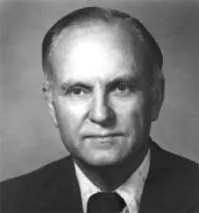
Dr. Sennholz heads the Department of Economics at Grove City College and is a noted writer and lecturer on monetary and economic affairs.
This article is presented here, by permission, from a paper delivered March 19, 1977 at Arden House in Harriman, New York, at the Fifth Annual Conference of The Committee for Monetary Research and Education, Inc., P.O. Box 1630, Greenwich, Connecticut 06830. The theme of the 3-day conference was “The Wrong and Right Cures for Unemployment.”
After almost 40 years of smooth sailing in academic and political waters, the Keynesian ship has run aground. It is taking much water and is beginning to break up. The massive rescue operations that are to free the giant tanker are continuing although the chances of success are small. There is growing concern about the pollution that will follow the breakup.
For the moment, the Keynesian ship is resting on two rocks, inflation and unemployment. Keynesians are calling for help and are offering rich rewards to potential rescuers. Paul A. Samuelson even holds up the hope of a Nobel Prize to the brave deliverer. “No jury of expert economists,” he asserts, “can agree on a satisfactory solution for the modern disease of ‘stagflation,’ many of the proffered cures may be as bad as the disease itself. That is why one can say that some young economist can win for herself or himself a Nobel Prize on the basis of an empirical or theoretical breakthrough that will help the mixed economy cope better with the present-day scourge.”¹
Modern inflation, the Keynesians lament, differs from that of the past in that prices and wages continue to rise while there is underemployment of capital and labor. When the monetary and fiscal brakes are applied and the rate of cost-push inflation is limited, the managed economy sinks into deep recession. Without the brakes, the inflation accelerates while unemployment remains high or even goes higher. The Keynesian tools of C + I + G (consumer, investment, or government spending) have lost their legendary power.
The Phillips Curve, which was hailed as the political manager’s blueprint, has become a big question mark. Its quantification of the trade-off relationship between unemployment and wage rates obviously is more fiction than description. And its pictorial message that a low rate of inflation means high unemployment, and greater inflation less unemployment, is spurious. The fact is that the Keynesian formula of full employment through monetary and fiscal stimulation is finally yielding its foreseen results: rising rates of inflation together with growing unemployment.
The Keynesian system contains many errors, too numerous to analyze in this essay. But we must mention just a few that have a bearing on the issue. In particular, we must reject the basic psychological maxim that government can fool all the people all the time with easy money and credit.
Poor Psychology
Lord Keynes was banking on the economic ignorance and stupidity of wage earners and their union agents. He recommended deficit spending and credit expansion as an efficient method for gradually and automatically lowering labor costs. Admittedly, lower real wages raise the demand for labor and reduce unemployment. But the success of the Keynesian plan depends entirely on the ability to deceive the workers and their unions or, if this should fail, to persuade them to suffer voluntary losses in real incomes.
Deceit is always the false road to a solution. It weaves a tangled web, which in the end misleads one’s self and destroys the confidence of others. While the Keynesians are weaving, the workers are marching in picket lines. They need no Ph.D. in Keynesian economics to understand how rising prices reduce the purchasing power of labor income. They are quick to demand wage boosts that compensate for the rise in goods prices. Moreover, they may force rises in money wage rates that anticipate future purchasing power losses, lest they lose during the life of the contract. Both claims, together with the demand for higher real incomes because of “rising labor productivity,” are foiling the Keynesian plan.
The post-Keynesians now admit that the customary dosages of monetary and fiscal policy no longer cause real wages to adjust to clear the labor markets. They speak of a great discovery of a new type of inflation in which labor does not want to be deceived, but continues to push for higher wages regardless of the recipe. In frustration and desperation, the Keynesian professors are developing new theories on “cost-push inflation” and charting new curves that are to explain the dilemma. Abraham Lincoln had the answer to the Keynesian cunning: “You cannot fool all of the people all the time.”
Because economic reality does not conform with their doctrines, Keynesians now are joining many utopian and would-be reformers, urging the use of force to fit man into their peculiar mold. To fit economic life into the Keynesian mold, they are debating the use of government force. Wanted: an incomes policy, that is, wage and price controls, or governmental guideposts, or government getting tough with the unions, or some other force of deliverance.
Institutional Unemployment
We recall that Franklin D. Roosevelt, and all presidents since, initiated their own programs for full employment. They all pledged top priority to the problem of mass unemployment. And yet, except for World War II years, unemployment has been our constant companion ever since 1930. In fact, it seems to grow ever more acute as it now makes its ugly appearance even in boom times. Almost eight million Americans are looking for jobs, although the economy is said to be prosperous and growing.
The Carter Administration, like its predecessors, is not really coping with the causes of unemployment. Under the influence of post-Keynesian conceptions it seeks once again to stimulate the economy through deficit spending and credit expansion, through tax rebates and public works, and talks about raising minimum wages and increasing unemployment compensation. It is resorting to the very measures that create unemployment rather than alleviate it.
Throughout the Keynesian and post-Keynesian era, the inexorable laws of economics have not changed. Unemployment still is, and always has been, a cost phenomenon. A worker whose employment adds valuable output and is profitable to his employer can always find a job. A worker whose employment inflicts losses is destined to be unemployed. As long as the earth is no paradise, there is an infinite amount of work to be done. But if a worker produces only $2 per hour, while the government decrees a minimum wage of $2.30 an hour plus sizable fringe costs, he cannot be employed. For a businessman to hire him would mean capital loss and waste. In other words, any compulsion, be it by government or union, to raise labor costs above those determined by the marginal productivity of labor, creates institutional unemployment.
With Friends Like These…
The problems of unemployment are badly obscured by popular pseudo-humanitarianism according to which the demand for higher labor costs is a noble demand for the improvement of the conditions of the working man. Politicians and labor leaders who forcibly raise labor costs parade as the only true friends of labor and the “common man,” and as the only stalwarts of progress and social justice. Actually, they are causing mass unemployment. Where there is neither government nor union interference with the costs of labor, there can only be voluntary unemployment. The free market offers jobs to all eager to work.
An administration that is genuinely interested in the well-being of the unemployed workers would aim at reducing their employment costs. In order to give new hope to our youth and promote on-the-job training and learning, a humanitarian administration would immediately repeal the minimum wage legislation. Or, as a beginning, it would exempt teenagers from its restrictions. But such a repeal would require greater political courage than displayed by any recent president. However politically expedient, it is nonetheless cruel to promise higher wages and more benefits when the net result can be no other than unemployment.
The pseudo-humanitarian push for higher labor costs is reinforced by the popular drive for generous unemployment compensation and other benefits for the poor and underprivileged. While we tax and discourage labor, we subsidize unemployment with great generosity. But we are harming millions of people economically and morally: the working population that is chafing under the growing burden of transfer taxation and, above all, the idle millions who are making the collection of public benefits a primary way of life. Unskilled workers whose earnings are relatively small can easily be caught in the intricate web of unemployment benefits. Why should a laborer seek employment at $100 a week if his unemployment benefits, supplementary compensations, severance pay and union support, food stamps, and the like equal or exceed this amount?
Cyclical Unemployment
A particular brand of institutional unemployment is cyclical in nature. It swells the ranks of jobless workers during economic recessions and depressions. According to mainstream economic doctrine, this kind of unemployment is a chronic phenomenon of the individual enterprise order which from time to time suffers from fluctuations in investment or capital goods. Businessmen may make changes in investment which are amplified in a cumulative, multiplied fashion. They will add to the stock of capital, or make net investments, only when the level of national income is growing. Prosperity must come to an end and recession ensues when sales go down, or even when they merely level off or grow at a lower rate than previously. On the other hand, investment demand can be induced by growth of sales and incomes.
This explanation, known by the high-sounding name of “acceleration principle,” induces Keynesian administrations to apply a great number of measures that aim at stimulating income. Wage increases, tax reductions and rebates for lower income earners, together with “expansionist” monetary policies, are to promote consumption, the moving force for full employment and economic growth.
The doctrine is as old as it is fallacious. It is built on the ancient myth that the stimulator and spender, i.e., government, is an entity outside and above the economic process, that it owns something that is not derived from its subjects, and that it can spend this mythical something for full employment and other purposes. In reply we must again and again repeat the truism that government can spend only what it takes away from taxpayers and inflation victims, and that any additional spending by government curtails the citizens’ spending by its full amount.
Consequences of Inflation
The business cycle with its phases of boom and depression is the inevitable consequence of inflation and credit expansion. When the federal government suffers a budget deficit it may raise the needed money through borrowing the people’s savings, or through the creation of new money and credit by the banking system under the direction of the Federal Reserve. To borrow and consume savings is to invite an immediate recession, for the Treasury now consumes the funds that were financing economic production. As interest rates rise, business must curtail its operations. Therefore, lest all private industries contract as federal spending expands, the federal government resorts to inflation and credit expansion.
Government thus resorts to a method of deficit financing that completely muddles the situation. That is, while government is consuming more resources and capital funds, interest rates do not rise, but actually decline on account of the creation of new money. Declining interest rates now misguide businessmen who embark upon expansion and modernization projects, and mislead them to participate in an economic boom that must soon run aground for lack of genuine savings. Business costs, especially in the capital goods industries, soar until production becomes unprofitable or even inflicts losses. At this point the decline sets in. Projects are cancelled, output is curtailed, and costs are reduced. In short, the depression that is caused by a falsification of interest rates, leading to structural maladjustments, is alleviated through readjustment and repair of the damage inflicted by the credit expansion.
Bigger and Better Booms
The Keynesians and their practitioners in government are loudly proclaiming that they have learned to cope with the cycle. Actually, they are not avoiding the cycle by refraining from deficit spending and inflation, they are merely “solving” the dilemma of stagnation and decline through ever-larger bursts of deficit spending and money creation. Every administration is desperately spending and inflating in order to kindle another boom. Then, after a while, the boom is followed by another recession that necessitates an even larger deficit and more inflation. Unfortunately, this merry-go-round, which characterizes the federal administrations from 1930 to date, has debilitated the U.S. dollar and made individual savings an important resource for federal deficit financing.
During the period of boom, capital and labor are attracted by the feverish conditions in the capital goods industries. Here employment tends to rise as labor moves from consumers’ goods industries to the booming capital goods market. There may even be some unemployed workers who now find jobs under boom conditions, which may temporarily reduce the general rate of unemployment. But the boom passes by the millions of workers who are condemned to idleness by minimum wage legislation, labor union policies, and the temptations of compensation and food stamps.
When the fever finally gives way to the chills of recession, the capital goods industries undergo a painful contraction. Capital and labor are set free. They now return to the long-neglected consumers’ goods industries from whence they came. In an unhampered labor market the readjustment would be brief and direct. But in a market that is obstructed by 65 weeks of generous unemployment compensation and many other benefits, the readjustment process must be slow and circuitous. Unemployment rises and stays high for long periods of time.
In boom and bust, goods prices rise as a result of the various injections of new money by the full-employment planners. During the boom, capital goods prices lead the way. During the depression when these retreat in contraction and readjustment, the prices of consumers’ goods take the lead, which utterly confounds the Keynesians. The phenomenon of rising unemployment together with rising consumer prices painfully contradicts the acceleration principle and completely jumbles the Phillips Curve.
Hedge Unemployment
The Keynesian commitment to expansionary policies is a commitment to inflation that does not promote full employment. It does not achieve the “miracle… of turning a stone into bread,” but generates the business cycle with periods of high unemployment. Continued application of the Keynesian recipe must finally lead to the complete breakdown of the monetary system and to mass unemployment.
Rampant inflation destroys the capital markets that sustain economic production. The lenders who suffer staggering losses from currency depreciation are unable to grant new loans to finance business. And even if some loan funds should survive the destruction, lenders shy away from monetary contracts for any length of time. Business capital, especially long-term loan capital, becomes very scarce, which causes economic stagnation and decline. To salvage their shrinking wealth, capitalists learn to hedge for financial survival; they invest in durable goods that are expected to remain unaffected by the inflation and depreciation. They buy real estate, objects of art, gold, silver, jewelry, rare books, coins, stamps, and antique grandfather clocks.
Surely, this redirection of capital promotes the industries that provide the desired hedge objects. But it also causes other industries to contract. It creates employment opportunities in the former and releases labor in the latter. As the hedge industries are very capital-intensive, working with relatively little labor, and the contracting industries are rather labor-intensive with a great number of workers, the readjustment entails rising unemployment. Of course, the readjustment process is hampered by labor union rules, generous unemployment compensation, and ample food stamps.
Similarly, double-digit inflation causes businessmen to hedge for financial survival. They tend to invest their working capital in those real goods they know best, in inventory and capital equipment. Funds that were serving production for the market become fixed investments in durable goods that may escape the monetary depreciation. Economic output, especially for consumers, tends to decline, which raises goods prices and swells the unemployment rolls.
Deficits Consume Jobs
Both federal deficits and the inflation that follows, consume productive capital. The deficits of the U.S. government are consuming massive amounts of business capital that otherwise would produce economic goods, create jobs, and pay wages. During the decade of the 1950′s, total U.S. government deficits amounted to a mere $17.7 billion. During the 60′s, the total was only $56.9 billion. During the first half of the 1970′s, deficits rose to $71.4 billion, and, as if they were following an exponential curve, in the second half of this decade, must be expected to exceed $200 billion.
The inflation itself is a powerful destroyer of productive capital. It taps the savings of many millions of thrifty individuals for government consumption and redistribution. It weakens the capital markets and misleads businessmen into costly management errors. It causes businessmen to overstate their earnings, overpay their taxes, and consume their fictitious profits.
In the United States, government is attacking business capital from both sides: It is pressing continuously toward higher levels of consumption through spending schemes and extensive redistribution of wealth and income; and it is severely hampering economic production and capital formation through taxation and intervention. The “environmental” regulations alone are estimated to impose some $300 billion of cleanup costs on American industry during the 1970′s. All such costs are “unproductive,” meaning that the expenditures consume business capital without generating new production and income. They will never build factories, stores, offices, and many other facilities of production. And above all, they will not afford employment to the jobless millions.
In a stagnant economy that no longer permits capital formation and business growth, the institutional pressures for higher labor costs are painfully felt in the form of rising unemployment. The job situation may even get worse when the net amount of productive capital begins to shrink as a result of excess consumption and declining production—that is, when the amount of capital invested per worker begins to decline and wage rates must readjust to lower levels. In such a situation, which in the judgment of some economists is already upon us, the institutional pressures for higher labor wages and benefits—to which laborers have grown accustomed and believe themselves to be entitled economically and morally—would generate ever-higher rates of unemployment. f, at the same time, government should “stimulate” the sagging economy with easy money and credit, goods prices will soar alongside the unemployment rolls.
The Ultimate Folly: Disintegration Unemployment
The ultimate folly which government may inflict on its people is the imposition of price controls, which are people controls. When goods prices soar because budget deficits run wild, and monetary authorities aim to “stimulate,” the very administration conducting such policies desperately reaches for the control brakes. But there is probably no other measure that so promptly and effectively disrupts economic production and weakens the currency as comprehensive price controls. And no other policy or disaster causes more unemployment more rapidly than the imposition of stringent controls over prices.
Price controls instantly paralyze the labor market, hamper economic production, encourage consumption, and create shortages that invite an even more coercive system of rationing, allocations and priorities. Obviously, where a central authority dictates all things, where millions of prices and wages are replaced by a single directive, chaos and darkness descend over economic life. Our splendid exchange system, with its magnificent division of labor, disintegrates and gives way to a primitive command system. The disintegration is accompanied by mass unemployment.
Even without price controls, rampant inflation causes such serious disarrangement of markets and disruption of production that both economic disorders—boom and depression—occur simultaneously. Consumers’ goods industries tend to contract while capital goods industries that are producing the machines, equipment, and materialsfor business hedging, enjoy a feverish boom. But the labor market with all its institutional rigidities is unable to adjust to the rapid changes, and therefore suffers the strains of rising unemployment.
Moreover, the disintegration of the exchange system as a result of the failure of money, the medium of exchange, causes a general decline in real wages, which breeds widespread labor unrest. Individual productivity may fall, which boosts business costs. Labor unions react with militant demands and ugly strikes, which inflict losses on business and cause even more unemployment. With millions of idle workers searching for work, other millions are marching on picket lines in protest against the rampant inflation that is engulfing their jobs and livelihoods. Such are the symptoms of the finale of a currency that became a Keynesian stimulant and a medium for redistribution.
The capsized Keynesian ship is sinking. The property loss is staggering, but the crew is safe. Experience, which is the best of teachers, comes at a dreadfully high price. It teaches slowly, and at the cost of mistakes. The important thing is to listen and to learn.
1Paul A. Samuelson, Economics, 10th edition, McGraw-Hill Book Co., New York, 1976, p. 820…. the Keynesian formula of full employment through monetary and fiscal stimulation is finally yielding its foreseen results: rising rates of inflation together with growing unemployment.