Capitalism is a vehicle for constructive change.
Thomas Robert Malthus prophesied failure for mankind and so did much to inflict the invective of “the dismal science” on economics. In his 1798 Essay on the Principle of Population, Malthus held sexual appetite would constantly tend to propel population beyond production, setting in motion the triumph of abject scarcity: subsistence wages, disease, malnutrition, starvation, famine, death, and other unpleasant checks on population growth and rising living standards.
Dwight Lee, the Bernard B. and Eugenia A. Ramsey Professor of Private Enterprise at the University of Georgia, and Richard McKenzie, the Walter B. Gerken Professor of Enterprise and Society at the University of California-Irvine, reject such Malthusian doom and gloom. They hail capitalism as a vehicle for constructive change, as a means of bringing about, in the words of Joseph Schumpeter, “creative destruction.”
Still, they accept the Malthusian idea of the reality of scarcity, limits, and opportunity costs. Man just can’t do everything and have everything. Scarcity forces him to choose, and in choosing to make mistakes but thereby to learn, to forge ahead. Choice helps explain why Malthus was wrong.
Lee and McKenzie point out that man is a lot more than a biological organism worker, eater, baby-maker. Man thinks, and that’s precisely what separates him from all other species. He can choose family size. He can choose to save, invest, invent. He can choose to forgo present consumption, create capital, engage in division of labor, trade goods with his fellow man, and accordingly accelerate production and technology.
To be sure, that acceleration involves some inevitable failures—mistakes. Progress is a kind of process of two steps forward and one step back. Lee and McKenzie note, for example, how the automobile inflicted failure on the investors and workers in the once vast horse-and-buggy industry. Even within an industry the pattern of progress and failure holds. The authors cite the brilliance of Nucor Steel in setting up nonunion mini-mills that have given old-line giants USX, Bethlehem, and Inland Steel a run for their money. Similarly Apple Computer started PC manufacture in a garage to challenge giantd IBM, NCR, and Digital Equipment, with Apple itself becoming today an $8 billion giant.
Failure is part of a bigger picture, advise the authors, conceding that the consequences of competition can result in pain that strikes many as cruel, harsh, and unacceptable. Lee and McKenzie cite Henry Hazlitt’s famous one lesson that the major source of error in economic understanding comes from the tendency “to concentrate on . . . short-run effects on special groups and to ignore . . . the long-term effects on the community as a whole.”
So the authors see virtue in economic failure and failure in “political virtue.” They write: “The biggest threat to the success of the market economy is not the self-correcting failures imposed by market competition, but the self-perpetuating failures imposed by political competition for government protection against the discipline of the marketplace.”
That protection helps explain the counterproductivity of government tariffs, industrial policy, and welfare programs. Of our rising welfare underclass, Lee and McKenzie note that food stamps cost $13.5 billion against an initial program of $40 million in 1965. The Aid to Families with Dependent Children budget was $17.8 billion in 1986 compared with $1.7 billion in 1965. In this same period the annual cost of housing assistance to the poor surged to $13.3 billion from $300 million. Apparently Uncle Sam can support whatever size of the underclass he can afford.
I wonder what Parson Malthus, were he alive today, would think of widespread and persistent government failure.
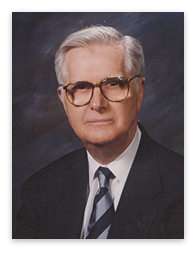
Dr. Peterson, adjunct scholar at the Heritage Foundation and former Lundy Professor at Campbell University, is working on a book on political economy.