Contrary to socialistic tenets, the free market is the only mechanism that can sensibly, logically, intelligently discipline production and consumption. For it is only when the market is free that economic calculation is possible.1 Free pricing is the key. When prices are high, production is encouraged and consumption is discouraged; when prices fall, the reverse holds true. Thus, production and consumption are always moving toward equilibrium. Shortages and surpluses are not in the lexicon of free market economics.
Conceded, the above is no news to those who apprehend free market economics; they well know of its disciplinary influence as regards production and consumption. This alone warrants our support of the free market. However, the free market has two other quite remarkable disciplinary possibilities which have seldom been explored.
Before making that exploration, it is necessary to recognize the limitations of the free market. The market is a mechanism, and thus it is wholly lacking in moral and spiritual suasion; further, it embodies no coercive force whatsoever. In these respects, the market is without disciplinary possibilities.
“Like all mechanisms, the market, with its function for the economizing of time and effort, is servant alike to the good, the compassionate, and the perceptive as well as to the evil, the inconsiderate, and the oblivious. “2 Scrupulosity is not among its characteristics.
The free market is a name we give to the economic activities —a short-hand term, we might say—of a people acting freely, voluntarily, privately, cooperatively, competitively. It is distinguished by universal freedom of choice and the absence of coercive force. Ideally, only defensive force—government—is employed to put down fraud, violence, predation, and other aggressions.
Given a society of freely choosing individuals, the market is that which exists as a consequence—it is a mechanism that is otherwise nondefinitive. It is the procession of economic events that occur when authoritarianism—political or otherwise—is absent.
While private enterprise is often practiced in a manner consonant with free market principles, the two terms are not synonymous. Piracy is an enterprise and also private. Many businesses when in league with unions, for instance—willingly or not—feature elements of coercion and thus are not examples of the free market at work.
The free market has only been approximated, never fully attained, and, doubtless, never will be realized. It is an out-of-reach ideal; we can only move toward or away from it. Yet, in the U.S.A., even in these days of a rapidly growing interventionism, the free market flourishes to a remarkable extent. To appreciate this, merely envision the countless willing exchanges—hundreds of millions daily—such as Mrs. Jones swapping a shawl she has made for a goose Mrs. Smith has raised, or the money you pay for a phone call or a quart of milk. In these instances, each party gains, for each desires what he gets more than what he surrenders. In a word, the free market is individual desire speaking in exchange terms. When the desire for Bibles is accommodated in noncoerced exchange, we can conclude, quite accurately, that we are witnessing a market for Bibles. Or when the desire for pornography is being thus accommodated, we can conclude that there is a market for trash. I repeat, scrupulosity is not a feature of the market.
An Amoral Servant
When the desires of people are depraved, a free market will accommodate the depravity. And it will accommodate excellence with equal alacrity. It is “servant alike to good… and evil.”
It is because the free market serves evil as well as good that many people think they can rid society of evil by slaying this faithful, amoral servant. This is comparable to destroying the sun because we don’t like the shadows we cast or breaking the mirror so that we won’t have to see the reflection of what we really are.
When I sit in front of a TV and view trash, I tend to rant and rave at what I’m seeing. Wake up: What I hear and see is a reflection of what’s in me! Thus, my only corrective is to read a good book or otherwise cease to patronize such low-grade performances.
The market is but a response to—a mirror of—our desires. Once this harsh reality is grasped, the market becomes a disciplinary force. To elaborate: Say that a person desires, buys, and reads a filthy book. Were he to realize that what he’s reading is a picture of what’s in his own make-up, such a realization, by itself, would tend to change him for the better. The market would then reflect the improvement. But note that the market has no such effect on those who are oblivious to this fact. It’s the knowledge of this character-revealing fact that makes of the market a disciplinary force. I am only trying to point out the market’s potentiality in this respect.
Instead of cursing evil, stay out of the market for it; the evil will cease to the extent we cease patronizing it. Trying to rid ourselves of trash by running to government for morality laws is like trying to minimize the effects of inflation by wage, price, and other controls. Both destroy the market, that is, the reflection of ourselves. Such tactics are at the intellectual level of mirror-smashing, attempts not to see ourselves as we are. The market’s potentiality as a disciplinary force is thereby removed. To slay this faithful, amoral servant is to blindfold, deceive, and hoodwink ourselves. Next to forswearing a faith in an Infinite Intelligence over and beyond our own minds, denying the market is to erase the best point of reference man can have. So much for the first somewhat unexplored possibility of the market as a disciplinary force.
Imperfect Man
Now to the second. This cannot be explained unless we are aware of our numerous shortcomings, of how narrow our virtues and talents really are—everyone’s, no exceptions.
Let’s take, for example, the greatest mathematical genius who ever lived. He’s a giant in his field. Yet, without any question, he’s a know-nothing in countless other ways. This goes for outstanding generals, chemists, physicists, scientists of whatever brand. No one ever gets more than an infinitesimal peek at the Cosmic Scheme, at the over-all luminosity, even at himself. We must see that the biggest among us is tiny. And one who denies this about himself is displaying the greatest ignorance of all: he doesn’t even know how little he knows! “If we wish to know anything, we must resign ourselves to being ignorant of much.”3
Reflect on this human reality, on imperfect man, particularly on the more imaginative and brilliant individuals among us. While they possess an outstanding and remarkable aptitude or two, they too are daydreamers. “If only I had a million dollars,” is a dream that flashes across countless minds. Many of these specialists want above all else to pursue their own peculiar bent whether it be going to the moon, genetic alteration of other human beings, releasing the atom’s energy, or whatever.
Knowing so much about one thing and so little about everything else, they are unable to know what effect their ambitions, if achieved, might have on the human situation. Just as a baby with a stick of dynamite and a match is unaware of what the consequences might be!
The lamentable fact is that scientists, pseudo scientists, and other technologists have been given a wishing well: the Federal grab bag. They, thus, are encouraged to carry out any experiment their hearts desire, without let or hindrance. Leaving aside the destruction of our economy by inflation—featured in the grab bag’s financing—they are alarmingly endangering all the people on this earth, even the earth itself. And primarily because they suffer no restraining and disciplinary forces; their passions and ambitions are on the loose!
The Disciplines of the Market
The remedy? Let these ambitions be submitted to the discipline of the market precisely as are most other commodities and services. Go to the moon? Of course; that is, when the market permits the venture, if enough people voluntarily subscribe the cash. Release the atom’s energy? By all means; that is, when the market is ready for it.
Am I saying that the market has a wisdom superior to the President of the United States, or the Congress, or a bureaucracy? I am not. The market is a mechanism and is neither wise nor moral. I am only claiming that it has disciplinary qualities. To understand why requires no more than a knowledge of what the components of this mechanism are: millions upon millions of individual preferences, choices, desires. The market is an obstacle course; before I can pursue my bent or aptitude or obsession, I must gain an adequate, voluntary approval or assent! No wishing well, this! My own aspirations, regardless of how determined, or lofty, or depraved, do not control the verdict. What these others—impersonal as a computer—will put up in willing exchange for my offering spells my success or failure, allows me to pursue my bent or not.
There are exceptions to this rule, of course. For instance, some of us who may be unable to win in the market will, like Van Gogh, face starvation in order to pursue our passions. The threat of starvation, however, is quite a discipline in itself; at least, not much is likely to be uncovered in these circumstances that will destroy life on earth. It takes big financing to do unearthly things.
The market very often returns fortunes for comparative junk and, on occasion, returns nothing at all for great and beneficial achievements—temporarily, that is. Eventually, in a free society, the junk goes to the junk heap and achievements are rewarded.
I believe that anyone should follow his star; but let him do so with his own resources or with such resources as others will voluntarily supply. This is to say that I believe in the market, a tough disciplinary mechanism. I do not believe in cars without brakes, impulses without repulses, ambitions without check points, wishes run riot. Societal schemes that are all sail and no ballast head society for disaster!
The rebuttal to this line of reasoning is heard over and over again: “But we voted for it,” meaning that the Federal grab bag—open sesame with other people’s income—has been democratically approved. Granted! But this is nonsense: The fruits of the labor of one man are not up for grabs by others, that is, not rationally.4 This is not a votable matter, except if one’s premise be a socialistic society. What’s right and what’s wrong are not to be determined at the shallow level of nose-counting or opinion polls. To argue otherwise is to place the same value on the views of morons as you do on your own.
Others’ Money or Mine?
As a disciplinary force over wild aspirations, the President of the United States, a member of Congress, a bureaucrat is not only less effective than the market but less effective than any single buyer or seller in the market. An individual, when a government official, considers only how much of other people’s money should be spent. The motivation in this instance favors spending over economizing. The same individual, in the free market, considers how much of his own property he is willing to put on the line. The motivation in this instance is self-interest. And this is tough! Ambitions as silly as tracking the meanderings of polar bears by a Nimbus satellite stand a chance for satisfaction when a grab bag made up of other people’s money is readily at hand;5 whereas, the free market gives short shrift to projects that are at or near the bottom of individual preferences.
True, were personal ambitions subjected to the disciplines of the market, trips to the moon would have to be postponed. Atomic energy might be a phenomenon of the future. Many other scientific explorations—some secret—taking place today in our universities and Federally financed would, under the discipline of the market, still be safely stored in imaginative minds.
This is no argument against technological breakthroughs. It is merely to suggest that these illuminations be financially encouraged only as the free market permits. The resulting steadiness in progress might then be harmonious with an expanded understanding of what it is we really want and can live with.
I repeat, societal schemes that are all sail and no ballast head society for disaster. The free market is ballast—a stabilizer—we might well put to use if we would avoid wreckage in the stormy seas of political chaos.
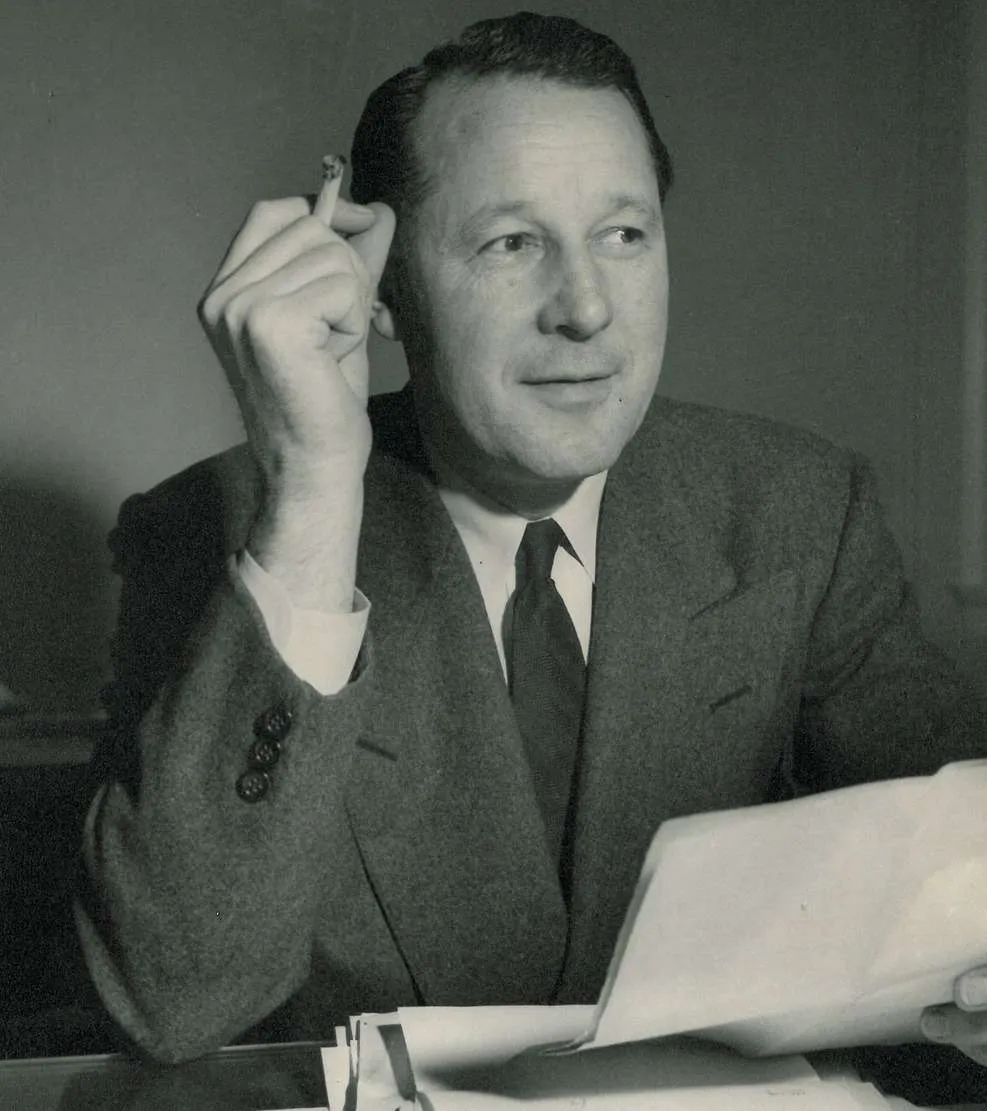
This article will appear as a chapter in Mr. Read’s book, Let Freedom Reign, to be available soon.
—FOOTNOTES—
1 Professor Ludwig von Mises establishes this point, irrefutably, in his book, Socialism (London: Jonathan Cape, Ltd., 1969).
2 See “Value—The Soul of Economics,” by W. H. Pitt. The Freeman, September, 1969.
3 John Henry Newman.
4 For what I consider to be a rationally constructed explanation of this point, see “The American System and Majority Rule” by Edmund A. Opitz, THE FREEMAN, November, 1962.
5 See “The Migration of Polar Bears,” Scientific American, February, 1968