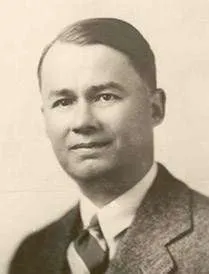
Mr. Chamberlin is a skilled observer and reporter of economic and political conditions at home and abroad. In addition to writing a number of books, he has lectured widely and is a contributor to The Wall Street Journal and numerous magazines.
Among the world’s obituary notices some attention should be paid to the strange death of that respectable political and economic doctrine known as liberalism. Throughout the nineteenth century the Liberal Party was one of the two principal contenders for power in Great Britain. And, what was more important, liberal ideas, especially in economics, predominated in the entire Western world.
Franklin D. Roosevelt’s hastily improvised Four Freedoms had not been heard of. But three freedoms, rooted in the principles of historic liberalism, as expressed in the writings of Adam Smith and Locke and Bentham and Mill, were widely observed and contributed much to the possibilities of economic growth and adjustment of population strains. These were all freedoms of movement, for men, for capital, for ideas. The millions of immigrants who came to the United States required no visas. In the best liberal tradition surplus manpower went to lands of growth, where there was a demand for labor in factories, in transportation, on farms, not only to the United States, but to other developing countries, such as Canada, Australia, Brazil, and Argentina. All the dreary business of currency control was unknown at a time when the gold standard acted as an automatic regulator, assuring the parity of the world’s leading money systems.
Again in line with liberal principles, capital could freely seek the sources of largest return, which were the lands and enterprises in greatest need of capital. It would be hard to find a better example of the principles of economic liberalism in action than the financial and trade policies of Great Britain. The return of British capital in many cases took the form of supplies of foodstuffs and raw materials which, under the British free trade policy, were admitted, usually without any payment of duty at all, at most with nominal tariffs. It is remarkable how many problems that are now posed in economic reports and threshed out in conferences took care of themselves when the gold standard and the authority of the free market were unquestioned.
The third freedom, of the transmission of ideas, was also unhampered by any Iron Curtain, any deliberate policy on the part of the rulers of a large part of the world to mold the thinking of their subjects. Even in Russia, the country looked on in the nineteenth century as a bastion of dark reaction, there was no difficulty in obtaining The London Times or other leading newspapers of Western Europe in Moscow or St. Petersburg, and there was nothing like the present Soviet deliberate insulation of the people against thoughts which were dangerous from the standpoint of communism.
Locke and Natural Rights
What was this historic liberal faith that was strongest in Great Britain and the United States, but which was shared, in large degree, by educated men throughout the European continent and which shaped the economic policies of the time? This faith is perhaps best understood by a survey of the ideas of some of its leading advocates. One of these is John Locke, whose eminently lucid mind contributed much to formulate in theory the practical compromises between the extreme positions of royalism and puritanism which found expression in England’s “Glorious Revolution” of 1688. (And it deserved the name “Glorious,” if only because it inaugurated a long period of civil peace and averted the futile bloodshed and bitterness that have always attended violent revolutions bent on the pursuit of utopian aims.)
Locke enunciated the principle of “natural rights” which influenced so much the Founding Fathers of the American Revolution. High among these natural rights, in his opinion, were “life, liberty, and property.” It may have been an accident that this formula of Locke was not incorporated in our Declaration of Independence, the less meaningful “pursuit of happiness” being substituted for “property.” Locke affirmed the position that the state was made for man, not man for the state, and brushed away such mythical nonsense as the divine right of kings. His definition of the state is that of an arrangement for general convenience and well-being, strictly enjoined against practices that lead to tyranny. As property is the outcome of labor, it is entitled to security and Locke describes it as “the great and chief end, therefore, of men’s uniting into commonwealths.”
Smith Rejects Mercantilism
Equally influential in the economic sphere was the viewpoint of Adam Smith, who dealt a series of powerful blows, in Wealth of Nations and other writings, to the already decaying system of licenses and regulations. (The planners and collectivists who believe that tinkering with prices and wages, exports, imports, and conditions of production is something new and advanced should read up on their history; European economic systems up to the nineteenth century were full of minute regulations and attempts to interfere with the natural operation of the free market.)
“Every man,” writes Adam Smith in Moral Sentiments, “is by nature first and principally recommended to his own care.” Not for Smith the modern fads about “national goals” and promoting the “public sector” of the economy at the expense of the private. He strongly emphasizes the point that the public good is best served by the action of innumerable private individuals, each pursuing his own good. He would limit what he calls “that insidious and crafty animal vulgarly called the statesman or politician” to the tasks of providing for external peace and internal order. A hostile commentator, the late Harold J. Laski, in his one-sided but brilliant work, The Rise of Liberalism, gives a fair summary of Smith’s basic position as follows:
Adam Smith is the determined critic of most of the industrial regulations in vogue in his time. He is against protective tariffs, trade combinations, whether of capital or of labor, bounties, labor legislation, monopolies. He sees industry as a mass of interrelated actions by individuals who will do well enough so long as promises are kept and violence prohibited; and the fuller the competition between them the greater will be the public advantage. Where the system of liberty obtains, each man has the maximum inducement to labor, since he has then the certainty of reaping the maximum reward from it…. There is an identity of interest between classes in society which is the more fully realized the more they are left alone.
Another contributor to the ideology of historic liberalism is Edmund Burke. Although Burke is the intellectual patron saint of modern conservatives, he took his stand not with the Tories, but with a branch of the Whig party of his time. And, although his views on authority, tradition, and prescription are suffused with a conservative outlook, his negative conception of the proper role of the state is quite in the liberal tradition. In his essay, “Thoughts on Scarcity,” Burke wrote as follows:
To provide for us in our necessities is not in the power of government. It would be a vain presumption in statesmen to think they can do it…. It is in the power of government to prevent much evil; it can do very little positive good in this, or perhaps in anything else.
Nineteenth Century Liberals
Political systems in nineteenth century Europe varied, becoming more authoritarian as one went further to the East. But economic liberalism, before World War I, was scarcely questioned. And, as a doctrine it justified itself by its works. It transformed Great Britain, where it seemed to have struck deepest root and found its most convincing advocates, into the workshop of the world. With its institutions of the free market, stable currencies, easy transfer of capital it made possible the expansion of world trade on an unprecedented scale and brought into practical use for the general benefit resources in the most remote parts of the world that would otherwise have continued to waste for lack of technical know-how, managerial enterprise, and investment capital. Its lessons are still valid; it was by the application of liberal economic principles that Europe outside the Iron Curtain was saved from the bleak and dreary morass of rationing, allocations, price controls, and bilateral trade in which the old continent threatened to bog down after the end of World War II.
On the continent of Europe liberalism, although nowhere a dominant political force (the big European mass parties are almost all Catholic or social democratic in inspiration), possesses substantial influence, because it still means what it meant in what, as we can see in retrospect, was the golden age of liberalism, between the fall of Napoleon and the outbreak of World War I. Most of the leading newspapers in European countries, large and small, are edited in the spirit of classical liberalism.
But a strange fate, a kind of euthanasia has befallen liberalism in two countries where it was once most powerful, in the United States and in Great Britain. The British Liberal Party which produced many prime ministers before World War I has shrunk to a tiny remnant, able to elect to Parliament only a small handful of members, unable to hold the balance between the Conservatives and the Laborites. And this tiny remnant is not agreed as to philosophy and tactics, program and direction.
British and American Reversals
Some look back a little wistfully to the time when liberalism was the creed of economic individualism, favoring private as against state initiative, rejecting the idea that government should be a grab bag into which every special interest group should reach for favors. Other modern British liberals bow before the new gods of state planning. So the British voter is left in doubt as to what he is voting for if he supports the Liberal cause at the polls. And the prospect of a significant revival of the historic party of Gladstone and Asquith is dim.
In the United States the good ship Liberalism has suffered a still sadder fate. It has been successfully boarded by a pirate crew of state interventionists and near-socialists who have forgotten, if indeed they ever understood, the principles of historic liberalism, who regard Marx and Keynes as more relevant to modern conditions than Adam Smith.
Two illustrations will show how liberalism, in its twentieth century American meaning, has completely departed from the original liberal philosophy. Economy and retrenchment in government spending were two constant watchwords of the Grand Old Man of British liberalism, William E. Gladstone. On principle, Gladstone was a sworn enemy of the personal income tax, which he tried to abolish altogether at one time and succeeded in keeping at a level which now seems incredibly low.
By contrast the “liberal,” modern American style, is a profligate spender of public funds for any and all purposes, and sometimes merely for the sake of spending. If he is free from the cynicism of a Harry Hopkins (“Tax, tax, tax; spend, spend, spend; elect, elect, elect”) with his patent formula for bribing the people with their own money, he is likely to be a strong Keynesian, convinced that the sure cure for all social and economic difficulties is for the government, the supposed horn of plenty, to write a bigger check. I recently met a professor of economics in a large public institution of learning who was sure unemployment could be abolished — if the government would only run a big enough deficit.
There has also been a noteworthy and significant shift in attitude toward the state since the early period of the American Republic. At that time it was the Federalists, the more conservative of the two principal parties, who favored a relatively strong central government, although a government well provided with checks and balances against the danger of tyranny. It was the Jeffersonian Republicans, the Leftists of their time, who were most jealous of the powers granted to the central government. It was Jefferson, for whom today’s statist “liberals” still profess admiration, who repeatedly stressed the idea that the government which governs least is best. As Jefferson wrote to James C. Cabell in 1816:
The way to have good and safe government is not to trust it all to one, but to divide it among the many, distributing to everyone exactly the functions he is competent to… What has destroyed liberty and the rights of man in every government which has existed under the sun? The generalizing and concentrating all cares into one body, no matter whether of the autocrats of Russia or France, or of the aristocrats of a Venetian senate.
A Tendency to Wink at Stalin’s Worst Crimes
As American self-styled liberals departed entirely from historic liberalism in exalting and striving to make more powerful a strong centralized state, so they lost touch with such a characteristic of traditional liberalism as resenting acts of cruelty and tyranny, under whatever pretexts these might be committed. The attitude of many intellectuals who considered themselves liberals toward the Soviet dictatorship in the thirties, the period when some of Stalin’s most terrible crimes were being committed, was a disgrace to reason, humanity, and commonsense — all presumably liberal values.
One of the more bizarre occupations of these phony “liberals” was drawing up and signing “Hooray for Murder” manifestoes, approving Stalin’s slaughter of many of his most prominent colleagues, following trials of which the genuineness would scarcely be asserted now, even in Moscow. A convincing test of the objectivity of the American “liberal” mind in regard to the Soviet Union would be to go through the files of any typical magazine with this point of view in the thirties and forties and find out how much space was devoted to such events as:
· The liquidation of the Russian kulaks as a class.
· The state-engineered famine of 1932-33.
· The Soviet slave labor system.
· The deportations to forced labor from Eastern Poland and the Baltic States.
· The massacre of many thousands of Polish war prisoners in 1940 in the Katyn Forest and elsewhere.
The amount of space would be negligible and mainly devoted to denying that such mass atrocities occurred. Such fanatical partisan commitment to the whitewashing of a foreign dictatorship, such complete departure from the qualities of humanity, objectivity, and open-mindedness which have always been considered characteristic of the liberal spirit, suggest an infatuation that calls for examination. And examination shows that many Americans who regarded themselves as liberals were so blinded by utopian hopes or so frightened by the depression of 1929-33 that they cast overboard basic liberal ideals and were willing to overlook or explain away any crime, however monstrous, committed by a regime professing to stand for the abolition of capitalism and a state-planned economy.
A Semantic Dilemma for Those Who Believe in Liberty
This capture and appropriation of the honorable word, liberalism, by theorists whose reliance on omnicompetent statism would horrify the Founding Fathers of the liberal faith creates an embarrassing semantic dilemma for those who believe in integral liberty, on a foundation of economic liberty, who may have some reservations about calling themselves conservatives. Friedrich Hayek, unwilling to call himself a conservative while conscious of the perversion of liberalism in the United States, chooses to call himself an Old Whig, recalling that Edmund Burke, intellectual hero of most modern conservatives, belonged not to the Tories, but to a wing of the Whig Party.
However this semantic dilemma may be solved (by the use of the term libertarian, for instance), it is important to remember that the piratical seizure of the term liberalism in the United States by statists and near-socialists draws a strong line of distinction between classical liberalism and what passes by that name in America today and also between continental European liberalism and “liberalism” on this side of the Atlantic.