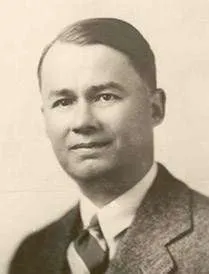
Mr. Chamberlin is a skilled observer and reporter of economic and political conditions at home and abroad.
Between 1917 and 1949, within the span of a generation, communism achieved a leap from the status of the small, little-known political sect in the Russian revolutionary movement to a system that dominated the lives of one-third of the population of the world, including the Soviet Union, mainland China, and the considerable area in Eastern and Central Europe which had been subjected to communism as a result of Soviet military invasion and occupation. Not since the early sweep of the Mohammedans from the deserts of Arabia over the Near and Middle East and North Africa had a new doctrine acquired power so swiftly on such a large scale.
What made the success of communism seem more formidable was its apparent concentration of power and authority in Moscow. Stalin had only to whisper a command and it was translated into action not only in the countries under Russian military and police control, but also by the communist parties in America and Western Europe, where they had not yet gained power. An article in a French communist publication was sufficient to cause the American communists to discard the comparatively moderate leadership of Earl Browder and substitute the more violent, intransigent William Z. Foster.
The communists seemed to have discovered and applied, first in Russia, then in the satellite countries of Eastern Europe and in China, a magic formula for holding power, once a successful revolution had been brought about, whether by internal collapse, civil war, or military intervention from outside. This formula, which also served Hitler, Mussolini, and lesser fascist dictators very well (it was by no means the only feature common to communism and fascism in practice) might be summarized as follows: unlimited propaganda plus unlimited terror.
After a communist take-over, all means of information, entertainment, and instruction—the schools, the press, the radio, theater, and the arts—were pressed into the service of glorifying the all-powerful state and the ruling Communist Party. It was expected that this would prove especially effective with a younger generation that had no knowledge of foreign countries, no knowledge of previous conditions.
And, for those who did not accept the propaganda, there was ruthless unrelenting terror, ranging from loss of a job, denial of the right to publish writings, to the more extreme measures: arrest, exile to forced labor, execution before a firing squad. Diabolical as this technique was, from the standpoint of the freedom and dignity of the individual human being, it was also diabolically effective as a means of organizing and regimenting people and repressing and discouraging any organized resistance and dissent.
Dissension Sown Abroad, But Prohibited Domestically
So, while the communists used every conceivable trick and device to extend their sway by setting class against class, race against race, group against group in noncommunist lands, they insulated themselves against movements of protest and revolt in the countries they ruled by this steady application of the method of propaganda plus terror. With this were linked two characteristics of all communist regimes, regardless of other differences: one-party political dictatorship and economic collectivism in the sense that the state, in one form or another, became the sole employer, operating through various agencies all mines, factories, farms, stores, and other economic enterprises. It is difficult for one who has not lived under it to imagine the crushing weight of concentrated power represented by a state which combines the political power of the most absolute despots of the past with the economic mastery represented by a monopoly of possession of all economic enterprises.
Imagine a government operating without any of the safeguards for the individual written into the United States Constitution, directing the contents of every newspaper, of every radio broadcast and, on top of this, managing all the economic production facilities, with the functions of management and labor organization alike controlled by the single ruling party. That affords a fair picture of what the communist state is like and of how difficult it is to organize opposition or resistance to its monstrous grasp.
Signs of Internal Weakness
Yet, with communism, as with Mohammedanism and other world-conquering movements, internal schism among the communist states has clearly set in, creating difficulties which were not foreseen in the first years of the Russian Revolution which Lenin, Trotsky, and Stalin envisaged as merely the first step toward world domination through world revolution. The first breach in the granite facade of international communism occurred in 1948, when Josip Broz Tito, the communist dictator of Yugoslavia, seceded from the overlordship of Moscow.
Tito’s breach with Moscow did not mean that Yugoslavia ceased to be a communist dictatorship. But the Yugoslav dictator resented the idea that his power, even his life, might depend on the reports of the Soviet agents whom Stalin sent into Yugoslavia to spy on and supervise his activities. A veteran of the communist movement, he had built up such a tightly organized political machine in Yugoslavia that he was able successfully to defy Stalin’s efforts to destroy his regime by all means short of war, including economic blockade and incitations to subversion. Sitting on the fence politically between East and West, although maintaining a generally “anti-imperialist” attitude in foreign relations and retaining a somewhat modified, maverick communism at home, Tito received large quantities of United States aid (considerably reduced in recent years). He also extracted some Soviet help when Stalin’s successors decided to restore more normal state relations between Moscow and Belgrade, although continuing to censure Tito as a revisionist more or less severely when matters of communist theory were under discussion.
Stalin’s death in 1953 was followed by several signs, in the Soviet Union and abroad, that communism was not the impregnable frozen fortress it had seemed to be. There were anticommunist revolts in East Germany in 1953, in Poland and in Hungary in 1956. These were all put down, the one in Hungary after a heroic, tragically uneven struggle by the majority of the Hungarian people, with workers and students taking a leading part, against the superior arms of the Red Army. But at least the myth of happy acquiescence of the peoples under communist rule was destroyed. And the Poles, who proceeded more discreetly than the Hungarians and did not push matters to the point of an armed clash, obtained the elimination of some of the more unpopular Soviet agents and of some of the cruder signs of Russian domination, especially distasteful because of bitter Polish memories of Russian oppression before the First World War.
Moscow vs. Peiping
Then, gradually but unmistakably, came the rift between the two communist giants, the Soviet Union and Red China. Because relations between Moscow and Peiping were like an iceberg, mostly concealed from public view, and because there were intermittent efforts, on the Soviet side, to coax the Chinese back into the orthodox communist fold, it is hard to set a definite date for a breach that also produced important repercussions in the satellite states of Eastern Europe.
Perhaps the exclusion of the Soviet Union, as a “white” nation, from the Bandung conference of Afro-Asian countries in 1955 marked the beginning of the disagreement. Khrushchev’s belated repudiation and denunciation of Stalin in 1956 did not appeal to the Chinese communists. When the latter, by bombardment and threats, attempted to oust the Chinese nationalists from the offshore islands of Quemoy and Matsu in 1958, Khrushchev offered only verbal support.
With the passing of time, differences of national interest and even of interpretation of communist ideology between the Soviet Union and China became more and more evident. In two ways the former is a “have,” the latter a “have not” country. The Soviet Union today controls, directly or indirectly, far more territory than the Empire of the Czars. There is no unredeemed area with a Russian population. And, although economic well-being is far below the standards of the United States and Western Europe, the Soviet Union has built up a considerable industrial plant, which it would not like to expose to the hazards of nuclear war. So, apart from lapses like the threat to West Berlin and the injection of missiles into Cuba, both of which ended in failure, Khrushchev and his successors so far have displayed a tendency to avoid sharp collisions with the United States and to rely on such methods as subversive propaganda and building up what they believe will be a superior economic system (not a likely prospect in view of the results to date) to sap and finally overthrow the capitalist order.
China is a much poorer country than the Soviet Union, probably at least a generation behind in economic development. It regards as a major foreign policy objective the reconquest of the island of Formosa, seat of the Chinese Nationalist government of Chiang Kai-shek. This objective, however, cannot be realized so long as Formosa is guarded by United States sea and air power. With less to lose in war, the Chinese, at least in words, are much more militant in preaching the doctrine of war against imperialism. And they resent Soviet unwillingness to “share the wealth” by giving them liberal economic aid, and Soviet unwillingness to back them up in military adventures against Formosa and India.
By 1960 Moscow-Peiping relations had become so strained that the Soviet government abruptly pulled out of China hundreds of Soviet scientific and technical advisers who had been helping with many new Chinese industrial installations. These were left in various stages of incomplete construction; the Soviet advisers packed up their blueprints and departed, leaving the Chinese to cope with the situation as best they could.
Heated Words
It would go far beyond the bounds of a brief article to cite all the polemical exchanges between the two big communist powers. But two quotations show how envenomed the tone had become in recent years. A Soviet message to Peiping of October 18, 1963, read as follows:
“Serious differences are being used in Peiping to unfold a campaign against the fraternal parties, unprecedented in its scope, which is sharply hostile in tone…. All the resources at the disposal of a large state have been set in motion to wage a struggle within the communist movement…. Enormous harm is being done and every communist is obliged to do everything possible to stop the development of events in the direction Peiping wants to give them. If this is not done in time, the consequences for the entire communist movement may be extremely grave.”
The Chinese response took the form of contemptuous personal abuse of Khrushchev:
“The United States imperialists have not become beautiful angels in spite of Khrushchev’s Bible-reading and psalm-singing. They have not turned into compassionate Buddhas in spite of Khrushchev’s prayers and incense burning. However hard Khrushchev tries to serve the United States imperialists, they show not the slightest appreciation…. They continue to slap Khrushchev in the face and reveal the bankruptcy of his ridiculous theories prettifying imperialism.”
Here one comes close to the root of the feud. The Chinese are claiming for themselves the role of champions of Leninist communist orthodoxy and accusing the Russians (the charge is spelled out in detail in many other Chinese publications and communications) of slackness in the revolutionary cause, of “revisionism,” the most insulting word in the communist political vocabulary.
A Major Cleavage
What has happened is more serious than a dispute between the two largest communist parties. It is a schism in the whole international communist movement, some parties siding with the Russians, some with the Chinese. The Chinese appeal is especially strong in
Asia, where the communists of Indonesia, Japan, North Korea, Burma, and New Zealand are in the Chinese camp. This is apparently also true for the majority of the Indian communists. And the Chinese seem to be ahead in a bitter struggle for influence in North Vietnam. China has also acquired a European satellite in tiny Albania and has launched splitting movements in the parties of Italy, France, and Belgium. The Chinese have also been very active in Africa, competing with the Soviet Union in attracting students and bribing African government officials in the newly independent states. In Africa the Chinese emphasize the color line, pointing out that the Russians are, after all, a white people.
Most of the European communist parties have remained loyal to Moscow, but have taken advantage of the Moscow-Peiping rift to win more political and economic autonomy. Khrushchev was unable, despite many efforts, to convene an international conference for the purpose of excommunicating the Chinese Reds from the international communist movement. In Stalin’s time Moscow‘s position as the sole center of the international communist movement was unchallenged. Now the conception of “polycentrism” put forward by the recently deceased Italian communist leader, Palmiro Togliatti, has made considerable headway.
Rumanian Deviation
Because the Soviet communist leaders are under heavy pressure from the schismatic Chinese, they are in no position to impose strict discipline on the East European satellites. The liberalization of living conditions in Hungary, the sweeping departures from rigid state planning in Czechoslovakia, most of all, perhaps, the demonstrations of increased political and economic freedom from Moscow in Rumania are all significant straws in the wind.
Indeed, Rumania has put on a pretty good exhibition of the role of “the mouse that roared.” Rich in salable oil and wheat, the Rumanians pressed on with steel development and trade with the West, despite Khrushchev’s attempts to persuade them to hold back on industrial development and remain a supplier of raw materials to other communist-ruled countries. And about a year ago, in the spring of 1964, the Rumanian Workers (Communist) Party published a remarkably independent manifesto, which would have been unthinkable in the Stalin era.
This manifesto began by offering a number of criticisms and recommendations to the Soviet and Chinese parties, with the professed objective of mediating their conflict. Then it repudiated in strong language the idea that some supranational planning body, such as the COMECON (the economic association of the communist-ruled states) should dictate to these states their proper lines of economic development and asserted Rumania‘s economic independence in the following terms:
“It is up to every Marxist-Leninist party, it is a sovereign right of each socialist state, to elaborate, choose or change the forms and methods of socialist construction…. No party has or can have a privileged place, or can impose its line or opinions on other parties.”
Dangers to the West
Polycentrism does not change the nature of communist regimes. These continue to deny political and civil liberties that are taken for granted in free countries. They retain strong political and economic ties with Moscow. They may be expected to continue voting with the Soviet Union and against the United States on most issues that come up in the United Nations. The governments in the East European states remain alien, imposed from without, and, in a big crisis, would look to Moscow for support against any insurgent movements of their own peoples.
Nor is the effect of the dispute between Moscow and Peiping certain in all circumstances to work out for the benefit of the free societies. The pressure of Chinese competition in revolutionary propaganda could conceivably push the Soviet Union into steps which are not in line with its true interests and desires.
Yet, after making all due allowance for these possibilities, the great communist schism, on balance, seems advantageous to the cause of freedom. The nightmare of a monolithic communist bloc of almost one billion people, stretching from the Baltic to the Pacific Ocean, has been dispelled. We may be seeing only the beginning, not the concluding phases of the disintegration of the huge empire which Stalin, exploiting the moral and political weakness of the Western powers, carved out after the Second World War. It is better that the Soviet Union and China should be at odds than that their resources should be combined for subversive ends.
Provided there is no weakness, no appeasement in the face of threats emanating from Peiping or Moscow, provided that communist aggression is held in check, it is possible that in the course of time the hostility between Moscow and Peiping may advance from words to blows. The free nations muffed a promising diplomatic opportunity when they failed to direct their prewar diplomacy to the end of insuring that, if war must come, it should involve only the Nazi and communist tyrannies. If another such opportunity should arise, one may hope that experience will teach more insight and realism, that the free peoples will remain enthusiastically disengaged in the event of a clash between the two totalitarian giants.
***
Protectorate
A protectorate was an arrangement by which a strong country agreed to protect a weak country from all tyranny. Except from the strong country itself.
From a child’s exam paper cited by Art Linkletter