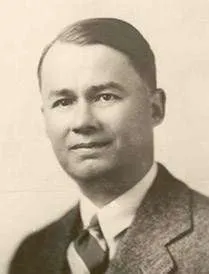
Mr. Chamberlin is a skilled observer and reporter of economic and political conditions at home and abroad. In addition to writing a number of books, he has lectured widely and is a contributor to The Wall Street Journal and numerous magazines.
Sailing under its own colors, socialism never got far in the United States. Native Americans, pragmatic by disposition, were not attracted by the dull and ponderous writings of Marx and Engels, with their underpinning of muddy Hegelian metaphysics. They were not inclined to call each other comrade or to take much stock in letters signed “Yours for the revolution.” The availability until 1900 of free land, the absence of European class distinctions, the ease with which individuals could move up or down the economic ladder — all these characteristics of American life were against the socialist conception of irreconcilable antagonism between two classes, exploiters and exploited.
So socialism in America was an intellectual import; it was no accident that of the two socialists elected to Congress one came from New York’s East Side, the other from a district in Wisconsin with a substantial population of German origin. Both in Eastern Europe and in Germany socialism was a creed with a considerable following, and it was natural that immigrants from these areas in many cases joined the American Socialist Party.
As the children and grandchildren of these immigrants became assimilated and lost touch with conditions in their parents’ homelands, interest in socialism waned. The American Socialist Party reached its highest proportion of the popular vote (about 6 per cent) with one of its hardy perennial candidates for President, Eugene V. Debs, in 1912. Then its vote tapered off steadily, with only one upsurge, in 1932, for Debs’s successor as regular candidate, scholarly and personally likable Norman Thomas. Finally the vote became such an infinitesimal percentage that the party ceased to nominate candidates for national office and now carries on merely as an educational and propaganda organization.
Americanizing the Ideas
Although socialism as a political movement for all practical purposes has ceased to exist, socialist proposals and ideas, from the time of the New Deal, have been taken over and put into effect by politicians of other parties. On many counts there is little difference today between European socialists, who have become more moderate because of the secession of the communists, and the stronger American advocates of government intervention and expanding social legislation. A prominent German Social Democrat once told the writer that his party was in substantial agreement with the “New Deal” and “New Frontier” Democrats, and the “Great Society” is the sort of blueprint for heightened government spending for supposed welfare aims that might be expected to win the hearty endorsement of a British or continental socialist.
A proposal to give the government authority to take over and operate key industries in the United States, should it come to a vote, would be overwhelmingly defeated. But socialism by a mixture of seduction and pressure is a horse of another color. This process is much farther advanced than most people realize and with remarkably little visible awareness or resistance from the businessmen, large and small, who might be expected to offer opposition.
Benevolent Intervention
An important element in the process of seduction is repeated affirmation by the highest government officials of devotion to the principles of free enterprise. Then comes the alluring suggestion that government wants and intends to be a benevolent partner of business. By this time resistance in the business community has been softened to a point where government bureaucrats, with little objection, take over some of the most important functions of the free market, such as the level of prices and the direction of investment. Price control and directed investment would have an ominous warning sound. So such expressions as government guidelines and voluntary restraints are preferred.
Professor Hayek once observed that, if any individual had invented the free market, he could have been considered an outstanding genius. But this system, like Topsy, “just growed” in response to the age-old needs for exchange of goods. Its service as an impartial regulator of prices is unique and unrivaled. In response to increased demand, actual or potential, prices rise. The contrary signal of falling prices indicates that demand has declined or is likely to decline.
All sorts of rulers, from despotic emperors of the past like Diocletian to communist dictators and computer-equipped bureaucrats of the present, have tried to cheat the free market by employing decrees or artificial means to push prices up or hold them down. But the usual end result of such efforts is about as successful as King Canute’s order to the waves and tides to stand still. (Perhaps Canute was rebuking some of the eager-beaver would-be planners in his entourage).
The Reins of Control
Slowly, gradually, almost imperceptibly, “guidelines” have replaced the impersonal mechanism of the market in determining the level of prices. When a price increase, however well justified by a rising trend in wages and other costs, draws a protesting whistle from the government official in charge of the guidelines, the corporation almost invariably backs down. Stockholders in steel companies, at a time when the general trend in profits and wages has been upward, are still looking for a restoration of the 40 per cent cut in earnings which they took some years ago when the larger steel companies reduced their dividends in this proportion. But government intervention has twice blocked steel price hikes. There has been the same experience in the aluminum and copper and tobacco industries. And against this growing interference of government with the verdict of the market place there have been remarkably few audible protests. When the president of the Chase Manhattan Bank, George Champion, last year urged businessmen to oppose what he called government-by-guideline, his stand was taken as amazing, although there was a time when almost no banker or industrialist would have taken a different attitude.
The threat of more open and direct controls has induced banks to accept sweeping limitations on their right to lend and invest abroad. Again, few voices have been raised in public protest, although private comment on this subject has often been sulphurous. As Alan L. Otten summed up the subject in a thoughtful article in The Wall Street Journal of January 13:
A threat of more direct controls on overseas investments has persuaded business to accept, with scarcely a murmur, a very complex system of very real “voluntary” controls. For the sake of “civil rights” businessmen have put up practically no fight against deep government intervention in their hiring practices. The Federal Trade Commission points to a sharp increase in “voluntary compliance” by businessmen with FTC rules on permissible trade practices. The Justice Department looks for widespread industry acceptance of its forthcoming “advisory guidelines” spelling out what will and won’t violate the antitrust laws. Auto firms readily acceded to Senate prodding for more safety equipment in new cars.
The Penalty of Resisting
Why are businessmen submitting to so much substitution of government judgment for their own with so little protest? The answer is partly in a process that may be called seduction. It is an old adage that the customer is always right and the government, thanks to expanded military and social welfare programs, is far and away the biggest single customer. Few business representatives look beyond the prospect of immediate profit, and the benefits to aircraft companies and engineering and electronics firms from enlarged war spending are obvious. Other types of firms stand to gain from “Great Society” expenditures, hospital suppliers from medicare, textbook, school, and laboratory manufacturers from higher educational outlays.
Moreover, the government is a customer equipped with teeth and claws not available to the individual buyer. It is in a position to blacklist firms that incur its displeasure, to shift its buying to those which are cooperative in accepting dictation. Given the vast complexity of the personal and corporate taxation system and of the antitrust laws and the large shadowy area between legality and illegality, the defiant head of a business firm faces the dreary prospect of tax harassment, with simultaneous damage to his pocketbook and to his public relations image.
It is an old familiar political trick to use patronage, appointments to public office, to help pass legislation on the Federal and state levels. But this kind of patronage is peanuts compared with the financial power that has accrued and is accruing to Big Brother in Washington as a result of steady expansion of government functions and the parallel growth of public spending. Ability to approve or withhold Federal grants in aid has given Federal agencies unprecedented power to control and overrule the judgment of the local school boards which have hitherto been the backbone of the public educational system. And the government’s position as the biggest single buyer lends a good deal of muscle to its demands that its guideline directions be obeyed.
Two Standards
In theory, wages — like prices —are subject to government influence and control. But in practice the government has proved less willing, perhaps less able, to employ sanctions against big concentrations of trade-union power than against business firms. A good example was the illegal transit strike that paralyzed transportation in New York City during the first weeks of January. The demands of the leader of the strike, the late Michael Quill, who tore up a court injunction against the strike with a degree of immunity from consequences not shown to Southern governors who opposed educational integration, were wildly in excess of the supposed wage increase limit of 3.2 per cent.
But the White House was very gingerly in its handling of Mr. Quill; he was not subjected to any of the pressures brought against firms seeking much more modest price increases. And the New York state authorities were positively abject in their reaction. The strike was in clear violation of the state Condon Wadlin Act, which forbids strikes by state employees and, among other penalties, forbids wage increases to violators for a term of years. The strike was settled on terms of virtual unconditional surrender, involving a settlement amounting to about a 15 per cent wage and fringe benefits increase. When judgment was given that this increase was illegal, the legislature hastily passed a law exempting transit workers from its operation. The problem of how to deal with stoppages of labor that hold up a large community to ransom, on pain of intolerable disruption of normal services, remains as far from settlement as ever.
As in Britain
There has been a parallel experience in Great Britain, where the Labor Government has been much more successful in holding down prices than in holding down wages, thereby storing up inflation and balance-of-payments troubles for the future. Even if it were desirable to substitute for the working of the free market a system of government fixing of prices and wages, with all the artificialities, inequities, and distortions which this involves, it would be almost impossible for a government to operate such a system in an even-handed manner. There are more votes represented in trade-unions than in management; and it is the temptation of politicians to follow what seems to be the trail leading to the votes, regardless of the effect on the welfare and viability of the national economy.
One reason why the business community, traditionally devoted to a free enterprise economy with a minimum of government interference, has accepted so meekly the growing incursions of government bureaucracy into the sphere of business decisions is the argument that inflation is a serious danger in the wake of a prolonged boom and that the government should possess some latitude in trying to forestall and avert this disaster. On the harmfulness of inflation there can be no reasonable difference of opinion. But it is contrary to all the teachings of experience and of sound economic theory to believe that inflation can be curbed by shadow boxing with its symptoms, rising prices and wages.
Curb the Spending
The only hopeful way of fighting inflation is to get at the roots, to cut down the creation of new money through Federal Reserve open market operations, to tighten credit and, above all, to cut down government spending. It is fantastic to be preparing the ground for a new raid on the harassed Federal income taxpayer when there are such promising targets for economy as the current $46 billion for welfare spending, over $3 billion for foreign aid, $3 billion for farm subsidies, $4 billion for an excessively expensive road-building program, and $4 billion for the project of putting a man on the moon and bringing him back — a project without military, scientific, or any other justification commensurate with its cost.
No doubt the war in Vietnam will be alleged as an excuse for levying supplementary taxes. But the true cause of a probable budget deficit may be found in the spendthrift growth of nondefense taxation, much of it with no justification except the desire to attract votes from groups that are “consumers,” not “producers” of social security. In the last six years, nondefense spending has grown by the enormous total of $32 billion. If a sum of $5 billion or even $10 billion is needed to put the budget in balance, an Administration or a Congress genuinely bent on economy could easily find it in these swollen expenditures.
It is high time for thoughtful businessmen, looking beyond the immediate balance sheet, to consider what will become of free private economy if government officials are to substitute their judgments more and more for the impartial verdict of the free market. A few years of outward prosperity, with ever stronger inflationary overtones, will be purchased too dearly if the result is some kind of government-run, socialized economy derived from a mixture of seduction and stronger pressures.