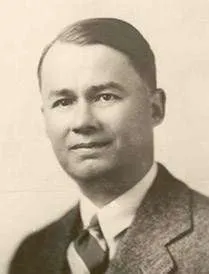
Mr. Chamberlin is the author of numerous books, lecturer, and contributor to the Wall Street Journal and many nationally known magazines.
Marxist prejudices contaminate many who never read Das Kapital and never voted the socialist ticket. One such prejudice is that there is something immoral and disreputable about profits. These are regarded as earnings without moral justification, filched by the idle rich from the men and women who are doing the actual work. A trade union leader, demanding a new boost in wages, can always arouse sympathy with the suggestion that the sums necessary for this increase need not be compensated by higher prices; they can come out of profits.
It is with this line of argument that Mr. Walter Reuther has been building up the demands for wage increases and “fringe” benefits which he will present to the automobile companies. He has been offering several variants on the theme that profits are too high, suggesting that higher wages could be paid out of profits without necessitating price increases, pro-posing that some form of profit sharing with employees be introduced and that the companies reduce the prices of their cars. He was careful to avoid any commitment to moderate wage demands if prices are reduced. Nor did his scheme for profit sharing include any provision for sharing losses which companies sometimes incur in years of slack business activity.
This attitude reveals a curious ignorance or singular indifference in regard to the economic history of the automobile industry. A main factor in its vast postwar expansion, which has provided hundreds of thousands of new jobs at record wage scales, has been the plowing back into the industry of a large part of the profits earned by Ford, General Motors, and Chrysler in prosperous years.
Profit is one of the principal dynamos of the individualist economic system. Without the prospect of profit, especially in new untried fields of enterprise, initiative would disappear, stagnation would set in, and a nation with a growing population would face a bleak prospect of continual growing unemployment.
A favorite catchword of the old intercollegiate socialist society meeting was: Production for use, not profit. But, like another catchword, “Human rights above property rights,” this one proves on examination, to be devoid of content. Where there is no production for profit, there will be no effective production at all.
The Free Market Yardstick
Ability to earn a profit is the surest test of the health of an economic enterprise, of its right to survive in a competitive free economic system. The free market system developed spontaneously. Had it been invented by any single individual, this man would have the right to be considered one of the greatest geniuses in history. For it is the element of free choice in the free market system that assures the most effective use of labor and resources.
Those goods for which there is growing demand normally rise in price, encouraging larger production. Those articles for which demand is slack fall in price, discouraging production. No state planning board, even if its members were the wisest men in the world, could anticipate trends in demand with the unfailing automatic accuracy of the free market, so far as it is left free from the meddling and distortions introduced by state planning and monopolistic devices.
Socialism, with its elimination of private ownership and designation of the State as the omnipotent and omnicompetent planner, producer, and supplier, does not and cannot eliminate the need for the impartial barometer of the market system. For under socialism, no one knows or can know how much any given article is worth.
When I was in Yugoslavia in 1955, I found the state economic planners racking their brains trying to introduce some kind of free market method of price judgment into their collectivist economic system. When I was in Poland last year, I was told of case after case of absurd underpricing, causing the wildest distortions in the economy, just because nothing had been found to replace the free market yardstick.
Ability to earn a profit, under the free enterprise system, is a certificate of efficiency and of real need for the existence of an enterprise. Prolonged and consistent inability to earn a profit means the bankruptcy court, the sanction for failure to meet the test of a competitive method of operation.
Capital for Industrial Expansion
Some critics seem to assume that profits represent vast sums paid out to social parasites to enable them to go on luxury binges at Miami and Palm Springs. Nothing could be more inaccurate. Retained profits play an enormous role in making possible industrial expansion and thereby creating more jobs for workers and more products for consumers.
In the year 1956, for instance, American corporations reported earnings — which may be overstated, as we shall discuss later —of $43.4 billion. What became of this sum? Corporate income taxes took $21.9 billion. Stockholders received $12.0 billion, on which they in turn paid taxes of about $3.5 billion. $9.6 billion were reinvested —a very considerable stimulus to industrial development and output.
This element of industrial reconstruction and expansion through retained profits has been of still greater significance in Germany where liquid capital was almost wiped out by the drastic currency devaluation of 1948 — itself a consequence of an inflation that was set in motion by Nazi war financing and carried farther by the negative policies of the occupation powers in the first years after the end of the war. German industrial companies had to start from scratch, building up inventories and stocks of raw material, replacing damaged and obsolescent machinery.
With normal sources of capital almost completely closed, German firms resorted on a large scale to so-called self-financing, compelling their stockholders to wait for dividends as they plowed back most of their profits into projects for expansion. The speed and scope of the German recovery proved that this policy paid off. Had all profits been distributed to workers or stockholders, the German economic recovery would have lagged badly. The amount of profits earned by industrial corporations and the extent of their availability under any “share the wealth” plan are grossly exaggerated in the public imagination. What stockholders got, after taxes, from dividends in 1956 was about $8.5 billion, or about $50 for every man, woman, and child in the United States.
This figure of $8.5 billion was less than one-fifth of the $43.4 billion which corporations earned. Of this larger sum, about three-fifths was taken away in taxes and more than one-fifth was reinvested in business. Many of the stockholders are people of very modest means, often workers in the industries which they partially own as stockholders. Incidentally, employee stock ownership, which exists widely in the United States, is a means by which workers can benefit personally and directly from the earnings of industry.
To abolish or unduly curtail profits would have the effect of drying up new investment, which is indispensable if the pace of American industrial development is to be maintained.
A Look at the Record
A brief refresher course in American economic history will show that the conception of profitless prosperity, however appealing it may be to some trade union leaders, has never been realized in practice. High profits, high employment, and high wages are inseparably associated. The converse of this proposition is equally true. Low profits, or losses in business enterprise, mean either low wages or high unemployment, or both, and a depressed level of output.
This is certainly no accidental coincidence. Profits, retained and put back into further development, are one of the more important dynamos of industrial progress. When these profits disappear, the pace of this progress slows down, or ceases altogether. The following facts and figures help to place in perspective the allegations of unduly high profits which are the stock-in-trade of shortsighted trade union leaders and demagogic politicians :
In the ten-year period 1947-56 American corporations earned a net profit of $362 billion. They never saw $175 billion of this amount, which was taken for taxes. Stockholders received $91 billion and business was able to retain $96 billion for its capital needs in a time of unprecedented demand which required continual expansion. During this period wages and salaries rose by 80 per cent, whereas after-tax profits increased by only 18 per cent and retained earnings were actually $2 billion a year less at the end of the period than at the beginning, despite an investment level three-fourths greater.
The New England Letter of the First National Bank of Boston of March, 1957, brings out three important and sometimes overlooked points about profits:
“First, profits are being greatly overstated. A substantial amount of inventory appreciation, arising from the higher replacement costs which have prevailed, has been included in profits. In only two years of the 1947-56 period were there any inventory losses, while the aggregate net gains reached $17 billion. This amount was taxed as profits, resulting in less tangible funds for business use. The second cause of overstatement may be found in the inadequacy of depreciation charges in view of the large volume of assets currently valued far below replacement cost. Under-depreciation of the physical assets of all American business is estimated at $6 billion for 1957 by the Machinery and Allied Products Institute. With current reproduction cost so far in excess of historical cost, income is not sufficiently charged, with the result that in effect industry is paying profits taxes on this amount of capital consumption. This is not only grossly inequitable but it is an incalculable drag on progress.
“Secondly, profit dollars have been shrinking in purchasing power. Business capital goods, according to reliable estimates, were 37 per cent above their 1947-49 costs early this year. The upward sweep of prices of such goods has been under way since 1933 almost without interruption. On this basis the business dollar of 1947-49 has a current purchasing power of 73 cents, compared with that of 85 cents for the consumer’s dollar.
“Thirdly, business profits are taxed excessively. In view of the 52 per cent rate of the federal income tax, the treatment of inventory profits and depreciation and the double taxation on dividends paid out to stockholders, this conclusion is inescapable. . . .
“The overstatement of profits, the shrinkage in purchasing power of profit dollars, and the excessive tax burden on profits are closely linked to the inflationary trend which has been running with varying degrees of intensity since before World War II. Inflation tends to destroy capital values.”
National vs. Private Ownership
A good deal of confusion of thought has been induced by calculations that, in the United States, a small percentage of wealthy individuals own a much more than proportionate share of national productive resources. In conclusions drawn from such calculations, however, no distinction is made between the minuscule proportion of a large income —even after taxes — which is spent on personal consumption and the enormously larger share which flows back in the form of reinvestment or investment in other industries.
Perhaps the best illustration of this issue of national versus private ownership is a humorous story which originated behind the iron curtain, in Czechoslovakia. An international commission, visiting a Czech factory, notes a few cars parked outside.
“To whom does this factory belong?” is the inquiry.
“To the workers because this is a workers’ state.”
“To whom do the cars belong?” “To the bosses — those who manage the factory in the workers’ state.”
The commission visits the United States and finds, outside a similar factory, a large number of cars.
“To whom does this factory belong?”
“To the private owners.”
“And to whom do the cars belong?”
“To the workers.”
Some people give the impression of wanting the fruits of a highly developed industrial system —more and more cars, telephones, plumbing installations, electrical appliances — without paying the price, which is a steady flow of new investment capital. The difference between sufficient and insufficient capital is one of the most important reasons for the difference in the standard of living of the average man of Western Europe or North America as compared with that of Asia, Africa, and Latin America. Estimates of the amount of new capital investment required to provide a worker with the tools of his job vary, but $10,000 seems to be a conservative figure. As our labor force increases by about one million a year, ten billion dollars of new investment is a rough estimate of the figure required to keep up a high level of employment. This figure will never be reached if there is a ruthless profit squeeze, either through excessive taxation or through demands for wage increases so out of proportion to productivity as to push prices beyond the consumer sales resistance point.
Two Indispensable Functions
Far from representing an expendable luxury or “surplus value,” profits fulfill two indispensable functions in a free economy. The expectation of profit operates on millions of entrepreneurs, from the man who puts his savings into a restaurant, a service station, or a truck, to the big corporation that sets aside millions for a promising laboratory research project or an expedition into some rugged territory in search of some new source of needed mineral. This is the main force that sustains general employment at a high standard of living.
Second in importance is the function of retained profits in making small businesses grow and big businesses become bigger The link between profits and prosperity is clear and unbreakable. Only through profits can we hope to achieve that freedom of enterprise and risk-taking which will produce sustained economic growth of a magnitude to match that which has brought us the highest standard of living the world has ever known.