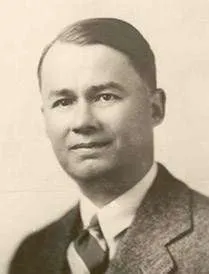
Though best known for his skilled observation and reporting of economic and political conditions at home and abroad, Mr. Chamberlin also writes knowingly as a patron of music and the arts.
A violation of cultural freedom, of the right to reject as well as accept, is the sandwich type program which has become standard for most American symphony orchestras. The sandwich takes the form of beginning and ending the concert with works of general appeal by composers of the classical and romantic schools, for example, Beethoven, Mozart, Bach, Brahms, Wagner, Tchaikovsky. The sandwich effect is produced by injecting between these acceptable compositions some outpourings of more or less raucous dissonance. The only way in which musical conservatives can avoid an undesired assault on their eardrums is to walk out in the middle of the concert, returning for the last work. They cannot dodge the musical forced feeding by arriving late or leaving early.
The music commentator, Henry Pleasants—whose little book, appropriately entitled The Agony of Modern Music, is a precious possession for lay music-lovers who do not like predominant trends in modern music but lack the technical training and knowledge to know exactly why—hits off this sandwich method of programing very well. Quoting the modern composer, Honegger, as authority for the statement, “The contemporary composer is a gate-crasher, trying to push his way into a company to which he has not been invited,” Pleasants continues as follows:
“This penetrates to the essence of the matter. The familiar spectacle of the contemporary work sandwiched between Beethoven and Brahms exposes the gatecrasher in full silhouette…. It also shows the conductor’s part in the conspiracy. There is Beethoven on one side to make sure that the audience comes in. There is Brahms on the other side to make sure that it does not get out before the gate-crasher has been heard.”
Twelve-Tonal and Atonal
In order to understand why this musical forced feeding is an infringement on the right of individual choice one should consider, first, the predominant characteristics of modern music and, second, the distinction between hearing music, on one side, and reading literature or viewing art, on the other.
Early in this century the Austrian composer, Arnold Schoenberg, discarded previous rules of harmony and melody by writing music in the so-called twelve-tonal scale. From this innovation many other modern composers have proceeded to complete atonality. I am not qualified to give a detailed musical analysis of the implications of these changes. But the effect is to take away from music the very characteristics which historically have provided most of its emotional and aesthetic appeal: clear and precise rhythm, ordered continuity, and the golden gift of melody.
At best, twelve-tonal and atonal music is dry and austere, suggesting an attempt to solve a difficult mathematical problem, not an appeal to the mind and heart. At worst, it produces an unbelievable chaos of clashing, discordant sounds. The Boston Symphony Orchestra—the one with which I am most familiar because of my place of residence—in an evil hour gave a “first performance” of a symphony by an American composer named David Diamond, which produced on most of the audience the effect the bullock feels from a stunning blow of the axe. To paraphrase Shakespeare, it was full of sound and fury, signifying nothing. And, as the brass sounded ever shriller discords, one felt that the situation called for two Harvard cheerleaders, one on each side of conductor Charles Munch, shouting at the tops of their voices: “Hit ‘em again, Hit ‘em again. Harder! Harder!”
Twelve-tonal and atonal music bears no relation whatever to the great musical tradition, classical and romantic. Its exponents prefer discords to chords, dissonance to melody, cacophony to harmony. If it is argued that dissonance is sometimes found in the works of premodern composers, Henry Pleasants has an appropriate answer:
“The difference between dissonance then and dissonance now is that in Monteverdi, as also in Mozart and even in Wagner, the listener is excited by the clash and quieted and rewarded by its resolution in what the listener feels to be a consonance. In modern music there is no resolution. Without harmonic order there are no tonal safe havens. Both composer and listener are left as helpless flotsam on a sea of tonal discomfort.”
Of course, music, like other creative arts, is subject to the processes of evolution. And the composers of the eighteenth and nineteenth centuries are individual personalities with distinctive styles. Yet, as I know from personal experience, a music appreciation broad enough to include composers of such differing types as Bach and Tchaikovsky, Wagner and Brahms, can reject, as intellectually unintelligible and aesthetically repulsive, the works composed on the basis of twelve-tonalism and atonalism.
Composer versus Audience
Because they have chosen such difficult and uncongenial forms of expression, modern composers have created a tremendous rift between themselves and the lay audience which is essential if music is to survive and flourish. So far as I know, there are no Gallup Polls on the subject of musical preferences. But there are enough ascertainable items of evidence to back up this statement, as the following list will show.
1. No opera of wide popular appeal has been composed during the last fifty years, as a glance at the Metropolitan Opera repertory will show. With perhaps one or two exceptions (and no great box-office enthusiasm for these) the list of operas presented in the 1960′s could have been presented in the 1910′s. There is no twentieth century Wagner or Verdi and this is more understandable because modern music, by its nature, is almost unsingable.
2. A
3. Every year the Boston Symphony Orchestra gives a concert for the benefit of the Pension
Fund of its members. Members of its audience who do not admire discordant music wish that every program might be chosen on the basis that dictates the selection of the Pension Fund concert program, which is regularly dominated by Beethoven, Brahms, Wagner, and similar composers. If the probable financial consequences for the musicians would not be so disastrous, it would be interesting to see how many people would voluntarily pay higher than normal prices to listen to the works of Bartok, Stravinsky, Berg, Webern, and other exponents of discord. The directors are not likely to risk the experiment.
4. Consider the programs of such eminent pianists as Artur Rubinstein, Rudolf Serkin, Van Cliburn, and other artists of like caliber. At least 90, perhaps 95 per cent of their selections were composed before 1900. The obvious inference to be drawn from this unmistakable fact is that pianists either do not consider contemporary works worth playing or know such works will have a repelling effect on the audience.
It is only the symphony orchestra, as a general rule, that engages in the musical forced feeding represented by the sandwich program. And they are only able to do this because they have what is essentially a captive audience.
With the wide growth of musical enjoyment and appreciation and the increase in the population, the concerts of every large orchestra are sold out by subscription in advance every season.
A Vast Difference
It may be argued that contemporary literature and art show offbeat and “avant-garde” tendencies and that it is only natural that music should also seek new paths. But this brings one to the point that there is an element of compulsion in listening to symphonic music that does not exist in the case of literature and art.
Suppose one doesn’t believe in the popular equation: obscurity plus obscenity equals genius. One can simply ignore the books which are written on this principle. No one demands that one read Finnegan’s Wake, The American Dream, and Tropic of Cancer as a condition for being allowed to read War and Peace, The Brothers Karamazov, and Vanity Fair. People who measure the impact of a novel by its number of four-letter words or intimate descriptions of sex relations can satisfy their taste. Those who have other standards can exercise their right of rejection.
This same freedom of choice, of acceptance or rejection, applies in art. If one visits one of the famous European art galleries, the Uffizi or Pitti in Florence, the Prado in Madrid, one doesn’t face a jarring contrast between the works of Raphael and Michelangelo and Titian and Velasquez on one hand, and on the other the weird “abstract” painting of the type easily imitated by a child or a chimpanzee. Modern art is reasonably housed in separate museums.
Forced Integration
But in music one enjoys no such freedom of choice. In music, alone among the arts, the pernicious dogma prevails that works of profoundly different style and content must be “integrated,” presented on the same program. The psychological effect of hearing, after a beautifully melodic symphony of Schubert or Schumann, some modern experimental work that suggests a concrete mixer operating in high gear is jarring, to say the least. It is unfair to the listener of conservative musical tastes. And it is entirely unnecessary.
To dislike unmelodic music is not to be so arrogant or intolerant as to call for its suppression. All the musical conservative asks is a kind of co-existence, a system of programing that would give the nonmelodic composers as much time and representation as the conductor may believe they deserve, but not on the same programs as musical works constructed according to entirely different standards.
The writer recently had an opportunity to argue this case on a televised panel that also included Erich Leinsdorf, conductor of the Boston Symphony Orchestra, and Gunther Schuller, an American atonal composer. The reaction was surprisingly strong. I personally received scores of letters, telephone calls, greetings in public places from strangers, all favorable to my viewpoint. And on a subsequent television appearance Mr. Leinsdorf, although he did not agree with me, stated that his mail had also been strongly on the conservative side—one more proof of the gulf that yawns between the modern composer and his audience.
Homogeneous programs, two or three all pre-Schoenberg, followed by one devoted to the newer experimental forms, seem the obvious answer to the problem of how to take the curse of compulsory cacophony off symphony programs while giving full freedom of expression to the nonmelodic schools of music. When some conductor recognizes this truth and shapes his programs accordingly, hosts of unwilling listeners who have put up with Bartok and Stravinsky and Bloch and Toch and Roy Harris and David Diamond and many others whose names are little known and will not be long remembered as the price of hearing the great classics and romantics will call him blessed. And the auditors who genuinely enjoy modern music—a much smaller number, one suspects, than that of those who pretend to enjoy it for fear of being considered “squares” or old fogies—could get their fill in concerts exclusively devoted to avant-garde compositions.
Appreciated by Their Contemporaries
Two objections to this viewpoint should be fairly stated and frankly faced. First, there is the banal cliché—which, historically, is entirely false—that truly great music is never appreciated in its own time. The truth is, and can be verified by consultation of works on musical history and biography, that there was not a single composer of the first rank who was not widely known and admired during his lifetime. The works of Haydn, Handel, Mozart, Beethoven, Brahms, Schubert, Schumann, Chopin, Liszt, Verdi, and Berlioz were widely played and enthusiastically applauded, not after their death, but while they were alive. Chopin was the toast of Paris and of other musical capitals. The new performance of a Verdi opera was an occasion for Italian national celebration. Wagner faced more difficulties because of the scope of his operatic innovations and his exacting demands in staging. Yet, before he died, he was able to have a special opera house built according to his specifications in Bayreuth, paid for by public subscription, and to see the first of the festivals that still commemorate his works before packed audiences. Is there any living composer who would be likely to receive such a tribute?
The picture of the typical musical creative genius of the past starving in a garret and leaving a legacy of unpublished manuscripts for future generations to discover is unalloyed fiction. Henry Pleas-ants notes that on the occasion of the first performance of Haydn’s “The Creation” the Vienna police had to be mobilized to keep order among the crowds. And he asks whether one could imagine such an outpouring of enthusiasm at the first performance of an oratorio by Honegger or Stravinsky.
The second argument for compulsory cacophony, for musical forced feeding, is that modern composers like to have their works measured against those of the masters of the past. There would be validity in this argument if they were abiding by the same traditions and standards and trying to create music according to the same rules of composition. But this is definitely not the case.
One could no more compare David Diamond or Lukas Foss with Beethoven and Brahms than one could compare apples with oranges. It is not merely disparity of gifts; it is total difference of style and aim.
The models of the atonalists are Schoenberg, Bartok, the later Stravinsky, Berg, Webern, surely not Beethoven, Mozart, Brahms, Wagner, and Tchaikovsky. It is against these models which they prefer that their works could most reasonably be measured.
If homogeneous programs should become the rule, not the exception, three desirable results would be achieved:
Musical conservatives would be spared the irritation and frustration of being placed under pressure, through the “sandwich” type of program, to sit through works to which their reaction is alienation and rejection.
A comparison of audience attendance at the all-classical and all-atonal and twelve-tonal concerts would furnish an index of public appreciation of these two styles of composition. There is not much difficulty in foreseeing how this kind of plebiscite would come out.
Finally, music would be freed from its present invidious position as the only art where the right of rejecting what is unacceptable is denied, de facto if not de jure. The obvious motive of the mixed program is to coerce audiences into listening to works which they would never attend of their free will and desire.
Music that cannot stand on its own feet, on its intrinsic appeal in the market place of public taste and judgment, will not survive; and it does not deserve to survive.
***
… For His Own Good
In the conduct of human beings towards one another, it is necessary that general rules should for the most part be observed, in order that people may know what they have to expect; but in each person’s own concern, his individual spontaneity is entitled to free exercise. Considerations to aid his judgment, exhortations to strengthen his will, may be offered to him, even obtruded on him, by others; but he himself is the final judge. All errors which he is likely to commit against advice and warning, are far outweighed by the evil of allowing others to constrain him to what they deem his good…………
John Stuart Mill, On