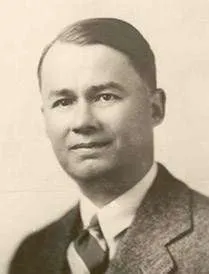
Mr. Chamberlin is a skilled observer and reporter of economic and political conditions at home and abroad. He has written a number of books, has lectured widely, and is a contributor to The Wall Street Journal and many nationally known magazines.
It is remarkable how the meaning of a word can change by the simple process of crossing the Atlantic Ocean. Take the good old once respectable word liberal, for instance. Should an inquiring American walk into a session of Europe's Liberal International, he would be among people who believe in private initiative and free enterprise, who recognize the organic connection between freedom from state planning and meddling and all other kinds of freedom, personal, political, economic. The European liberal is by definition strongly, on principle, against socialism, and for the individualistic, not the socialistic approach to solving economic and social problems.
How very different would be the atmosphere of a convention of the Americans for Democratic Action or any group that would call itself liberal in the United States. Here all the emphasis would be on having the state act as a rescue operator for everything from delinquent youths to worked-out mines, on government as the proper agency for relieving communities, families, individuals of their obligations, and taxpayers of an ever larger slice of their hard-earned incomes.
Here is a good sample of what passes for liberalism in the United States, as reflected in a news report of the program of an organization which calls itself the Liberal Party in the State of New York:
“The Liberals went far beyond the spending and social welfare proposals of the Democratic Administration of Governor Harriman. They outlined in 21,000 words a vast expansion of state spending and activity to meet 'the urgency of the times.'
” 'We cannot afford economics as usual and politics as usual,' the Party said.
“The program urged the creation of agencies to aid small business, promote industrial usage of atomic power, and protect consumers. It called for improvements in existing social legislation and heavy spending on education and welfare.”
Or take this definition of “liberalism,” statist brand, offered by Mr. Joseph S. Clark, Jr., former Mayor of Philadelphia, now Senator from Pennsylvania, in The Atlantic Monthly for July, 1953:
“A liberal is here defined as one who believes in using the full force of government for the advancement of social, political, and economic justice at the municipal, state, national, and international levels. . . . A liberal believes that government is a proper tool to use in the development of a society which attempts to carry Christian principles of conduct into practical effect.”
The genuinely liberal French nineteenth century economist, Frederic Bastiat, referred to the state as “the great fiction by which everyone hopes to live atthe expense of everyone else.” But in America the term liberal has been too often appropriated by those who share the delusion that the modern state possesses some mysterious power of giving to some groups without taking an equivalent amount from the same groups, or from others, either by higher taxation or by the still more reprehensible device of inflation.
Boarded by Pirates
The good ship Liberalism in the United States has been boarded by a pirate crew of state interventionists and near-socialists, whose ideals are the reverse of those of the historic pioneers of liberal thought, and who consider Karl Marx more relevant to modern conditions than Adam Smith. One of the first distinctively liberal thinkers was John Locke. His emphasis on “the natural right of life, liberty, and property,” on religious toleration, on a government of limited powers deriving its legitimacy from the consent of the governed drove coffin nails into old conceptions of the divine right of kings to govern as they might see fit. His views exercised a powerful seminal influence both on Britain's “Glorious Revolution” of 1688 and on the American Revolution a century later.
Locke in his time represented the golden mean between theories of royal absolutism and the crackpot ideas on religion and property developed by the so-called Levelers and other wild-eyed groups that came up during the period of strife and confusion that followed the struggle between Charles I and the Parliament. Locke showed how liberty and order could be assured under a political and social system which restricted the state to the role of guardian and enforcer of man's natural rights. The late Harold J. Laski was a radical socialist, not a liberal. Yet, in one of his best books, The Rise of Liberalism, he gives a summary of Locke's ideas on the state which, while not meant as praise, is basically fair and accurate:
“For God, as he [Locke] tells us, has given the world to 'the use of the industrious and rational,' and the state, by their own consent, is there to protect their exploitation of it. He has the full sense of indolence as sin, the corresponding insistence on the obligation to labor and the recognition of the successful man's good fortune as an enrichment of the commonwealth. If property is the outcome of labor, clearly it is entitled to security, for it is 'the great and chief end, therefore, of men's uniting into commonwealths.'
“They are to be secure in whatthey have, and, therefore, they are to be free. By freedom Locke means that men shall not be bound without their own consent.”
Personal Rights and Responsibilities
What Locke contributed to the political philosophy of liberalism was supplemented, on the economic side, by Adam Smith, who lived about a century later. His classical work, The Wealth of Nations, is a magnificent vindication of the general proposition that human beings get along best when there is the least governmental meddling and coddling. As Smith put it, “every man is by nature first and principally recommended to his own care.”
Smith believed that state action should be mainly limited to protecting the individual citizen against injustice and violence. The main function of what he called “that insidious and crafty animal vulgarly called the statesman or politician” was to give his countrymen peace abroad and order at home. He preferred “the natural rules of justice, independent of all positive institutions” to state planning and interference with the natural course of the economy.
If John Locke and Adam Smith were alive today, they would be puzzled and distressed by the clamor for setting up “national goals.” They would hold that a society, whose members are free to pursue their lawful interests under the normal dictates of the moral law, would fare pretty well, without the prescription of specific goals by the government or any other agency.
Edmund Burke is often claimed as the patron saint of conservative thinking. But, although much of Burke's emphasis is on respecting and preserving what is valuable in the national heritage, there is a utilitarian element in his thinking that fits in with classical liberalism, as expressed by Locke and Smith. What Burke wrote in “Thoughts and Details on Scarcity” against the conception of government as an omnicompetent provider was good classical liberal doctrine:
“To provide for us in our necessities is not in the power of government. It would be a vain presumption in statesmen to think they can do it….It is in the power of government to prevent much evil; it can do very little positive good in this, or perhaps in anything else.”
Classical Liberalism
So liberalism evolved as a political and economic philosophy before the British Liberal Party and similar parties on the continent were organized. For generations
Liberals and Conservatives alternated in power in England; the Liberal Party went to pieces as a result of a split between the Lloyd George and Asquith factions in World War I and has never been able to revive on a significant scale.
Standard principles of classical liberalism were the conviction that the best government governs least, a preference for individual enterprise over state action, coolness toward imperialist adventures, a belief in retrenchment in state expenditure, a zealous regard for the liberty of the individual against the encroachments of censorship and bureaucracy. John Stuart Mill's essay On Liberty expressed perhaps more eloquently than any other work the Victorian liberal's creed.
By some queer trick of perverted semantics the kind of people who in Europe would call themselves socialists or social democrats took it into their heads in America to establish a kind of squatters' right to the designation of “liberals.” The contrast between the authentic liberals of the past—who may still be found, incidentally, in continental Europe—and the statist “liberals” of the present is strikingly complete on several important issues of politics and economics.
The classical liberal believed that the emphasis in economic life should be on individual enterprise, not on state action. The Grand Old Man of Victorian liberalism, William E. Gladstone, regarded the personal income tax as an obnoxious and unjust form of taxation, tried at one time to abolish it, and kept it at a level that now seems incredibly low. “Peace, Retrenchment, and Reform” was a familiar Liberal slogan.
Unlimited Government
But the modern American “liberal” is apt to be, on principle, a profligate spender of public funds for any and all purposes and sometimes merely for the supposed stimulating effect of spending. If he is free from the patented cynicism of a Harry Hopkins, with his formula for buying the votes of the people with their own money, he is often a crude Keynesian, convinced that the cure for all economic ills is for the government—the supposed horn of plenty—to write a larger check.
The classical liberal believed in the wisdom of laissez faire, of letting the temporary difficulties and frictions in an economy work themselves out. The modern “liberal” wants the government to rush to the rescue, at the first sign of maladjustment, like a fire department responding to a fire alarm.
Two recent examples may be cited as proof that the laissez-faire philosophy is not a product of heartlessness or mental laziness. Recurring drought in the thirties caused large numbers of farmers in Oklahoma and adjacent states to pull up stakes and migrate, mostly to California. In the beginning there were hardships, difficulties of adjustment. But now the so-called problem of the “Okies” has long ceased to exist. California is giving them a better living than did the parched acres of their native states in the thirties.
There was a similar situation, on a much bigger scale, in Germany after the end of World War II. Many millions of Germans and people of German origin were driven from their homes in the eastern provinces of Germany, in the Sudetenland area of Czechoslovakia, in some of the Balkan countries. At first, the social problem of finding a livelihood for this in pouring of forced migrants seemed staggering.
But the German government resisted the temptation to seek a solution by means of regimentation. It did not tell the refugees that they must go here or work in such and such an industry. It gave help, within the limits of its resources; but it did not dictate. And today, there is practically no refugee problem. These new German citizens have taken the places vacated by the millions of able-bodied Germans who perished in the war. So successful has been the German economic recovery, which began when controls were scrapped and normal private incentives restored, that the German economy not only has absorbed and given employment to the vast numbers of refugees, but also has employed hundreds of thousands of foreign workers, Italians, Spaniards, Greeks, and others.
The classical liberal favored flexibility, letting individuals and industries face up to and make their own adjustments. The modern “liberal” would rather perpetuate rigidities, encouraging people to stay where there is no economic need for them, underpinning cracks in the economy with an ever-enlarging layer of state subsidies.
Classical liberalism was a powerful instrument in freeing the individual from the tyranny of arbitrary government. Modern “liberalism” goes in heavily for laws and judicial rulings that override deep-rooted local sentiments and destroy the right of the individual to dispose of his property as he may see fit and to choose his children's environment and associates.
Historically, genuine liberalism was the climactic phase in the emancipation of the individual from the injustices of despotism and feudalism and the pressures of a static social order. But the objective of modern “liberalism” is to put the individual in a new strait jacket of state aid and state control, of state handouts and state confiscatory taxation.
What can Americans do who believe in the original liberal principles of individualism, self-reliance, and opportunity and see these principles flouted by statists masquerading under the name of “liberals”? Well, they can use quotation marks whenever they refer to false “liberals.” And they can think hard for a term that will adequately describe their own position. For statism has established its squatters' right so firmly that no one who believes in the ideas of Locke and Adam Smith and Burke could call himself a liberal, in America, without inviting the gravest misconception of what he really stands for.
The last irony was reached when, in the time before the cold war had heated up, when the Soviet Union was still officially a gallant ally, it was not uncommon to see, in American left-wing publications, the expression: “Communists and other liberals.”