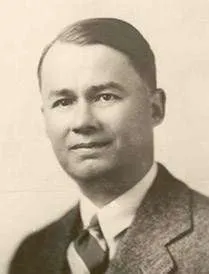
Mr. Chamberlin is a skilled observer and reporter of economic and political conditions at home and abroad. His recent writings include The German Phoenix (New York: Duell, Sloan & Pearce, 1963).
For Ludwig Erhard, principal author of the German economic miracle, the result of the recent German national election must have been one of his finer hours. It had long been clear that his bold wager on freedom from state controls as the surest road to economic and social recovery had paid off in perhaps the most stunning national success story of the postwar period. The rotund, cigar-smoking Prime Minister, who succeeded Konrad Adenauer as Chancellor, or head of the administration, in 1962, had every right to consider the outcome of the election as a striking personal victory and a national endorsement of the economic principles with which his name will always be associated.
Prominent among these are the rule of the free market, maximum freedom in international trade relations, wider diffusion of private property, and prosperity through competition. The people of a European country of key political, economic, and military importance have shown conclusively in a free election that they know when they are well off, that they reject all forms of extremism (procommunists got about 1.3 per cent of the vote, ultranationalists about 2.6 per cent), and that they are prepared to contribute their full share to the political stability and economic prosperity of the Western world.
At first sight, to be sure, the election figures may seem to indicate little change. Erhard’s party, the CDU (Christian Democratic Union), increased its percentage of the total vote from 45.5 to 47.5, falling just short of possessing an absolute majority in the new Bundestag (Parliament). The Social Democrats, the principal opposition party, also increased their share of the vote, falling just short of 40 per cent. But, when one considers five appreciable political and psychological handicaps which Erhard faced in the campaign, the magnitude of his success is impressive. These may be listed as follows, not necessarily in the order of their importance.
Various Handicaps Faced and Overcome
1. The CDU, alone or in combination with a much smaller moderate conservative group, the Free Democrats (FDP), has been in power for sixteen years, a much longer period than is usually required for an administration to wear out its welcome. Almost inevitably a government in power does some unpopular things and makes more opponents than supporters. Hence, the normal swing of the pendulum between two main parties in free countries.
2. On some issues, especially in foreign policy, the CDU leadership has not been speaking with a united voice. Virtually all Germans in the
And this leads to differences of emphasis and priorities. Foreign Minister Schroeder, for instance, has been less sympathetic to de Gaulle, more attached to the American orientation. Some influential CDU leaders, including former Chancellor Adenauer and the Christian Social Union leader, Franz Josef Strauss, of the Bavarian wing of the CDU, have stressed the necessity for keeping on the best possible terms with General de Gaulle. To be sure, de Gaulle has made it difficult for his would-be German friends. As a shrewd German journalist remarked to me recently: “Adenauer, Strauss, and others thought de Gaulle would be another John Foster Dulles, with a harder line toward Moscow. But he is nothing of the kind.”
However, such actions of the French President as his diplomatic flirtation with the Soviet Union, his abandonment in advance of the German legal claim to territory east of the OderNeisse frontier, his refusal to give Germany any say in a possible European nuclear deterrent, his suggestion that only Germany’s continental neighbors should decide the terms of a German peace settlement, have produced a disillusioning effect in Germany. Still, the hope for some form of closer West European union, with France and Germany as the nucleus, dies hard. This explains in part Adenauer’s sharp attack on the negotiations in Geneva looking to a ban on proliferation of nuclear weapons. This attack somewhat embarrassed Erhard during the campaign.
There have also been differences of opinion within the CDU about the desirability of creating a so-called “big coalition” of the CDU and the Social Democrats, the type of political set-up that exists in neighboring Austria. Erhard set his face like flint against any such arrangement. The election, he insisted, offered the voters a choice between his principles and those of his socialist opponent. A hybrid coalition government would obscure the issues and damage the whole idea of representative democracy.
In summary, Erhard’s political position was more vulnerable because of fissions and cleavages in the ranks of his own party.
3. This was the first German national election in which the CDU standard-bearer was not the legendary Konrad Adenauer, the leader of the new Germany, based on political and personal freedom and private enterprise, which emerged from the wreckage left by the Nazis and the crushing military defeat. Erhard’s life experience had been in economics, not in politics; after three years in office as Chancellor he had to stand on his own political record. And in this record there was some fumbling and bumbling, notably in dealing with Egyptian dictator Nasser’s attempts at blackmail in connection with the visit to Cairo of Walther Ulbricht, head of the Soviet puppet regime in the Soviet Zone of Germany. Adenauer, with the bluntness of age and long tenure of power, had never made any secret of his distaste for Erhard as a successor; he only acquiesced reluctantly when it became clear that no other candidate commanded an equal measure of popularity. So Erhard faced the double handicap of being the first CDU standard bearer after the invincible Adenauer and of not receiving the cordial support of his mighty predecessor.
4. Erhard was not the choice of the German intellectual community; he probably ran second in the “egghead” vote. Some leading German novelists, such as Gunther Gras and Heinrich Boll, went on speaking tours for his opponent, Willy Brandt. Erhard was the butt of derogatory articles and cartoons ridiculing his type of campaigning, which was to hammer in a few basic ideas and principles with a supporting foundation of facts and figures.
5. The Social Democrats put on a tremendous drive to prove their respectability, their fitness to govern, at least in a coalition. Since 1959 they had deleted from their party program the former demands for nationalization of the coal, iron, and steel industries and for comprehensive state planning of the economy. Pictures of Karl Marx and red flags vanished from their conventions. So did appeals to class struggle and class hatred. In an atmosphere of booming prosperity and full employment the old Marxist dogma had lost all sense, all relevance to reality.
They had put up as their candidate Willy Brandt, Mayor of West Berlin, who had never been a doctrinaire Marxist and who might be expected to possess some of the glamor attached to the defense of the freedom of West Berlin. And Brandt ran a very careful, cautious campaign which seemed designed to convince the German voters that the Social Democrats had evolved from a class party, committed to state control of the economy, into a progressive “people’s party,” almost indistinguishable from the CDU, except for the infusion of a few new ideas on internal reforms.
Free Market Preferred
Given this background of handicaps for Erhard, the pre-election polls indicating a neck-and-neck race—even the Social Democratic predictions that they would emerge from the polls as the strongest party—did not seem altogether unreasonable. But, when the votes were counted, the people had decided otherwise. They preferred the tried and true champion of the free market economy to those who professed a late conversion to the idea that might have been dictated by electoral opportunism. They preferred the proved achievements of the past to promises for the future. They placed the seal of a national plebiscite on a commitment to free private enterprise which has been of inestimable benefit to the German people themselves, and to the whole free world.
The proved, observable experience of Germany since the end of the war remains the shining example to which those who believe in the creative value of economic freedom may point. It is hard to imagine less favorable circumstances than those in which Erhard, as German director of economic affairs under the occupation military government which existed in 1948, made his historic wager on freedom of economic enterprise. The German cities were in ruins. Hunger was widespread. The new currency, introduced after the increasingly worthless marks of the war and first postwar years had been removed from circulation, was a large question mark. The country was flooded with penniless refugees, Germans and people of German origin driven from their homes in the eastern provinces of Germany and from various countries in eastern and southeastern Europe.
Price Controls Abandoned
The Germans had not been accustomed to a free economy for fifteen years: for one Nazi institution the occupation powers took over was a rigid system of wage and price controls, which may have been admirable on paper, but produced no consumer goods. The favored method of trade was barter, the preferred medium of currency was cigarettes.
The German authorities at that time did not possess the right to change a single fixed price or wage. But there was a loophole, of which Erhard was quick to take advantage. The cumbersome, unworkable system could be discarded as a whole. And this is what Erhard did, in July, 1948. When the American military governor, General Lucius Clay, called up Erhard to inform him that all the American economic advisers were gravely concerned by this step, Erhard replied: “So are mine.” But General Clay, himself a believer in free enterprise, let the experiment stick and, after some initial difficulties, the success was beyond the most optimistic expectations.
The cities were rebuilt and bloomed again. What had been bare shop windows filled up, as if by magic, not only with necessities, but with luxury goods that served as incentives. The currency, backed by ever larger gold reserves, became probably the hardest in Europe, after the Swiss franc. The refugees, who at first seemed a cruel, almost hopeless social burden, proved a tremendous economic asset. On this point, in various trips to Germany, I found a multitude of concrete examples.
In Düsseldorf, capital of the industrial state, North Rhine-Westphalia, I met a prominent businessman, Mr. Schroeder, owner of a flourishing cosmetics factory. He had owned a similar plant in Dresden, in the Soviet Zone. Realizing that private business in the Soviet Zone was doomed, he packed up his business blueprints, took with him a few trained specialists, and moved to Düsseldorf. (This, of course, occurred before the Berlin Wall was built.) His new factory is returning a good profit; his plant in Dresden is declining, as he hears from some of his old workers, for lack of efficient management and technical know-how. As in countless similar cases, the loss of the Soviet Zone has been the gain of the Federal Republic.
Another example of the “brain drain” that led to the erection of the Wall was given by a German young woman whom I met in an Austrian mountain resort. She spoke excellent English and spent part of her vacation time reading American and British authors. She remarked that, of her entire high-school graduating class in a town in East Germany, all but one, who felt the obligation to care for an invalid mother, had gone to West Germany in search of more attractive opportunities. Multiply the experience of this girl and of businessman Schroeder many thousand times and one has found not the least of the reasons why the Federal Republic is a good ten or fifteen years ahead of the Soviet Zone in the pace of recovery and expansion, even though the people on the two sides of the zonal boundary are Germans, with the same language and educational standards.
Some Problems Remain
It would be misleading exaggeration to represent the economic history of the Federal Republic as an unbroken series of successes. As Minister of Economics and as Chancellor, Erhard has been obliged at times to make concessions to pressure groups, to business groups, farmers, trade-unions. And the very success of the German “economic miracle,” paradoxically enough, has created some unforeseen difficulties and problems.
Letting people alone to make as much money as they honestly can has proved a marvelous formula for eliminating unemployment. It is accurate to say that in West Germany today there are no unemployed, only unemployables. Not only has all the normal unemployment in West Germany been absorbed; some 12 million refugees who arrived penniless and destitute from East Germany, from the Soviet Zone, the Sudeten area of Czechoslovakia, and other foreign lands have been swallowed up in the demand for manpower of expanding industry and foreign trade. More than that, about 1.2 million foreign immigrant workers, Italians, Spaniards, Portuguese, Greeks, Turks, and others, have come to Germany. And there is still a labor shortage.
Despite a tradition of hard work, Germans are only human. They are apt to slack off a little when they know that they cannot be fired or, if they are, can easily find another job around the corner. And the shortage of labor has helped to slow down the phenomenally fast growth rates of the nineteen fifties.
Freedom a Powerful Tonic
But on balance, and in comparison with neighboring countries, Dr. Erhard’s special brand of four-freedoms-medicine (free markets, free trade, free consumer choice, freedom of currency exchange) has been a most stimulating tonic for his countrymen. Foreign correspondents and other observers may have found a little dull Erhard’s reiterated listing of statistics illustrating the enormous growth of German output and foreign trade to a point when Federal Republic has a far big foreign trade than the whole of the United Germany of pre-war times and has passed Great Britain to become the second largest trading nation of the world.
But the German voters were not bored at all, because those of them who were old enough to remember the dark drab years of war and early postwar occupation could relate this account of national well-being to their own improvement in individual well-being: first motor-cycles, then cars, travel in foreign countries on an unsurpassed scale, more educational possibilities for their children. They gave Erhard a resounding vote of confidence; and this vote, in the outside world, should inspire satisfaction as a proof of German political maturity and resolution to continue on a path that has led to political stability and economic prosperity.
***
On Law and Freedom
The end of law is not to abolish or restrain, but to preserve and enlarge freedom. For in all states of created beings capable of laws, where there is no law there is no freedom. For liberty is to be free from restraint and violence from others, which cannot be where there is not law….
John Locke, Two Treatises on Civil Government (1690)
