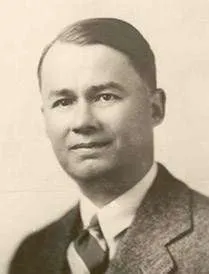
Mr. Chamberlin is a skilled observer and reporter of economic and political conditions at home and abroad. In addition to writing a number of books (his latest, The German Phoenix: Duell, Sloan & Pearce), he has lectured widely and is a contributor to The Wall Street Journal and numerous magazines.
This year marks the twentieth anniversary of the publication in this country of Friedrich Hayek’s The Road to Serfdom. Few books are remembered after such a lapse of time. But Hayek’s trumpet call to the economic freedom without which, as he demonstrates brilliantly, other freedoms are doomed to perish, remains quite undiminished in the freshness and universality of its appeal. The Road to Serfdom deserves a place of honor in every libertarian library; no other work has put the case for freedom and against totalitarian planning with such a happy blend of fire and logic, offering a scholar’s erudition in a style quite understandable to the normally well-educated human being.
Austrian-born Hayek, who has taught and lectured in Great Britain and the United States and who is now a professor at the old university in the picturesque South German town of Freiburg, has long enjoyed an impressive reputation among his economic peers. He is the author of a number of works on such subjects as prices and production, monetary theory and the trade cycle, profits, interest and investment, the pure theory of capital. The Road to Serfdom was, for him, a new venture, and a conspicuously successful one, in the field of popular pamphleteering.
Hayek left his native Austria, where he had taught economics at the University of Vienna, and took up residence in England. There, as a member of the faculty of the London School of Economics, he furnished a useful counterbalance to the collectivist theories of Harold J. Laski. He became a British citizen in 1938, when Nazism took over Austria. Abhorrence of those monstrous twin offspring of collectivist planning, communism and Nazism, has been a consistent principle of his thinking.
His Road to Serfdom is a cri de coeur, an alarm call emanating from the depth of his being at the thought that the Western countries, notably the United States and Great Britain, might have resisted the communist-fascist contagion only to succumb from within. This might happen as a result of a mistaken idea that other liberties will survive the destruction of the free market and the rule of law which inevitably grows out of attempts by government to plan and dictate to the individual how he is to carry on his activities.
In his stirring appeal to reason and to liberty Hayek is able to draw not only on his own vast stock of knowledge, but, thanks to his enormous erudition, on the ideas of many other outstanding thinkers. One of the most powerful indictments of the whole idea of state planning is the following quotation from Adam Smith:
The statesman who should attempt to direct private people in what manner they ought to employ their capitals would not only load himself with a most unnecessary attention, but assume an authority which could safely be trusted to no council and senate whatever, and which would nowhere be so dangerous as in the hands of a man who had folly and presumption enough to fancy himself fit to exercise it. (Italics supplied.)
Fallacies Exposed
Hayek sets up and effectively demolishes every plausible shibboleth and sophistry by which collectivists seek to justify their belief that people may properly be forced to accept collectivist patterns of life for their own good. This kind of arrogance, in its extreme development, has meant, in Russia, “liquidation of the kulaks as a class,” a euphemism for economically and often physically exterminating the peasants who were a little better off than their neighbors and the establishment of a network of slave labor concentration camps. In China it has meant the “elimination” of millions of alleged counterrevolutionaries, the “re-education” of millions more in forced labor projects.
In milder, earlier form this same arrogance asserts itself in theories that some bureaucrats, or state agencies, have a better right to determine how people shall spend their money than the people themselves. Here is Hayek disposing of this fallacy that, because comparatively few individuals think originally or independently, there is a moral justification for imposing one pattern of ideas on all the people:
In any society freedom of thought will probably be of direct significance only for a small minority. But this does not mean that anyone is competent, or ought to have power, to select those to whom this freedom is to be reserved…. It shows a complete confusion of thought to suggest that, because under any sort of system the majority of people follow the lead of somebody, it makes no difference if everybody has to follow the same lead. To deprecate the value of intellectual freedom because it will never mean for everybody the same possibility of independent thought is completely to miss the reasons which give intellectual freedom its value. What is essential to make it serve its function as the prime mover of intellectual progress is not that everybody may be able to think or write anything but that any cause or idea may be argued by somebody. (Italics supplied.)
One Monopoly Only
Advocates of socialism make real or alleged private monopolies one of their principal targets of attack. But their remedy, to turn all economic enterprise over to an omnipotent and omnicompetent state, is clearly far worse than the disease. Professor Hayek hammers home this point with relentless logic:
Our freedom of choice in a competitive society rests on the fact that, if one person refuses to satisfy our wishes, we can turn to another. But if we face a monopolist we are at his mercy. And an authority directing the whole economic system would be the most powerful monopolist conceivable. While we need probably not be afraid that such an authority would exploit this power in the manner in which a private monopolist would do so, while its purpose would presumably not be the extortion of maximum financial gain, it would have complete power to decide what we are to be given and on what terms. It would not only decide what commodities and services were to be available and in what quantities; it would be able to direct their distribution between districts and groups and could, if it wished, discriminate between persons to any degree it liked.
For an object lesson in the truth of this observation one need only consult consumers in any communist-ruled country. Perhaps the single most important reason for the vast gulf between the standard of living and the general state of comfort and consumer satisfaction in competitive and collectivist societies lies in the inevitable enormous difference between a system in which business enterprise must please the customer or fail and one in which the customer must accept whatever the state thinks he ought to have.
Concentration of Power Is Always a Danger
Hayek designates as a tragic illusion the belief of many “liberal” socialists that by depriving private individuals of the power they possess in an individualist system, and transferring this power to society, they can extinguish power altogether. What he has to say here is one of the highlights of his hard-hitting, powerfully reasoned essay:
What all those who argue in this manner overlook is that, by concentrating power so that it can be used in the service of a single plan, it is not merely transferred but infinitely heightened; that, by uniting in the hands of some single body power formerly exercised independently by many, an amount of power is created infinitely greater than any that existed before, so much more far-reaching as almost to be different in kind…. To split or decentralize power is necessarily to reduce the absolute amount of power, and the competitive system is the only system designed to minimize by decentralization the power exercised by man over man.
In other words, the competitive system has not only been demonstrably far more successful than any other in creating more wealth for more people. It has also served a very important moral purpose, by minimizing the concentration of power which has always been the principal characteristic of tyranny and the crimes of cruelty and oppression which tyranny generates. The association of respect for private property with all basic human rights is clear and indisputable, and never more so than in the twentieth century, when it has invariably been the regimes that, in one way or another, denied, abrogated, or abridged private property that committed crimes so monstrous that the very thought of them would have seemed incredible in previous centuries. One refers, of course, to the genocidal extermination of the Jews in Nazi-ruled Europe, to the destruction of the kulaks, the state-organized famine of 1932-33, the wholesale executions and huge slave labor system of the Soviet Union under Stalin.
The Road to Serfdom, unlike Hayek’s earlier learned works on economics, is no specialized study, comprehensible only to experts; it is the outburst of a man deeply concerned with moral issues which go to the heart of our Western civilization. So it contains this powerful comment on the very old ethical issue of whether the end justifies the means. (Most students of history would agree that this dilemma is more apparent than real, because the means inevitably shape and determine the end; it is inconceivable, for instance, that any really desirable goal can be reached through mass murder.)
The principle that the end justifies the means is in individualist ethics regarded as the denial of all morals. In collectivist ethics it becomes necessarily the rule; there is literally nothing which the consistent collectivist must not be prepared to do if it serves “the good of the whole,” because the “good of the whole” is to him the only criterion of what ought to be done….There can be no limit to what the citizen must be prepared to do, no act which his conscience must prevent him from committing, if it is necessary for an end which the community has set itself or which his superiors order him to achieve…. Once you admit that the individual is merely a means to serve the ends of the higher entity called society or the nation, most of those features of totalitarian regimes which horrify us follow of necessity. From the collectivist standpoint intolerance and brutal suppression of dissent, the complete disregard of the life and happiness of the individual, are essential and unavoidable consequences of this basic premise, and the collectivist can admit this and at the same time claim that his system is superior to one in which the “selfish” interests of the individual are allowed to obstruct the full realization of the ends the community pursues.
The Rule of Law Declines in Hitler’s Germany
The Road to Serfdom fairly bristles with seminal ideas on the nature of human relations in politics and economics. Hayek stresses the point that the controls which had been imposed in Germany before Hitler came into power had done much of the paranoid dictator’s work for him. Planning, as he points out, necessarily involves deliberate discrimination between particular needs of different people, and allowing one man to do what another must be prevented from doing. Hence, a decline in the principle of the rule of law, a reversion to the rule of status, a reversal of the movement of progressive societies which, in the words of Sir Henry Maine, has been a movement from status to contract.
Hayek is profoundly skeptical of the possibility of democratic planning, on an international as on a national scale. Getting down to cases, he poses questions which are very applicable today to the European Common Market experiment, admirable insofar as it means free trade over a wider area, questionable insofar as it tries to combine planning features with the abolition of trade barriers:
Who imagines that there exist any common ideals of distributive justice such as will make the Norwegian fisherman consent to forego the prospect of economic improvement in order to help his Portuguese fellow, or the Dutch worker to pay more for his bicycle to help the Coventry mechanic, or the French peasant to pay more taxes to assist the industrialization of Italy?… How many people in England would be prepared to submit to the decision of an international authority, however democratically constituted, which had power to decree that the development of the Spanish iron industry must have precedence over similar development in South Wales, that the optical industry had better be concentrated in Germany to the exclusion of Great Britain, or that only fully refined gasoline should be imported to Great Britain and all the industries connected with refining reserved for the producer countries?
The Test of Time
Out of Hayek’s love of liberty, out of his grief at the prospect of liberty being eroded in the house of its friends came a great book, worthy to rank with John Stuart Mill’s essay, On Liberty. It stands up splendidly to the test of rereading twenty years after publication because the author possesses the rare combination of vast political, historical, and economic learning with a brilliant, flashing style. He has the knack of getting to the heart of a problem in a few words, as when he says:
Who will deny that a world in which the wealthy are powerful is still a better world than one in which only the already powerful can acquire wealth?
And the narrative flow is frequently lightened by such epigrams as the following: “While the last resort of competitive society is the bailiff, the ultimate sanction of a planned economy is the hangman.”
Let the numerous recent executions for “economic crimes” in the Soviet Union bear witness to the truth as well as the wit of this comment.
Hayek’s book was a banner raised for integral liberty in a dark hour when war had strengthened the forces of totalitarian control all around and there was extravagant admiration for the economic planning of our “noble ally,” Stalin’s Soviet Union.
But the battle for liberty has to be won over and over again, despite such brilliant pragmatic demonstrations of its value as the spectacular recovery and development of the free part of Germany, the improvement in Great Britain after Labor’s dull austerity was relaxed by the Conservatives. The possibility that, for political rather than economic reasons, Labor may get another chance in England, and the growth in influence of the left-wing Nenni Socialists in Italy, may have a detrimental effect on what has been a general European movement toward sound economics and prosperity. The planners in our own midst are not silent or inactive.
So libertarians should continue to rally around the banner of Hayek’s inspiring plea for indivisible liberty—the best tract of its kind for the times.
***
Morality and Choice
What our generation is in danger of forgetting is not only that morals are of necessity a phenomenon of individual conduct but also that they can exist only in the sphere in which the individual is free to decide for himself and is called upon voluntarily to sacrifice personal advantage to the observance of a moral rule. Outside the sphere of individual responsibility there is neither goodness nor badness, neither opportunity for moral merit nor the chance of proving one’s conviction by sacrificing one’s desires to what one thinks right. Only where we ourselves are responsible for our own interests and are free to sacrifice them has our decision moral value. We are neither entitled to be unselfish at someone else’s expense nor is there any merit in being unselfish if we have no choice. The members of a society who in all respects are made to do the good thing have no title to praise.
FRIEDRICH A. HAYEK, The Road to Serfdom