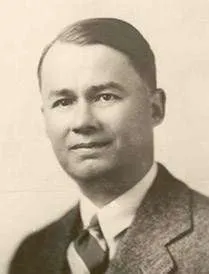
Mr. Chamberlin is a skilled observer and reporter of economic and political conditions at home and abroad. In addition to writing a number of books, he has lectured widely and is a contributor to The Wall Street Journal and numerous magazines.
Suppose that a primitive tribe in a distant jungle had forgotten the secret of how to make fire. Suppose the tribesmen were groping about with one experiment after another, trying desperately to regain the lost secret. There, in a nutshell, one would have a clue to much that has been going on in the
Anyone who has followed Soviet developments in the speeches of Soviet leaders and in Soviet newspapers and magazines during the last few years must be impressed by the amount of attention devoted to failings and breakdowns in the management of industry and agriculture. Khrushchev made one experiment after another. First, he set out to decentralize the cumbersome state economic bureaucracy that tries to run the national economy. Then, finding that the decentralized local “councils of national economy” were trying to keep for themselves more than their proper share of the available resources, he lurched uncertainly back to new methods of central direction. He was never able or willing to admit that the root of the trouble is in the systern itself, not in this or that detail of administration or organization.
Khrushchev followed the same pattern in agriculture, regarding which he imagined himself a special authority. In his last years of power he was continually rushing about the
But there was a very different story in 1963 when the Soviet Union was saved from hunger, if not actual starvation, by purchasing millions of tons of grain from the United States, Canada, and Australia. The other communist giant, Red China, found itself under the same necessity. A joke began to circulate about Khrushchev that he deserved a Nobel Prize in agriculture. He had planted grain in
Although political change in the
Standard of Living of Soviets Still Low by Comparison
There is a mountain of evidence to show that the Soviet standard of living today, with the fiftieth anniversary of the communist revolution less than three years off, remains abysmally low by comparison with the
“
Item Number Two: Radio Liberty, which broadcasts in Russian and other languages of the Soviet Union and monitors Soviet broadcasts, recently made a calculation of comparative New York and Moscow prices, in terms of working time required to earn this or that commodity. Roughly speaking, the Soviet worker or employee must toil ten times as long as the American for a quart of milk, sixteen times as long for a pound of sugar, ten times as long for a pound of coffee, seven times as long for a pound of pork—and soon through a long list of commodities. And the important considerations of quality and availability are also much more disadvantageous in
What with foreign tourists coming into the country, foreign broadcasts, and a limited number of Soviet cltizens permitted to travel abroad, the Soviet citizen is becoming more and more aware of how badly off he is. The old excuses are played out. It is almost twenty years since the last shot was fired in World War II. If, as around-the-clock propaganda assures him, the Soviet economic system is superior to the individualist or capitalist, Ivan Ivanovich, the Soviet man in the street, would like to see a few tangible proofs.
An Urgent Problem
So, as several of their public statements indicate, the front men for the new Soviet regime, Leonid Brezhnev and Aleksei Kosygin, face an urgent problem in creating more tolerable living conditions. And it is in the field of internal economic policy that they have departed most noticeably from Khrushchev policies.
The fallen Khrushchev proceeded on the basis of tightening the control of the local branches of the Communist Party over every detail of industrial and agricultural production. These branches were even split up into two departments, one for industry, one for farming. This split has been canceled and present policy is to let the Communist Party stick to the function of providing “general political guidance,” leaving tasks of management to the state managerial class. Although the small private plots of land which are left to peasants in the collective farms for individual cultivation produce a disproportionate share of such foodstuffs as poultry, vegetables, and dairy products, Khrushchev had been cutting back on these allotments as a source of capitalist infection. One of the first acts of his successors was to repeal these cuts.
Professor Liberman Proposes Test of Sales and Profits
There now seems to be an intention to try out on a much larger scale the ideas of Professor Yevsei Liberman, of
“The success of a factory’s work is judged, first by how wellits wares sell, and, second, by the profit level.”
Formerly, the state planning agencies tried to dictate every detail of factory production and sales. This proved especially unworkable in the consumers’ goods industries and created a temptation to fulfill the plan figures at any cost, paying little regard to quality or consumer desire. Now, the clothing industry and perhaps some others turning out consumer goods will experiment with the Liberman method, which will attempt to test genuine efficiency, not simply to produce a given number of units of this or that product. Many examples of the disastrous results of this latter method appear in the Soviet newspapers. So one can learn from Pravda—official organ of the Soviet Communist Party, which in this case was living up to its name, “Truth”—that every television set purchased by Muscovites in the first half of 1960 had been repaired at least twice; that the “Saratov 2” and “Dnieper” types of refrigerators were useless; that the shoe factory at Chernovtsy, in the Ukraine, had piled up 40,000 pairs of children’s shoes that no one wanted to buy.
Equally instructive are the woes of one Mr. Kamenev, general manager of GUM, the department store in
A hat factory with the martial name of Krasny Voin (Red Warrior) turned out every year 150, 000 hats, all black and unacceptable in shape, and GUM lost a million rubles trying to sell them. When an inquiring reporter from Izvestia got in touch with the manager of the Krasny Voin, he received a standard reply in such circumstances: “We have fulfilled the production plan; the rest doesn’t concern us.”
To anyone who, like the writer, has lived for a considerable time in the
Authority Without Responsibility
Whether the normal techniques of private capitalism can work within the strait jacket of a state-owned, state-controlled economy remains to be seen. On this question Mr. Henry Hazlitt ventures a pessimistic forecast in his recent book, The Foundations of Morality: “If 1 am a government commissar, selling something I don’t really own, and you are another commissar, buying it with money that is really not yours, neither of us really cares what the price is.”
But what is significant is that Khrushchev during his time of power, and now his successors, recognized that some dynamo was lacking in the Soviet system of production and groped around as desperately as one might imagine primitive tribesmen doing who had forgotten how to light their campfire. This same trend is noticeable in the Soviet satellite states of eastern Europe, especially in
Conditions for Progress
To ignite fire or, to drop the figure of speech, to make a modern industrial and agricultural system function at high efficiency, the following elements are essential: the right to earn and inherit property, the payment of differential incentive wages for superior skill and diligence; the right to operate a business for profit—or loss; the existence of a free market to determine the value of what is being produced; a sound, freely exchangeable currency; and a competitive system as the surest and least painful guaranty of standards of quality and efficiency. When Lenin and his followers took over power, profiting by the chaos and disorganization of
All forms of private ownership for profit were abolished; the state undertook to run the entire economy; money practically lost all value; it was meager ration that counted, not the pay in increasingly worthless paper rubles. Some of these changes were in line with communist ideology; others were forced on the regime by the exigencies of prolonged civil war.
The ultimate result was what even communist economists recognize as one of the most formidable breakdowns of production in world economic history, with industrial production falling to 20 per cent, farm output to about 50 per cent of normal. In 1921 there was a prodigious famine which took millions of lives and would have taken millions more if it had not been for the large-scale supply of food by Herbert Hoover’s American Relief Administration and the smaller contributions of many other foreign humanitarian organizations.
By this time Lenin realized that something had to be done, and quickly, if the whole Soviet systern, which had won the civil war against the divided and poorly organized resistance of the anticommunist forces, was not to founder as a result of complete economic paralysis. He came up with what was known as the NEP, or New Economic Policy, of which one important feature was the substitution of a fixed tax for the former policy of requisitioning whatever the government judged was the peasant’s surplus foodstuffs—a policy that produced more peasant uprisings than food. At the same time private trade was legalized and a regular wage system replaced the payment of wages in kind. Small industries were again permitted to function. Considerable inequalities in compensation were permitted and there was an attempt, not always successful, to keep the ruble currency fairly stable in terms of purchasing power.
Spectacular Results
The results of this lukewarm, halfhearted return to capitalism were spectacular, comparable with what happened in
But, while Germany went from success to success on the pathway of full capitalist restoration, Josef Stalin, after getting a firm grip on the levers of power, proceeded to liquidate the NEP, abolishing private trade, forcing the peasants, with the most ruthless methods of compulsion, to give up their small private holdings and work in big state-controlled collective farms, imposing on the country all the rigors of a command economy. Stalin’s goal was a swift build-up of the heavy industries and the war preparedness of the
The Missing Spark
After the grim dictator’s death in 1953 there was an easing of his more ruthless measures. Many of the victims of his slave labor camps were released and conditions in the camps were somewhat humanized. Slave-driving methods in the factories were relaxed. The peasants, who had been the low men on the Soviet totem pole, as they had been, indeed, throughout Russian history, were given a little more incentive.
Yet some essential sparkplug was lacking; and this fact became clearer as the Soviet economy became more complex. It had been comparatively easy to set a few simple goals: so much steel, coal, oil, and the like, although agriculture lagged badly as a result of the destruction of the peasant’s old incentive of personal ownership of land. There were years under Stalin when the output of farm products was little more than it had been before the Revolution, despite the growth of population and the large injection of tractors and other modern machinery.
Somehow, the secret of fire had not been rediscovered and the groping for new methods of stimulating productivity under Khrushchev and under Khrushchev’s successors let some curious skeletons out of the cupboard. It is obvious from the most orthodox Soviet sources that the national economy has bent, almost to the breaking point, under a crushing load of competing and often conflicting bureaucratic planning instructions. About the end of 1964 a deputy in the Supreme Soviet (parliament) cited the case of the Izhora factory, which received seventy different official instructions from nine state committees, four economic councils, and two state planning committees, all authorized to give orders.
Some of the grotesque things that have been happening would have defied the imagination of the great Russian satirical humorist Gogol. There was, for instance, a chandelier factory where the workers were paid higher bonuses for turning out heavier chandeliers. The upshot was that they produced chandeliers that pulled down the ceilings.
Small wonder that Yevsei Liberman and other would-be reformers are getting a hearing. Yet the pull of communist dogma and of the vested interests in maintaining the old system of bureaucratic controls should not be underestimated. Once a machine of bureaucratic planning is set up, disentanglement becomes as difficult as for a fly to extricate itself from flypaper. It is still far from certain, given the Soviet political and ideological system, that its rulers will succeed in relearning the secret of fire.
However this may be, two conclusions seem to be in order. The first is that the
Second, we can see today a new illustration of the truth of Oxenstierna’s maxim: With how little wisdom the world is governed! Just when state economic planning, pushed to extreme lengths in the Soviet Union, is emitting sounds that suggest a death rattle, the people of Great Britain, by a very narrow margin to be sure, have entrusted their government to a party which holds up the planning of productivity and the regulation of individual incomes as Alpha and Omega of progress and economic wisdom.
***
Necessarily Inefficient
Every government activity is delayed and directed by hundreds of democratic checks and balances. Economically, this is necessarily inefficient. But the preservation of freedom requires us to keep these checks and balances, even though the cost of government services and production is thereby greatly increased.
Inefficiency in government is the price we pay for liberty. If, in an attempt to make our government more efficient, we undermine the cumbersome checks and balances and divisions of power specified in our Constitution, liberty will disappear in the
Dean Russell