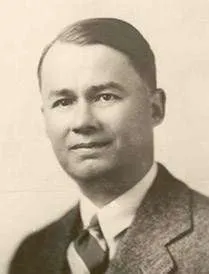
Mr. Chamberlin is a skilled observer and reporter of economic and political conditions at home and abroad. He has written a number of books, has lectured widely, and is a contributor to The Wall Street Journal and many nationally known magazines.
Is the German federal republic a worthy partner in the community of free nations and, incidentally, a remarkable illustration of what economic freedom can do in restoring a nation to prosperity from wartime devastation? Or is it mere camouflage for lurking Nazis, who pull all the strings from behind the scenes and are only awaiting an auspicious moment to achieve a new take-over of political power?
Sparked by the grisly recital of concentration camp horrors during the trial of Adolf Eichmann in Israel, there has been a more or less concerted drive to convince American public opinion that the second interpretation of German conditions is the correct one. A bestselling book represents Nazism not as a frightful aberration, a twin symptom with communism of revolt against Western individualistic civilization with its Judaeo-Christian and Greek and Latin roots, but as a natural outgrowth of German history and German character. Other works, which have not reached so wide an audience, go still farther in trying to represent Germany under Konrad Adenauer as only one short step removed from the Germany of Adolf Hitler, as a state where democracy is despised and liberalism is persecuted, where most of the people make little effort to conceal their Nazi sympathies.
Behind this drive to create a picture of a Germany unchanged and unchangeable are several strong emotional preoccupations. First, some individuals, in their justified horror at the crimes of the Nazis, are unwilling or unable to recognize that great numbers of Germans were also victims of Nazi tyranny and that there was an honorable German resistance movement. In these individuals there is a tendency, conscious or unconscious, to make mountains out of molehills, to regard isolated cases of hoodlumism, such as daubing swastikas, as more significant than the fact that there is not a single neo-Nazi deputy in the German parliament.
Second, there is a trend, especially in England but not unknown in other countries, to regard Germany as the only possible future enemy, to refuse to look at the map and see what a tiny speck is the German Federal Republic compared with the vast expanse of the Soviet Eurasian Empire, to overlook the enormous change in the European balance of power caused by the Soviet conquest of eastern and southeastern Europe and the contraction of Germany within extremely narrow frontiers. Along with this there is a marked resentment, in British socialist circles, against the new Germany for proving so emphatically that a combination of hard work, a normal incentive system, and a free market economy is a far more hopeful road to national prosperity than an elaborate system of state controls and inhibitions.
Finally, it is very definitely in the interest of Moscow, and of international communism, to create the image of a “revenge-hungry Bonn militarism.” Nowhere has the anti-Adenauer drum been beaten so assiduously as in Moscow, and for an obvious reason: the German Chancellor’s principled and unswerving anticommunism. To inspire doubt as to the character and motives of the German Federal Republic would be a propaganda feat worth many divisions to Nikita Khrushchev.
While it is easy to identify specific motivations for the anti-German propaganda which has been very much in evidence during the last year, the allegations that are voiced against the Federal Republic should be examined on their merits. The most familiar of these allegations are as follows:
1. The Germans always have been and remain an incurably militaristic and aggressive people.
2. There is no real democracy in the Bonn Republic and Adenauer is a virtual dictator.
3. Many former Nazis or Nazi sympathizers are in influential positions; a case frequently cited is that of Dr. Hans Globke, State Secretary in the Chancellor’s Office, a post roughly equivalent to that of Presidential Assistant in the United States.
4. German courts turn a blind eye to Nazi misdeeds, and the truth about the Nazi system is not taught in the German schools.
5. Neo-Nazi propaganda is rampant and influential, so that the emergence of a new Führer is probably only a question of time.
This writer has spent a good deal of time in Germany, before the Nazis came into power, during the first year of Hitler’s rule, and since the end of the war. With this background of contacts with hundreds of Germans of varying social backgrounds and viewpoints, supplemented by extensive reading of German newspapers, magazines, and books, I have no hesitation in pronouncing this over-all indictment as false and misleading. The small substratum of truth is submerged in a thick overlay of misrepresentation and gross exaggeration. Take up the counts one by one.
1. German Militarism
Historically, this allegation is quite untrue. For centuries the division of Germany into many states, some of them microscopically small, encouraged and invited the aggression of stronger neighbors. During the Thirty Years War (1618-1648) French and Swedes and foreign mercenaries fought over Germany and ravaged it. Louis XIV repeatedly invaded Germany. If one considers the names of the streets which radiate from the Paris Arc de Triomphe—Wagram, Friedland, Jena—or of the Austerlitz Station or the Rue de Rivoli, these commemorate Napoleonic battles fought far from France‘s home grounds. It was France that declared war on Prussia in the Franco-Prussian War of 1870-71. And, if Bismarck set a trap for Napoleon III, the French Emperor made himself co-responsible for this conflict by walking into the trap. There was a tendency to rewrite the historical evidence about the origins of World War I in the light of Adolf Hitler’s unquestionable personal responsibility for World War II.
But the judgment of Sidney B. Fay, the objective American scholar, at the conclusion of his massive work, The Origins of the World War, is worth remembering:
“Germany did not plot a European war, did not want one and made genuine, though too belated efforts to avert one. She was the victim of her alliance with Austria and of her own folly…. It was the hasty Russian general mobilization, assented to on July 29 and ordered on July 30, while Germany was still trying to bring Austria to accept mediation proposals, which finally rendered the European War inevitable.”
I was in Germany in 1922-23, shortly after the end of World War I, and I have been in Germany repeatedly since World War II, the last time in August 1961. There was a tremendous contrast in the mood of the German people, especially the youth, in these two aftermaths of defeat. Following World War I, there was a strong nationalist ferment and a keen desire for revenge. I still recall attending a movie which showed the German War of Liberation against Napoleon and the cheers which broke out when the Prussian Field Marshal Blucher was shown crossing the Rhine.
Of this spirit, which also found expression in the growth of many illegal military organizations designed to circumvent the restrictions on Germany‘s armed forces, there was not a trace after the terrific collapse of 1945. There was not a single case after 1945 when the occupation powers had to deal with any kind of serious nationalist conspiracy.
As a matter of fact, it was infinitely easier to keep the Germans disarmed than to persuade them to rearm when it was realized that without German cooperation the European balance of power would be hopelessly tilted in favor of the Soviet Union. Although they have now modified their position, the Social Democrats fought German rearmament to the last ditch. There was an immense psychological resistance of the Germans themselves to the idea of taking up arms. Now, equilibrium has been restored. Young Germans accept military service as a necessity. But nowhere in Germany today does one find “militarism” in the sense of glorification of war as something intrinsically desirable. The Germans are realistic enough to know that they would stand no chance if they had to face the might of the Soviet empire alone. They have no national army; all their divisions are committed to NATO.
2. Undemocratic and Dictatorial
Every people has its own way of practicing democracy. Respect for leadership and authority—for party discipline—is stronger in Germany than in some other countries. But for the last twelve years, the Federal Republic has maintained a stable existence under free institutions. Freedom of press and speech has been fully maintained. If Chancellor Adenauer came out with the highest vote in four national elections, this was not because the voting was rigged. It was because German prestige abroad and prosperity at home had revived much faster than any observer would have imagined possible in the bleak early years of foreign occupation. To anyone who saw the ruined, hungry, economically paralyzed Germany of 1945 or 1946, the Federal Republic (although not the part of Germany kept under Soviet occupation) would have been almost unrecognizable, booming with prosperity and steadily pointed upward.
The sensitiveness with which German voters react to important events was vividly demonstrated by what happened after the communists sealed off East Berlin on
3. Ex-Nazis in Government
It is true that some ex-Nazis are in government service. The Nazi regime was totalitarian, and membership in the Nazi Party—or at least in some Nazi-controlled organization—was for many Germans a condition of employment. It would have been impossible to staff a competent civil service exclusively from people who had been in concentration camps or in emigration.
What would be a serious cause for concern would be any sign that ex-Nazis were influencing the policy of the Federal Republic along Nazi lines. But of this there is not the slightest proof. On the contrary, it would be impossible to imagine a system more different from Hitler’s than the one which has developed under the leadership of Konrad Adenauer.
Nazi Germany exalted the state, cultivated a fanatical creed of German racial and national superiority, based the country’s economy on intensive build-up of war industries, rejected any cooperation on equal terms with its European neighbors. Adenauer Germany has based its economy on free private enterprise, has been busily denationalizing and selling to small investors some big state enterprises, has led the way in promoting close European integration, and has been, if anything, a little laggard in building up to very modest goals of defensive military power.
4. Prejudiced Judges and Teachers
Most of the relatively few cases of serious anti-Semitic actions have led to court trials. Nearly all the more unregenerate Nazis live abroad—the surest sign that they would not be welcome in the Federal Republic. There has been a serious, determined, and fairly successful effort to bring to legal account those Nazis who committed crimes that were inexcusable, even by wartime standards: murders and torture in concentration camps, in Germany and in occupied countries.
In the first years after the end of the war, war crimes trials were reserved to the Allied powers and led to 5,000 convictions and 806 death sentences, some of which were commuted. Since German courts took over, more than 30,000 people were prosecuted for war crimes, according to Walther Strauss, a conservative anti-Nazi who is State Secretary in the Ministry of Justice, and over five thousand were convicted. Since 1958 a central office for the exposure of Nazi crimes has been functioning in Ludwigsburg, and there has been a strenuous effort to finish prosecutions of war criminals before the statute of limitations comes into effect.
It would be impossible to claim that every school in Germany gives full instruction on the crimes of the Hitler period. Local conditions and parents’ sentiment enter into the picture, and there is difference of opinion among educators as to the proper age when children should be told stories of revolting crimes. But the suggestion that German schools are systematically covering up the sins of the Hitler period is quite false. On this point the testimony of Dr. Benjamin Fine, former education editor of The New York Times who made a detailed study of the German education system in the summer of 1961, is worth quoting:
“With the exception of a small unimportant fringe of neo-Nazis, the overwhelming majority of German youth believes in the democracy of the Federal Republic…
“Hitler and his philosophy are dead, as far as German youth are concerned. Perhaps some traces of his influence still linger in neoNazi circles, but this is little more than the ‘lunatic fringe’ you could find in any country. Films showing Hitler or his followers are met with laughter or scorn. Schools stress the evils that Hitler and the Nazi regime did, and the destruction they caused to Germany.”
5. Neo-Nazi Propaganda
What about the strength and influence of the “neo-Nazis”? Politically, it is as close to zero as possible. Of the little groups like the Socialist Reichspartei which are oriented in this direction, not one member in free elections has been seated in the German parliament. In scores of casual meetings with Germans, many in the informal atmosphere of mountain hikes, I never met one who defended Hitler or who wished to see a return of the Nazi system.
Dr. Walther Strauss, who regards Nazism as a terrible blot on the civilized German Christian conservative tradition, offered this penetrating analysis of the danger of a Nazi revival in a conversation in the Ministry of Justice in Bonn last summer:
“Compare the aftermaths of two great wars, in which Germany suffered crushing defeat. It is now sixteen years since the end of World War II. Sixteen years after World War I, in 1934, Hitler was in power, with a machine of terror and propaganda calculated to crushall opposition. Look how different the situation is today. Bonn is not Weimar. During the existence of the Weimar Republic we had 21 changes of Cabinet. Up to 1961 we had only one Chancellor, Konrad Adenauer. Instead of a score of discordant parties in parliament we have only three parties represented now in the Bundestag—and all these three, however they may disagree among themselves, are dead set against any return to Hitlerism. And of course our economic position is entirely different. Now, we have work for all and general prosperity. In the years of Hitler’s rise to power, there was mass unemployment and acute economic distress. We now have a younger generation that has grown up completely without Nazi influence. Every year that passes weakens any lingering appeal of Nazi sentiment.”
There is unfortunately one part of Germany where Nazi spirit and methods still prevail. This is the so-called German Democratic Republic (which is neither German, nor democratic, nor a republic), where Soviet tanks prop up the hated regime of Soviet Gauleiter Walther Ulbricht. Its popularity may be gauged by one simple fact: over three million Germans have fled from its territory to the prospering Federal Republic since 1945. Its character as a huge penitentiary has been emphasized by the wall in Berlin, designed to prevent the prisoners from escaping.
The brutal young Vopos (“People’s Police”) who shoot men, women, and children trying to escape, are blood brothers, in ideology and character, with the young thugs whom Hitler recruited into his SA and SS. But this obvious parallel between the brutalitarian methods of Nazism and communism never seems to occur to the commentators who make a specialty of baiting the German Federal Republic, where free political andlegal institutions go hand-in-hand with economic freedom.
It is high time that this nonsense about rampant, triumphant neo-Nazism in the Federal Republic be recognized for what it is: malicious propaganda, compounded of downright falsehood, gross exaggeration and half- and quarter-truths, designed consciously or unconsciously to advance the victory of Soviet imperialist communism and to sow distrust between free peoples who should stand together.