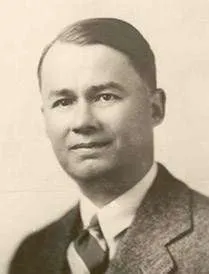
Mr. Chamberlin is a skilled observer and reporter of economic and political conditions at home and abroad. He has written a number of books, has lectured widely, and is a contributor to The Wall Street Journal and many nationally known magazines.
From Moscow recently has come an impressive lesson in the eternal truth that freedom is integral and indivisible, that without economic and political freedom there can be no freedom of the mind and the spirit. The occasion was the long, scolding, threatening lecture which Nikita Khrushchev delivered to an audience that included leading Soviet writers, artists, and composers. The Communist Party, with Khrushchev as its representative and spokesman, is not content to control the entire political and economic life of the Soviet Union, to make all the big decisions of foreign and internal policy, to “plan” every year how much every Soviet citizen will be permitted to consume, from bread and sugar to furniture and moving-picture tickets. It also assumes the right to plan and dictate what its subjects may hear, read, see on all media of communication, to determine, so far as this is possible, what Russians shall think.
Since Stalin’s death ten years ago there have been changes in the Soviet Union, although the extent and significance of these changes should not be exaggerated. Khrushchev’s personal style as a dictator differs from Stalin’s. Stalin was a paranoid introvert who, especially in his last years, saw very few foreigners as he lived secluded in the Kremlin, never leaving Russia. Khrushchev is a bouncy extrovert who seems to enjoy travel, crowds, and mingling with diplomats and journalists. The ghastly terror of Stalin’s rule has abated; during the last decade there have been no mass deportations, many prisoners have been released, and conditions in concentration camps have become less barbarously inhuman. Arbitrary arrests are less frequent.
However, the Soviet Union remains a strict police state, governed from above. A self-perpetuating party bureaucracy is the source of all power. Elections are farces; it is still true, as Lenin is reported to have said, that there may be any number of political parties in Russia, provided that the Communist Party is in power—and the other parties in jail. The Iron Curtain is no empty phrase; the Soviet authorities do everything in their power to insulate the Soviet people from knowledge of conditions abroad. Moscow remains the only European capital where it is impossible to buy the New York Times, or any other foreign noncommunist newspaper.
The Soviet government invests a vast amount of money and technical resources in jamming foreign radio broadcasts. The status of the peasants remains what it has been since collective farming was forced on them thirty years ago: that of serfs assigned to their tasks by the state. And, as against the relaxation of terror in some fields, there has been in recent years an extension of the death penalty, especially to so-called economic crimes, which in some cases are nothing more than the exercise of initiative and ingenuity in short-circuiting the processes of the cumbersome bureaucracy.
This same mixed pattern—relaxation here, tightening there—has been equally evident in intellectual life. Under Stalin the rules for the writer, artist, musician were simple. Every novel, every painting had to point the moral that all was for the best in the communist world. It was a matter of conform or, at best, not be published; at worst a one-way ticket to a concentration camp. The result of this kind of force-draft “culture” was the most barren period in the creative arts since Russia assumed its place in European culture through the creations of such poets as Pushkin and Lermontov and such novelists as Tolstoy, Turgenev, Dostoevsky, and Gogol. Apart from one epic novel, Sholokhov’s Quiet Flows the Don, the whole of Soviet literary production during the quarter century of Stalin’s personal absolute rule (1928-1953) may be dismissed as mediocre to worthless.
Temporary Release
The same considerations that led Stalin’s successors to abate political terror induced them to relax somewhat the shackles on the intellectuals. A more sophisticated and educated generation had grown up, restive and disillusioned with an unvarying diet of coarse propaganda which was often in glaring contradiction to the realities of everyday Soviet life. So, very cautiously and gingerly, and with many jerks and halts, a little more license was granted in the creative arts.
Literary magazines began to let a little fresh air into their contents. Now and then a novel appeared which most probably would not have been submitted and certainly would not have been published under Stalin’s reign of terror. The most striking example of this was the recent appearance of Alexander Solzhenitsyn’s A Day in the Life of Ivan Denisovich, a matter-of-fact account, without any injection of spectacular horrors, of the normal life of the half-starved, half-frozen slave laborers in the Arctic climate of Northern Siberia. How complete the system of thought control and censorship in the Soviet Union is may be gauged from the fact that this was the first printed word in Russia which documented the very existence of the slave labor camps to which millions of human beings were consigned.
But the relaxation of restrictions on free expression did not proceed in a straight line. Doctor Zhivago, the great novel of Russia‘s outstanding man of letters, the late Boris Pasternak, became a literary sensation in Europe and America and sold in hundreds of thousands of copies. But it could not be published in Russia, and the author and his book were overwhelmed with coarse abuse. Pasternak was put under such pressure that he declined the invitation to receive the Nobel Prize for literature in Stockholm.
Now, progress has come to a dead halt and a retrograde movement seems to have begun. Khrushchev’s manifesto—given the widest possible publicity through press and radio—indicates that, in the opinion of the ruling group, intellectual ferment had gone too far and that the authority of Communist Party dogma must be reaffirmed. Khrushchev sneered at what he called the moldy idea of absolute freedom and declared that the Party regards the press, literature, painting, music, radio, pictures, and theater as “sharp ideological weapons.” “In questions of art,” he continued, “the Central Committee of the Party will demand from everyone—from the most merited and renowned as well as from the young budding artists—unswerving adherence to the Party line.”
Czarist Censorship
Here, in a nutshell, is the blight that has fallen on creative expression in the arts under communism. There was censorship in Czarist Russia; but this did not prevent the emergence of literature second to none in depth of psychological insight, in the quality of human compassion, in imaginative depiction of characters. But the Czarist censorship was purely negative and fairly easy to evade.
No one demanded of Tolstoy or Turgenev or Chekhov that he depict Imperial Russia as a happy place in which to live; and this is certainly not the impression the reader gains from the Russian literature of the nineteenth century. So long as the nineteenth century Russian novelist abstained from open endorsement of revolution and from disrespectful references to the Imperial family, he could write pretty much as he pleased.
But under the communist dispensation a neutral, apolitical attitude is not tolerated. You must either ballyhoo the cause of communism or face the dry guillotine of not being published—in a society where the state is the only publisher. The case of Doctor Zhivago is very instructive. Had there been no censorship and had there been competing private publishers, this work would have been a best seller for a Russian public sickened of stereotyped propaganda fiction that bears no relation to the realities of life.
Khrushchev has unconsciously and unwillingly given new proof that liberty is integral and indivisible. Many in the United States and Western Europe probably agree with the Soviet Premier’s blunt characterization of modern abstract art as suggesting something “smeared with a donkey’s tail,” find much modern music tiresomely and earsplittingly cacophonous, and object to trends toward obscenity and contrived obscurity in some modern literature. But no one in a free country would deny the writer, the composer, the artist the right to express himself according to the dictates of his inner impulse.
The Blight of State Dictation
Far worse than the most obnoxious and absurd cultural experiments is the prospect of a political party or any other impersonal authority assuming the right to dictate the form and content of novels, poems, plays, paintings, and symphonies. Public opinion, in the long run, usually sifts out the valuable from the phony in fields of creative expression. But no culture worthy of the name can survive the blight of state dictation.
It is interesting and significant that the same system which eliminates consumer choice in material things and which substitutes the judgment of the state for that of the consumer and the free market in deciding what, and how much of what, should be produced, arrogates this same privilege in matters of the intellect, carefully pre-tasting and prefabricating what the Soviet citizen may read and hear and determining, so far as possible, what he is to think.
It is no accident that such political institutions as free elections, freedom of speech, press, and assembly, safeguarding of the legal rights of the individual against arbitrary state authority, are intimately bound up with a free economy, with the maintenance of a free market, with the acknowledged right to acquire, own, and transfer private property. Where one finds free trade, there will also usually be free thought; and the converse of this proposition is equally true.
The Gadarene swine who rushed over a cliff to their destruction were models of discretion compared with intellectuals who have advocated socialism, communism, fascism, and other forms of collectivism which would substitute state planning for individual initiative. For the surest prediction that can be made about such systems is that they will not leave the human mind and soul out of the range of things which it is proposed to control.
The Arrogance of Planners
It is only on the foundation of free political institutions and a free economy that there can be any security for the intellectual to create and express himself freely.
That is why resistance to the tendency of the modern state to swell and expand beyond its proper functions is an essential element of the vigilance that is always needed if freedom is to be maintained in all fields, not least in those of the mind and the spirit.
Adam Smith pronounced a final and devastating judgment on the illusions and delusions of the state economic planners with his wise observation:
“The statesman who should attempt to direct private people in what manner they ought to employ their capitals would not only load himself with a most unnecessary attention, but assume an authority which could safely be trusted to no council or senate whatever, and which would nowhere be so dangerous as in the hands of a man who had folly and presumption enough to fancy himself fit to exercise it.”
The same overwhelming arrogance that leads state planners in all societies to claim for themselves this privilege of substituting their judgment for that of the impersonal free market is easily transferred to the sphere of the intellect. If planning is good for industrial output and for the provision of the people with just what they require, or ought to require, in food and clothing and housing, why should it not also be extended to books, magazines, press, radio, every medium for influencing thought?
The principle of the free market is just as sound in cultural values as in the production of material things. The state as patron is only the other side of the coin from the state as censor; it is miscast in both roles. A good illustration is the contrasted position of opera in New York and in London.
Experiments in cacophonous modern compositions have been infrequent at New York‘s Metropolitan Opera because they invariably have proved unsuccessful from the box-office standpoint. Not being subsidized, the Metropolitan directors are obliged to pay some consideration to what their audiences wish to hear. (There is, alas, no such pressure on the program makers of the symphony orchestras, whose concerts are regularly sold out. Consequently, they are able to inflict what they wish on what are essentially captive audiences).
Unmelodic music is just as unpopular in London as it is in New York. But an organization called the Arts Council, supported by public funds, steps into the breach by furnishing subsidies which are used to cover the deficits incurred by performing unpopular operas to half-filled houses. So, as is apt to be the case, the greatest satisfaction of the greatest number—whether it be in the choice of opera or in the thousand and one other items that enter into the standard of living—is insured by leaving the decision to the free operation of public taste. A system of state subsidized art in any form is likely to turn into a playground for cranks and doctrinaires.
Freedom Is Indivisible
So, one always comes back to the proposition that freedom is integral and indivisible. To violate the principle of the free market, of consumer choice, is equally disastrous in economics and in the arts. It is difficult to calculate how much a free economy is superior to a controlled one, merely because of the fact that it is free. The first steps toward a controlled economy may seem attractive, desirable, even necessary; but the final station on this road is the substitution of some bureaucratic agency’s judgment for that of the individual in one element after another involving the individual’s standard of living.
State planning in the arts is almost certain to end in one of two pitfalls, censorship and thought control, or foisting on a captive audience eccentric and unpopular forms of expression. It is remarkable how many problems, cultural and economic, could be avoided and/or solved by the on one side from those on the simple device of leaving people free to follow the bent of their own taste and judgment.
Indeed, if one would seek to reduce to a single formula the ideological struggle of our time—a struggle that is both international and intra-national—the best touchstone for distinguishing those other might well be belief in the saving virtue of free consumer choice. There is the dividing line between libertarians on one side and totalitarian communists, socialists, fascists, collectivists of all kinds and degrees—authoritarian so-called reformers—on the other.